 By
Kelley Kelly
By
Kelley Kelly
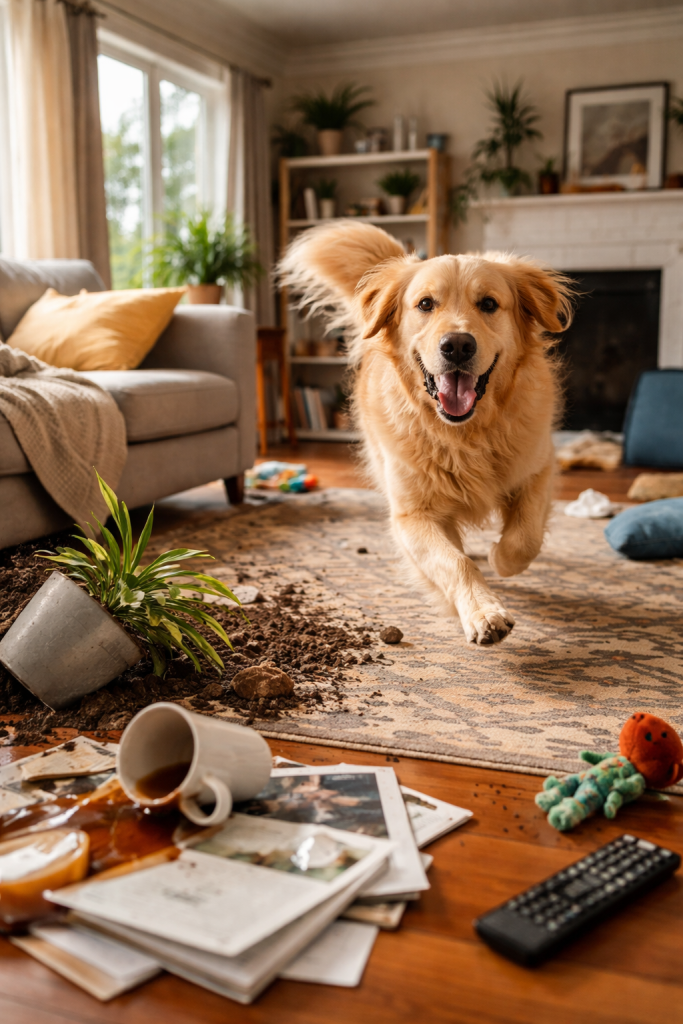
If you’ve ever looked at your pet in the middle of a meltdown and thought, “What is wrong with you?”—you’re not alone.
Barking at nothing. Racing through the house. Knocking things over. Scratching, chewing, pacing.
It feels like misbehavior.
But in most homes, it isn’t defiance.
It’s overstimulation.
Your pet isn’t trying to be difficult. Their nervous system is simply overwhelmed. And once you see that, everything changes.

4
What Overstimulation Actually Looks Like in Pets
Overstimulation happens when a pet takes in more sensory input than they can process. Noise. Movement. New people. Long days without rest. Inconsistent schedules. Too much excitement without recovery.
Dogs often show it through:
- Excessive barking
- Jumping and mouthing
- Pacing or restlessness
- Inability to settle
Cats show it differently:
- Hiding or sudden swats
- Scratching furniture
- Night-time chaos
- Hyper-vigilance or withdrawal
These aren’t “bad habits.” They’re stress signals. Your pet’s body is saying, “This is too much.”
Why Modern Homes Overload Pets
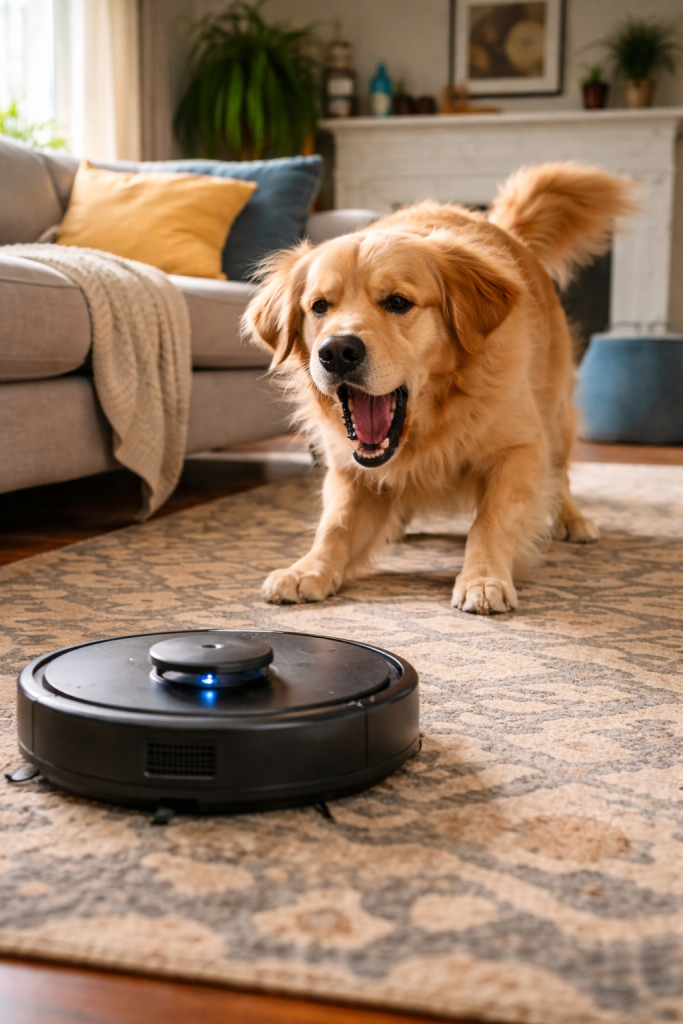
Your home is full of stimulation your pet didn’t evolve for.
Doorbells. TVs. Phones. Vacuums. Traffic sounds. Irregular schedules. Long stretches of boredom followed by bursts of activity. Even love can overwhelm when it’s unpredictable.
Without structure, your pet never knows:
- When rest is safe
- When activity is coming
- When the day will slow down
So they stay alert.
Alert turns into reactive.
Reactive turns into “bad behavior.”
What looks like disobedience is often just a nervous system that never gets to stand down.
The Hidden Cost of Constant Correction
When behavior feels disruptive, most people respond with correction.
“No.” “Stop.” “Down.” Over and over.
That doesn’t teach calm. It teaches vigilance.
Your pet starts scanning you, the room, the door, the window. Their body stays tense. They don’t learn how to settle—they learn how to wait for the next interruption.
You feel like a referee.
They feel like they’re always in trouble.
No one relaxes.
Over time, this creates a loop: behavior → correction → pause → behavior again. The stress underneath never resolves.
Overstimulated vs. Regulated: What Changes
| Overstimulated Day | Structured Day |
|---|---|
| Pacing and vocalizing | Settles more quickly |
| Reacts to every sound | Observes without panic |
| Seeks constant input | Rests between activity |
| Needs constant correction | Begins to self-regulate |
| Owner feels tense | Owner feels confident |
The pet didn’t change personalities.
Their environment changed.
How Structure Calms the Nervous System

Calm isn’t taught through commands.
It’s created through predictability.
When a pet knows:
- Morning always starts the same way
- Activity comes at familiar times
- Evenings always wind down
Their brain stops bracing.
Routine tells them the world is safe.
A structured day quietly answers the question your pet is always asking:
“What happens next?”
When they know the answer, their body softens. Breathing slows. Muscles relax. Behavior follows.
How a Calming Daily Routine for Pets Restores Balance
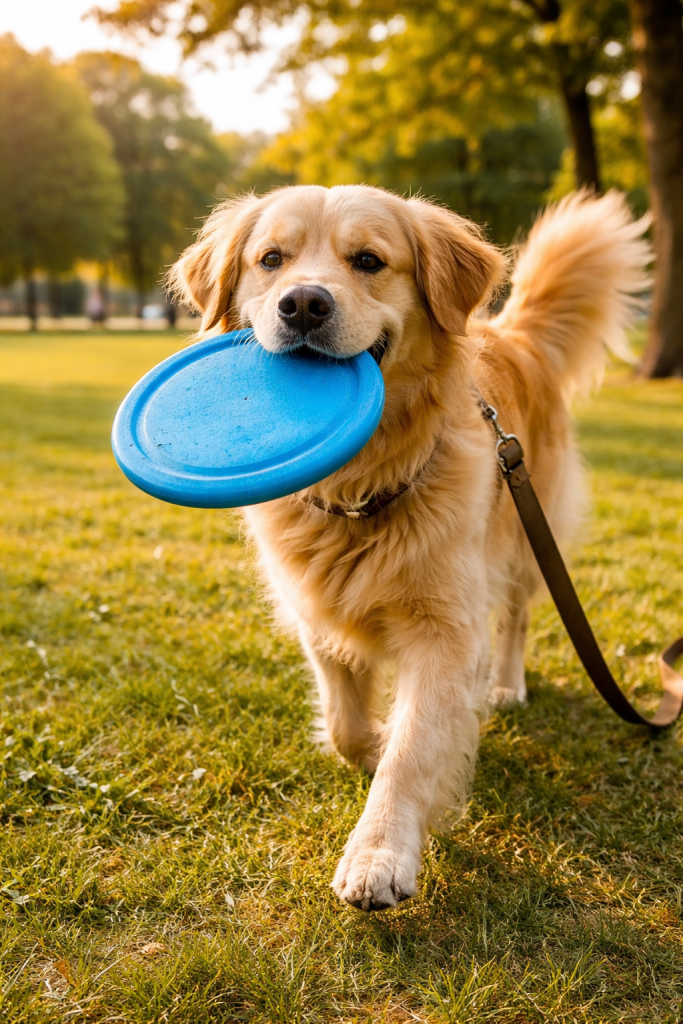
This is why a calming daily routine for pets works so well. It removes uncertainty. And uncertainty is what keeps stress high.
You don’t need to “fix” your pet. You need to give them a rhythm.
Start small:
- Keep mornings predictable
- Schedule movement before chaos appears
- Create a clear evening wind-down
- Protect rest time
- Repeat the same patterns daily
This isn’t about control. It’s about safety.
When your pet knows what comes next, their nervous system stands down. And behavior follows.
For the full framework, visit From Chaos to Calm: How to Create a Peaceful Daily Routine for a Well-Behaved Pet and learn how to build a day your pet can finally relax inside.

4
The Reframe That Changes Everything
Your pet isn’t bad.
They’re overwhelmed.
And overwhelm isn’t corrected.
It’s soothed.
Structure does that.
Consistency does that.
A predictable day does that.
When stress drops, behavior shifts. Not because your pet is trying harder—but because they finally feel safe enough to stop trying at all.
My Pets Routine participates in an Affiliate Advertising program designed to provide a means for us to earn advertising fees by advertising and linking to Affiliate Partners.
[…] or pull its owner into an unsafe position. A controlled dog is also less likely to become overwhelmed or reactive when the trail gets […]