
 By
Kelley Kelly
By
Kelley Kelly
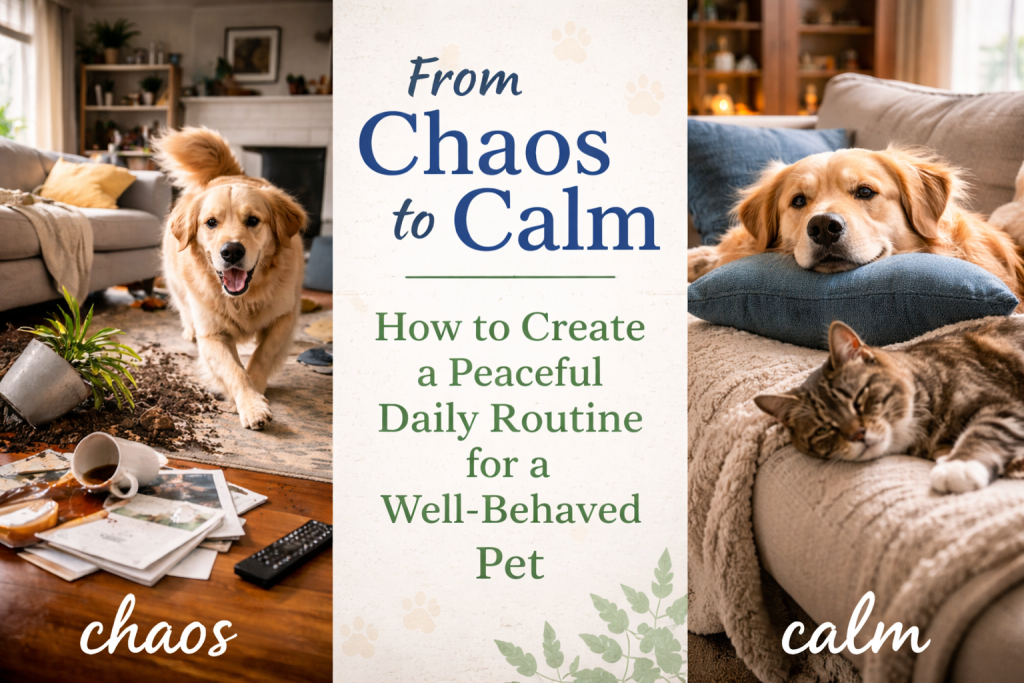
There is a moment that too many pet owners know too well.
It’s late in the day. You’re tired. The house is loud. Your dog is barking at every sound outside. Your cat is darting through the hallway. Toys are scattered across the floor. You’re not angry—you’re overwhelmed. You love your pet deeply, but in that moment, you wonder why something that was meant to bring comfort feels like another source of stress.
Most people don’t want a “perfect” pet.
They just want their home to feel calm again.

A peaceful home with pets isn’t silent. It isn’t rigid. It isn’t built on constant correction. It’s steady. Predictable. Supportive. It’s a place where energy has somewhere to go, rest has permission to happen, and both human and animal can breathe.
The truth is this:
Most “bad behavior” isn’t bad at all. It’s a pet’s nervous system reacting to uncertainty.
What looks like disobedience is often stress.
What feels like chaos is often confusion.
What seems unfixable is often just unstructured.
A calm, well-behaved pet isn’t created through control.
It’s created through rhythm and structure.
And rhythm is something you can build.
Why Chaos Happens in Loving Homes
Most homes don’t intend to feel chaotic. They are full of care, affection, and good intentions. But from a pet’s perspective, many modern homes feel unpredictable.
Long stretches of boredom.
Sudden bursts of activity.
Irregular schedules.
No clear beginning or end to the day.
Add in doorbells, televisions, phones, vacuums, visitors, traffic sounds, and emotional shifts in the humans they rely on, and it becomes clear why so many pets stay on edge.
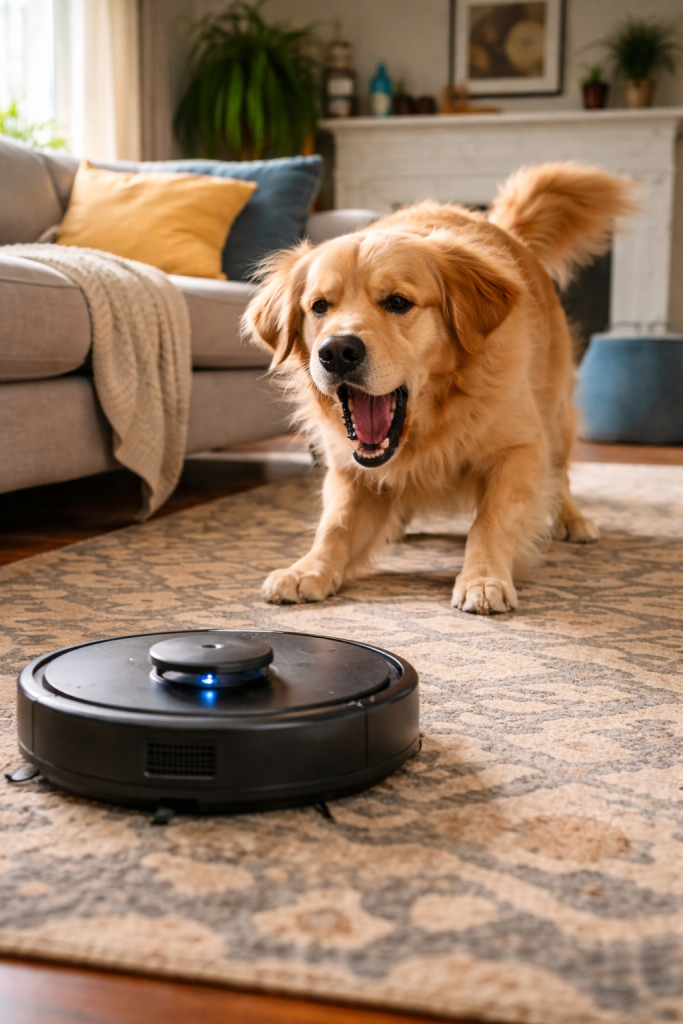
A pet who doesn’t know what comes next stays alert.
A pet who stays alert becomes reactive.
A reactive pet is labeled “difficult.”
This is why an overstimulated dog paces and barks. Is always on Alert.
It’s why stressed cat behavior often looks like hiding, scratching, or night-time chaos.
Not because they are “bad.”
Because their world doesn’t feel settled.
“Why Your Pet Isn’t ‘Bad’ — They’re Overstimulated”
When days feel random, pets don’t know when movement is coming, when rest is safe, or when the world will slow down. So they stay ready. Always watching. Always waiting.
That state of readiness is what turns into noise, destruction, and constant interruption.
The Hidden Cost of Reactivity
When behavior becomes disruptive, most people respond with correction.
“No.”
“Stop.”
“Down.”
“Quiet.”
Again and again.
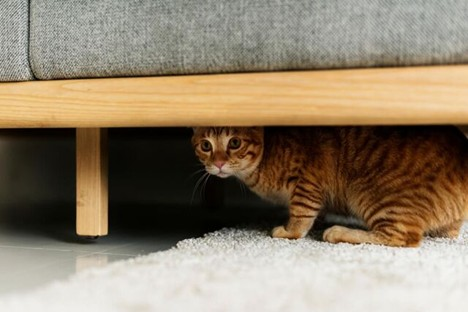
Correction interrupts behavior, but it doesn’t change the emotional state behind it. A dog barking because they are overstimulated doesn’t just calm down because they were told “quiet.” A cat hiding from stress doesn’t relax because they were pulled out.
The behavior pauses.
The tension stays.
Over time, this creates a loop:
Behavior → Correction → Pause → Behavior again
Your pet learns to watch you.
You learn to manage them.
No one truly relaxes.
You start to feel like a referee instead of a companion.
Your pet starts to feel like they’re always in trouble.
The house feels busy even when nothing is happening.
This is where many people begin to lose confidence. They try harder. They read more. They wonder if they’re doing something wrong. The question quietly forms:
Why can’t my home just feel calm?

Calm Is Not Obedience
A calm pet is not one who obeys instantly.
A calm pet is one who feels safe enough to rest.
Safety doesn’t come from constant direction.
It comes from predictability.
When a pet knows:
- Morning always starts the same way
- Activity comes at familiar times
- Evenings always wind down
Their brain stops bracing.
Routine answers the question every animal is constantly asking:
“What happens next?”
When that question is answered, the nervous system softens. Breathing slows. Muscles relax. Behavior follows.
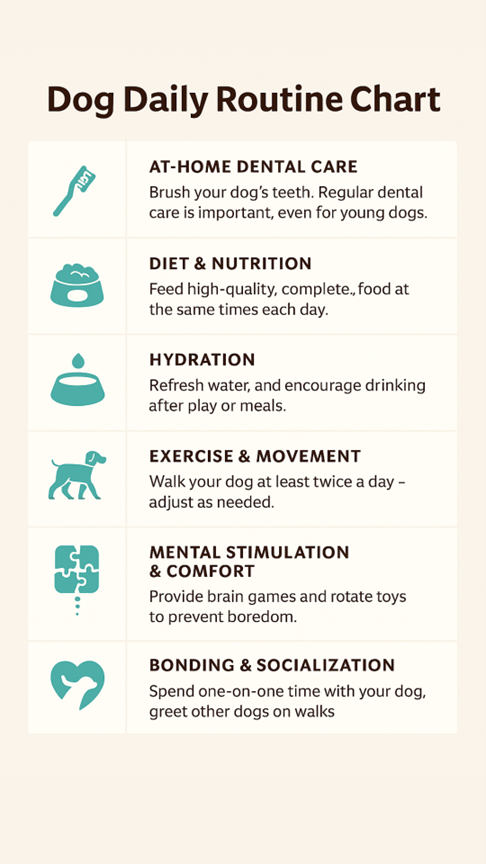
This is why a calming daily routine for pets works so well. It doesn’t force change. It creates an environment where calm becomes natural.
“Normal or Not? What Your Pet’s Behavior Is Really Saying”
Instead of reacting to every sound, your pet begins to observe.
Instead of pacing, they begin to settle.
Instead of creating noise, they begin to trust.
Not because they are trying harder.
Because they finally feel safe enough to stop trying at all.
What a Calm Routine Actually Does
A routine doesn’t remove your pet’s personality.
It removes uncertainty.
It gives energy a place to go.
It gives rest permission to happen.
It gives your pet a sense of time.
And it gives you clarity.
You begin to recognize what is normal for your pet.
You can tell the difference between a tired day and a stressed one.
You stop guessing.

This is the foundation of a peaceful home with pets.
Not control.
Not perfection.
Just rhythm.
“The Daily Calm Routine That Reduces Barking, Chewing, and Chaos”
The Shape of a Calm Day
A calm day isn’t rigid.
It’s familiar.
| Time of Day | Focus | Purpose |
| Morning | Wake, potty, food, light movement | Sets emotional tone |
| Midday | Rest with brief stimulation | Prevents energy buildup |
| Evening | Activity + connection | Releases stress |
| Night | Wind-down ritual | Signals safety |
The goal isn’t perfection.
The goal is emotional predictability.
When time itself becomes predictable, your pet no longer has to manage uncertainty with behavior.
They begin to flow with the day.
“From Loud to Livable: What a Peaceful Day With Your Pet Looks Like”
Morning: Where Calm Begins
Mornings set the tone for everything that follows.
In a loud home, mornings begin with urgency. Barking at movement. Pacing near the door. A rush of energy before anyone is fully awake.
In a calm home, mornings are familiar.

Your pet wakes. Stretches. Moves through a pattern they recognize.
Potty.
Food.
A short walk or play session.
Even five minutes of structure tells your pet:
The world is in order.
They don’t have to guess what’s coming.
They don’t have to pace.
They can exhale.
This is often where barking and restlessness begin to fade.
You feel it too.
The day begins without a jolt.
Midday: Energy That Doesn’t Boil Over
Many behavior problems don’t appear in the morning. They show up later—when unspent energy meets frustration.
In chaotic homes, midday is often a long stretch of nothing. Pets nap lightly. They stay half-alert. By late afternoon, tension builds. You can almost feel the evening storm forming.
In a calm home, midday has gentle shape.
There is rest, but also a small release. A short walk. A puzzle toy. Five minutes of play. A window perch for cats. Something that quietly says:
You’re seen. You’re engaged. You don’t have to invent excitement.
This isn’t about wearing your pet out. It’s about preventing energy from piling up. When stimulation arrives in small, predictable moments, your pet doesn’t have to hold it all inside.
They rest more deeply because they trust another moment of movement will come.
This is how a routine prevents chaos before it begins.
Evening: Where Chaos Used to Live
For many homes, evening is the hardest part of the day. Everyone is tired. Pets feel the shift. This is when barking, chewing, and pacing tend to peak.
In a loud home, evenings feel unpredictable. Energy has nowhere to go. Pets create their own stimulation.
In a calm home, evenings follow a simple rhythm:
Activity first.
Then food.
Then calm.
Movement comes before rest is expected. Energy is released before stillness is required.
This order changes everything.
When a dog has walked or played before dinner, they don’t need to bark at every sound. When a cat has chased a toy before the house quiets, they don’t need to race the hallway at midnight.
The room softens.
Movement slows.
You stop managing every moment.
“How to Reset a Hyper or Anxious Pet Without Constant Corrections”
Evenings become something you look forward to instead of something you survive.
Night: Closing the Day Gently
In chaotic homes, nights feel uncertain. Pets roam. Wakeups happen without warning. Sleep is light.
In calm homes, the day closes the same way it began—with predictability.
Lights dim.
Voices lower.
The same final potty or check.
A treat in a familiar place.
This isn’t training.
It’s signaling.
You are telling your pet’s body:
Nothing else is coming.
Over time, many pets begin to wind down before you even ask. They head toward their bed. They yawn. They settle.
They aren’t being obedient.
They’re being reassured.
What Changes When Days Make Sense
| Loud Home | Calm Home |
| Constant correction | Natural settling |
| Reactive behavior | Predictable behavior |
| Owner fatigue | Owner ease |
| Pet anxiety | Pet security |
Nothing magical happened.
The day simply gained a rhythm.
This is what it means to create a peaceful home with pets. Not by controlling every behavior, but by shaping time itself.
Why This Feels So Different
A calm day doesn’t feel strict.
It feels supportive.
Your pet isn’t guessing anymore.
They aren’t scanning for what’s next.
They aren’t creating noise to manage uncertainty.
They know:
Morning has a beginning.
Evening has an ending.
Rest is safe.
And when a pet feels safe, behavior softens on its own.
A routine is powerful, but it is not a substitute for medical or behavioral care when something is truly wrong.
If your pet shows:
- Sudden personality changes
- Loss of appetite lasting more than a day
- Signs of pain
- Aggression that feels out of character
- Withdrawal that doesn’t improve
Those are signals to consult a veterinarian or qualified behavior professional.
Routine builds stability.
Professional care protects health.
Together, they create real peace of mind.
You Can Build This
A peaceful day isn’t a personality trait.
It’s a structure.
You don’t need a perfectly trained pet.
You need a day your pet can understand.
That is what From Chaos to Calm is about.
Not perfection.
Not silence.
Not control.
Just rhythm.
A rhythm that lets your pet relax.
A rhythm that lets you breathe.
A rhythm that turns noise into flow.
And once you build it, calm stops being something you chase.
It becomes something you live.
My Pets Routine participates in an Affiliate Advertising program designed to provide a means for us to earn advertising fees by advertising and linking to Affiliate Partners.