
 By
Kelley Kelly
By
Kelley Kelly

Welcoming a Green Iguana into your home is a significant undertaking that shifts the dynamic of a household from standard pet ownership to something more akin to maintaining a small, living prehistoric ecosystem. Unlike the relatively straightforward needs of a puppy or kitten, an iguana requires a meticulously calibrated environment where temperature, humidity, and light spectrums are managed with scientific precision. These reptiles are not merely pets but are complex, sentient beings that can grow to impressive lengths and live for nearly two decades when their “Routine to Thrive” is properly established. This third pillar article for mypetsroutine.com explores the essential requirements for introducing an iguana, emphasizing that success with these arboreal herbivores depends entirely on the owner’s commitment to replicating a tropical canopy within a domestic setting. From the initial arrival to the long-term management of their unique dietary and behavioral needs, we will cover the foundational elements required to foster a healthy and interactive relationship with your new lizard companion.
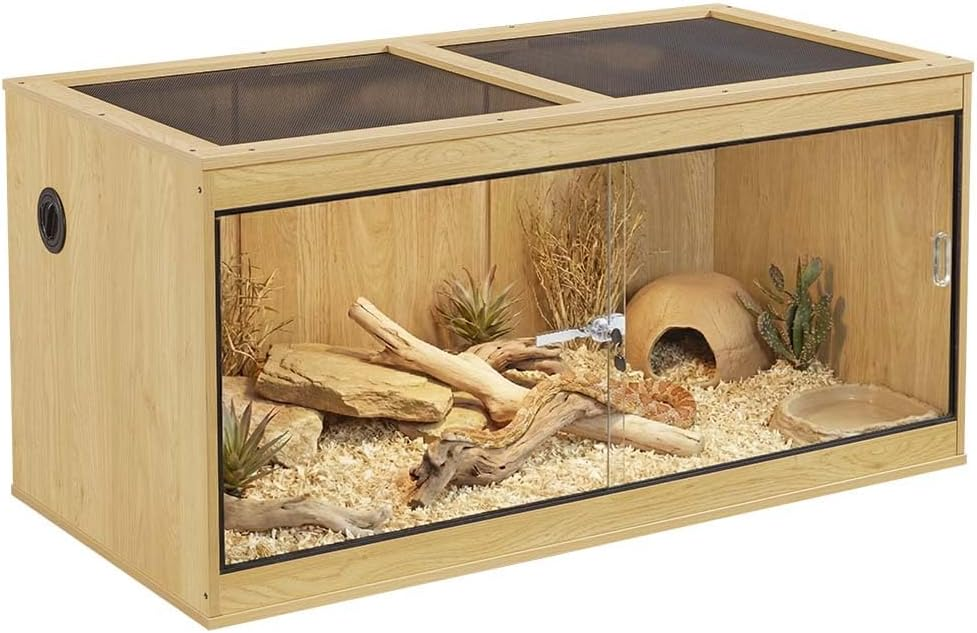
Preparing for an iguana’s arrival must begin with the understanding that these animals grow rapidly and require vast amounts of vertical space. A common mistake among new keepers is starting with a small glass aquarium that the iguana will outgrow within months. Instead, you should aim for a large, well-ventilated enclosure that prioritizes height over floor space, as iguanas are naturally arboreal and feel most secure when they are perched high above the ground. This enclosure must be equipped with sturdy, non-toxic climbing branches and shelves that can support the weight of a growing lizard. Before the iguana even enters the home, the environment must be “pre-flighted” by running the heating and lighting systems for at least forty-eight hours to ensure that the thermal gradients are stable. Iguanas are ectothermic, meaning they rely entirely on their surroundings to regulate their internal body temperature, making a failure in heating equipment a life-threatening emergency.
The most technical aspect of iguana ownership involves the lighting and heating array, which must provide both UVA and UVB radiation. Without high-output UVB lighting, an iguana cannot synthesize vitamin D3, which is required for the absorption of calcium from their diet; a deficiency in this area leads to Metabolic Bone Disease, a painful and often fatal condition. You must provide a clear basking spot where temperatures reach between ninety-five and one hundred degrees Fahrenheit, while the cooler end of the enclosure should remain in the low eighties. Humidity is equally critical and should be maintained between seventy and eighty percent to support healthy skin shedding and respiratory function. Achieving this often requires a combination of automated misting systems, large water basins, and daily manual spraying. By creating this complex atmospheric routine, you provide the biological foundation upon which the rest of the iguana’s health depends.

When you finally bring your iguana home, the transition should be as low-stress as possible. Iguanas are naturally wary of predators and will likely view a new owner and a new room as a potential threat. Upon arrival, place the iguana directly into its prepared enclosure and resist the urge to handle it for at least the first week. During this acclimation period, your only interactions should involve changing food and water and performing light cleaning. This allows the iguana to establish its territory and realize that the presence of a human does not equate to a physical attack. You may notice behaviors such as “head bobbing” or the extension of the dewlap under their chin, which are territorial displays. By respecting these boundaries early on, you build a “Routine of Safety” that makes future taming and handling much easier as the animal learns to associate your presence with the arrival of fresh greens rather than fear.
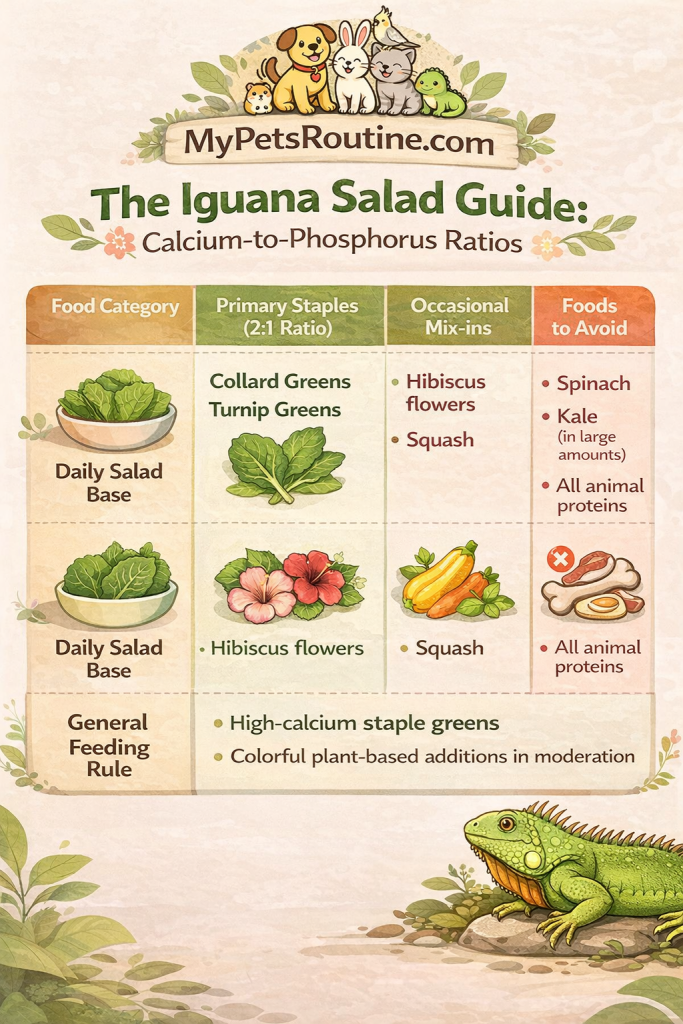
Nutrition for an iguana is a lifelong exercise in botanical variety and chemical balance. They are strict herbivores, and their diet must consist almost entirely of leafy greens, vegetables, and small amounts of fruit. The most critical factor in their diet is the calcium-to-phosphorus ratio, which should ideally be two-to-one in favor of calcium. The base of every meal should consist of calcium-rich staples such as collard greens, mustard greens, turnip greens, and dandelion greens. These should be supplemented with shredded carrots, green beans, and squash to provide a variety of textures and vitamins. It is vital to avoid feeding an iguana animal protein, insects, or cat and dog food, as their kidneys are not evolved to process these materials and doing so will lead to premature organ failure. Every meal should be finely chopped to prevent choking and lightly dusted with a high-quality calcium powder that does not contain added phosphorus.
Treats offer a way to enrich the iguana’s life and can be used as a bridge for taming, but they must be managed carefully. Fruits like papaya, mango, and berries are highly prized by iguanas and can be offered by hand or via tongs once the animal is comfortable with your presence. However, because fruits are high in sugar and often low in calcium, they should never exceed ten percent of the total daily intake. Using these high-value items specifically during taming sessions encourages the iguana to approach you voluntarily, transforming a “fight or flight” response into a “foraging” response. Over time, this positive reinforcement allows for the development of a unique bond where the iguana may even seek out interaction or allow for gentle head scratches, though it is important to remember that they are never truly “domesticated” in the way a dog or cat is.
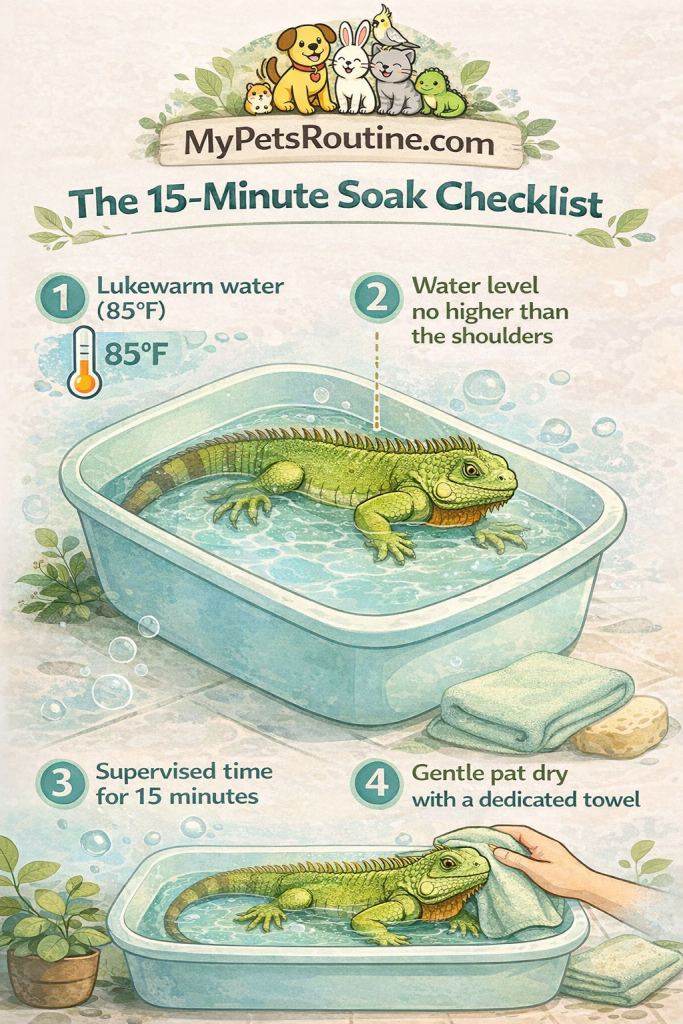
Hydration and hygiene are inextricably linked in the world of reptile care. While an iguana will drink from a bowl, they often prefer to lap moisture from leaves or absorb it through their skin during soaking. Providing a large, shallow water basin within the enclosure is essential, but you must be prepared for the fact that many iguanas prefer to use their water bowl as a primary bathroom. This behavior is actually a benefit for the owner, as it makes the daily cleaning routine more predictable, but it requires that the water be changed immediately and the bowl disinfected whenever it is soiled. Additionally, providing your iguana with a fifteen-minute soak in a bathtub of lukewarm water two or three times a week aids in hydration, assists with the shedding of skin, and encourages healthy bowel movements. This soaking routine is one of the most effective ways to keep the animal clean and prevent the buildup of bacteria in the enclosure.
Play and rest for an iguana are centered around their natural instinct to bask and explore their vertical territory. Unlike mammals, an iguana does not “play” with toys in a traditional sense, but they do benefit immensely from environmental enrichment. This can include rotating the placement of branches, introducing safe, edible plants like hibiscus into the enclosure, or providing “climbing ladders” made of natural rope. Rest is equally important and must be strictly regulated by a twelve-hour light and dark cycle. Using a timer to ensure the lights go off at the same time every night is crucial for their circadian rhythm. During the dark hours, the temperature should not drop below seventy-five degrees Fahrenheit; if your home is cooler than this, a ceramic heat emitter that provides warmth without light is necessary to allow the iguana to sleep undisturbed while maintaining its metabolic rate.
This Article contains affiliate links. If you purchase through these links, My Pets Routine may earn a commission at no additional cost to you. We only recommend gear we trust and have carefully researched.
Check out Current Price and Availability at Amazon
Proper bathroom habits and general hygiene are also a matter of public health for the human members of the family. Like most reptiles, iguanas can carry Salmonella as a natural part of their intestinal flora. While this does not harm the lizard, it can cause illness in humans if proper sanitation is not followed. You should establish a strict routine of washing your hands with antibacterial soap after every interaction with the iguana or its enclosure. All cleaning tools, food bowls, and bathtubs used for the iguana should be dedicated solely to the animal and disinfected regularly with a reptile-safe cleanser or a diluted bleach solution. By integrating these safety steps into your daily “Routine to Thrive,” you ensure that the joy of keeping a magnificent tropical reptile is not overshadowed by health concerns, creating a safe environment for both the pet and the people who care for it.
Ultimately, the goal of introducing an iguana as a new pet is to move from a state of management to a state of flourishing. The initial months are the most demanding, requiring constant monitoring of equipment and the establishment of a rigorous dietary and cleaning schedule. However, as the iguana grows and begins to recognize the patterns of its new life, the rewards become apparent. There is a profound sense of accomplishment in watching a sensitive, exotic creature thrive under your care, displaying its natural behaviors and striking colors in a habitat you have painstakingly built. By following the detailed protocols at mypetsroutine.com, you are ensuring that your “green dinosaur” has every opportunity to live a long, healthy, and enriched life as a central part of your household.
MyPetsRoutine.com participates in the Amazon Services LLC Associates Program, an affiliate advertising program designed to provide a means for sites to earn advertising fees by advertising and linking to Amazon.com.