
 By
Kelley Kelly
By
Kelley Kelly

Welcoming a cockatiel into your home is a decision that transforms the very acoustics of your living space, replacing silence with a repertoire of melodic whistles, curious chirps, and the occasional rhythmic tapping of a beak against a favorite perch. These charismatic members of the cockatoo family are renowned for their expressive crests and orange cheek patches, but beneath their charming exterior lies a highly social, intelligent avian mind that requires a sophisticated “Routine to Thrive” to avoid the pitfalls of boredom and feather-destructive behaviors. Unlike a dog or a cat, a cockatiel experiences the world through the lens of a prey species with an incredibly sensitive respiratory system and a deep-seated need for flock companionship. This final pillar article for mypetsroutine.com will serve as your definitive roadmap for introducing a cockatiel, focusing on how to bridge the gap between their wild, Australian outback origins and the comforts of a modern indoor lifestyle. We will explore the technical requirements of avian housing, the evolution of the psittacine diet, the necessity of uninterrupted sleep, and the patient process of building a bond that can last upwards of twenty years.
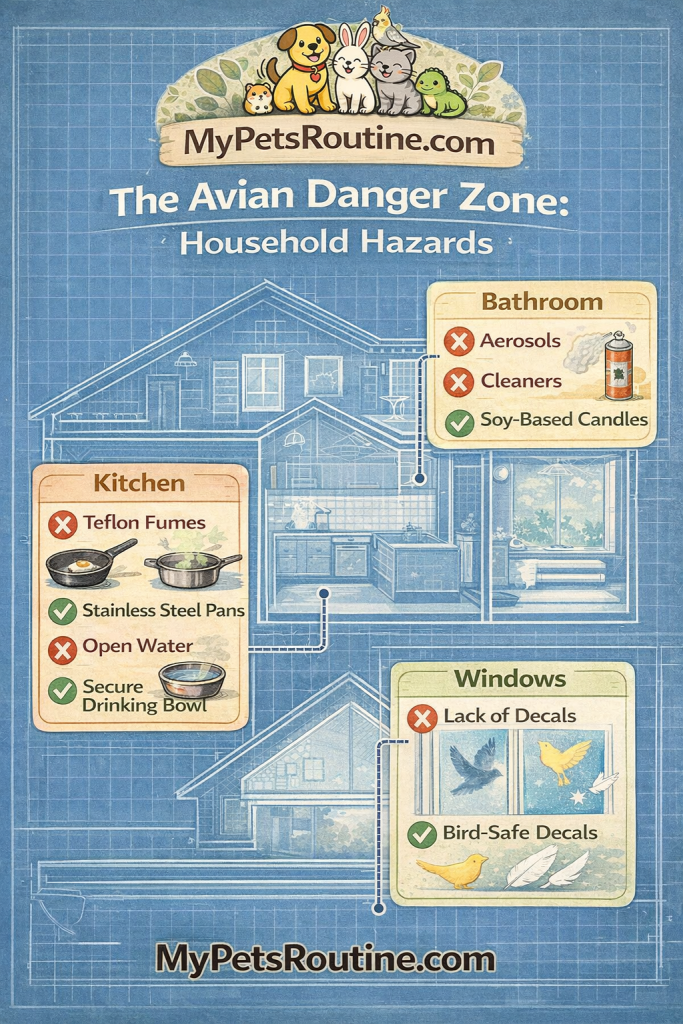
The foundational element of a cockatiel’s new life is their enclosure, which should be viewed not as a cage but as a secure sanctuary that facilitates natural movement and exploration. When selecting a flight cage, you must prioritize horizontal width over vertical height, as birds fly across rather than straight up. A suitable cage must be large enough for the cockatiel to fully extend and flap its wings without touching the sides or any accessories, with bar spacing no wider than five-eighths of an inch to prevent the bird from accidentally getting its head stuck. The placement of this sanctuary is equally critical; it should be situated in a high-traffic area of the home where the bird can feel like part of the “human flock,” yet away from the kitchen. The kitchen is the most dangerous room in the house for a cockatiel due to the presence of non-stick cookware. When overheated, Teflon and other polytetrafluoroethylene coatings release odorless, colorless fumes that are instantaneously fatal to birds. By placing the cage in a sunlit corner of a living room or a dedicated bird room, you provide a view of the household’s daily rhythms while protecting their delicate lungs from household toxins.
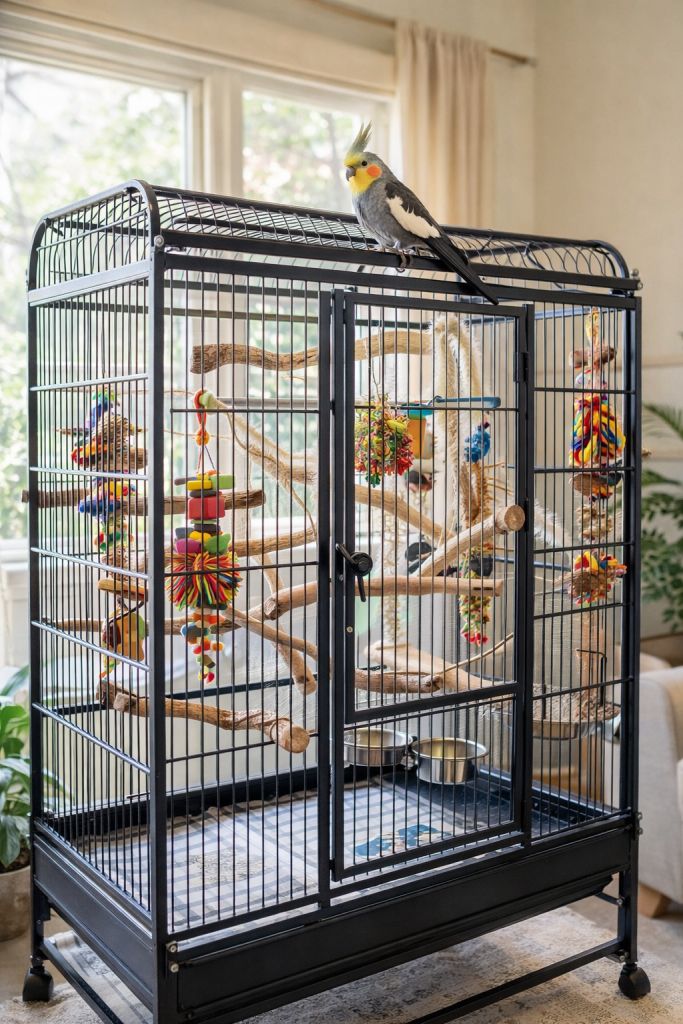
Equipping the cage requires a thoughtful selection of perches and toys that cater to the cockatiel’s physical and mental health. You should avoid the uniform, smooth dowel perches that often come with standard cages, as standing on a consistent diameter can lead to pressure sores and a condition known as bumblefoot. Instead, provide a variety of natural fruitwood or grapevine perches with varying textures and thicknesses, which naturally exercise the muscles of the feet and keep the nails worn down. Foraging and shredding toys are non-negotiable for a thriving bird; in the wild, cockatiels spend a significant portion of their day searching for food and stripping bark. You can mimic this by providing toys made of palm leaves, balsa wood, or seagrass, hiding small treats within them to encourage the bird to work for its reward. Furthermore, every cage must have at least three stainless steel bowls: one for high-quality pellets, one for fresh water, and one for a daily “chop” of fresh vegetables.
The arrival of your cockatiel and the subsequent introductory period must be governed by a philosophy of slow, steady progress and low-pressure observation. When you first bring the bird home, place the carrier inside or directly against the open cage door and allow them to hop in at their own pace. For the first forty-eight to seventy-two hours, your primary goal is to exist near the cage without demanding interaction. You can sit nearby and read aloud or talk in a soft, soothing voice, which helps the bird habituate to your presence and vocal patterns. Cockatiels are masters of reading body language, and they will be watching you to see if you are a predator or a potential flock mate. Avoid making direct, prolonged eye contact or reaching into the cage quickly, as these are viewed as aggressive gestures. Once the bird begins to eat, drink, and preen in your presence, you have successfully established the first layer of trust, moving the “Routine to Thrive” from simple survival to social integration.
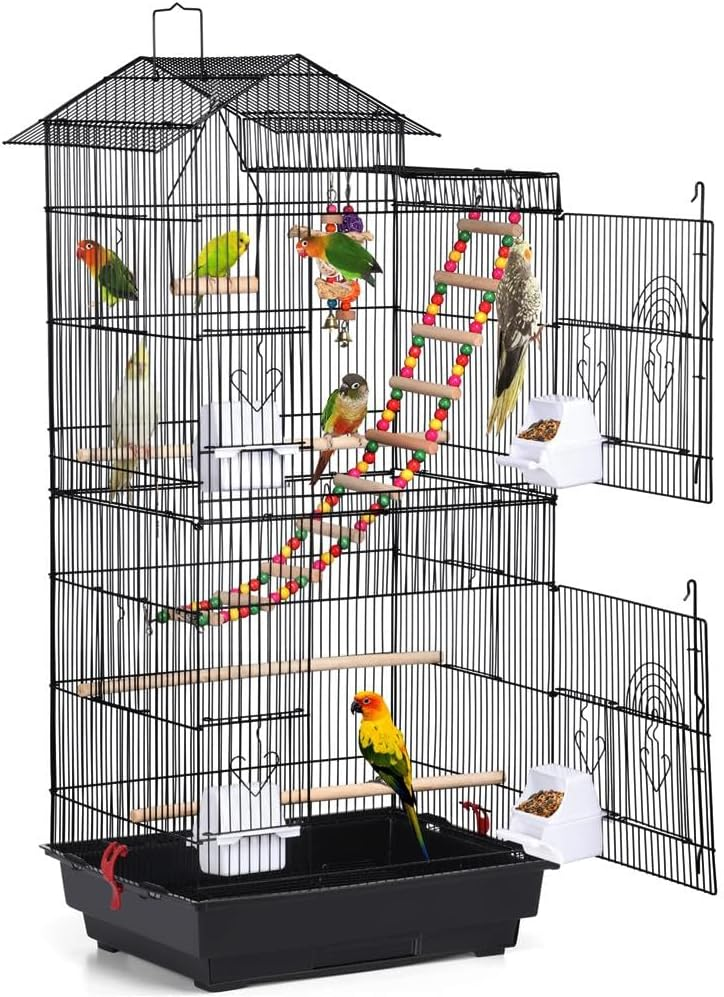
Yaheetech 39″ Roof Top Bird Cage for Cockatiels
Check out Current Price and Availability at Amazon
Nutrition for a cockatiel has evolved significantly beyond the traditional “seed-only” diets that were common in previous decades. While cockatiels are primarily ground foragers who eat seeds in the wild, a domestic bird that does not fly miles a day will quickly become obese and develop fatty liver disease on a strictly seed-based diet. A modern, healthy routine should center on a high-quality, organic formulated pellet, which should make up about sixty to seventy percent of their caloric intake. The remaining portion of their diet must consist of a daily “chop,” which is a finely diced mixture of nutrient-dense vegetables like kale, broccoli, carrots, sweet potatoes, and bell peppers. You should introduce these fresh foods early and consistently, as cockatiels can be notoriously “picky” eaters if they aren’t exposed to variety during their formative months. While a small amount of seed can be offered in the evening as a comfort food, it should be treated as a supplement rather than a staple.
Table 1: The Cockatiel’s Daily Chop Guide
| Daily Powerhouse Veggies | Occasional Fruit Treats | The Never-Feed List |
| Leafy Greens: Kale, Bok Choy, Dandelion Greens, Swiss Chard | Berries: Blueberries, Raspberries, Strawberries | Toxic: Avocado (specifically the skin and pit), Chocolate |
| Orange Veggies: Steamed Sweet Potato, Butternut Squash, Shredded Carrots | Tree Fruits: Apple (flesh only; no seeds), Pear, Peach (no pit) | Chemicals: Caffeine, Alcohol, High-salt or High-sugar snacks |
| Garden Variety: Broccoli florets, Bell Peppers (all colors), Snap Peas | Tropicals: Papaya, Mango, Banana slices, Melon | Alliums: Onions, Garlic, Leeks, Scallions (can cause anemia) |
| Grains/Proteins: Cooked Quinoa, Sprouted Mung Beans | Melons: Cantaloupe, Watermelon (remove large seeds) | Misc: Fruit seeds/pits (cyanide risk), Uncooked beans |
Treats, particularly sprays of golden millet, are the most powerful tool in your training arsenal. Millet is often called “birdie candy,” and because cockatiels find it irresistible, it should be reserved exclusively for taming and positive reinforcement training. When the bird is comfortable taking a sprig of millet from your hand through the cage bars, you can begin the process of “target training” or teaching the “step-up” command. By associating your hand and specific verbal cues with the arrival of millet, you transform the bird’s natural fear of hands into an eager anticipation of a reward. This positive reinforcement creates a language of communication between you and your bird, allowing for a more interactive and less stressful relationship. You must be careful, however, not to overfeed treats, as a cockatiel who fills up on millet will often ignore their nutritious pellets and vegetables, leading to nutritional deficiencies over time.
Hygiene and bathroom management for a cockatiel are relatively straightforward, though they require daily attention to prevent the buildup of bacteria and dust. Cockatiels are “powder down” birds, meaning they produce a fine white dust that helps waterproof their feathers, which can accumulate on surfaces near the cage. To manage this and keep the bird’s skin healthy, you should offer a bath two or three times a week. This can be done by providing a shallow dish of room-temperature water or by using a fine-mist spray bottle to simulate a gentle rain shower. Many cockatiels will respond to the mist by fluffing their feathers and performing a “rain dance,” which is both a delight to watch and essential for their feather condition. Regarding bathroom habits, cockatiels have a fast metabolism and will eliminate every fifteen to twenty minutes. While you can “potty train” a bird to go on command over a specific waste bin, it is often more practical to simply use bird-safe paper liners at the bottom of the cage and replace them daily to monitor the health of their droppings, which are a primary indicator of their internal well-being.
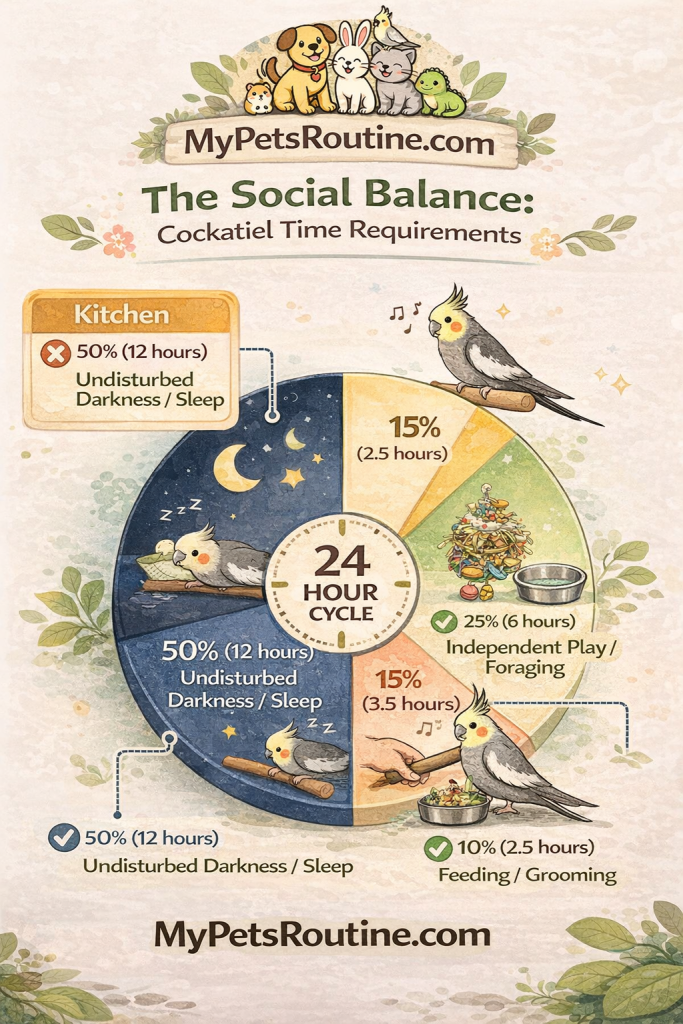
The concepts of play and rest for a cockatiel are governed by a strict biological clock that requires more sleep than most humans realize. A cockatiel needs between ten and twelve hours of total darkness and quiet every night to maintain their immune system and regulate their hormones. Without this “long-night” routine, cockatiels can become chronically stressed, leading to irritability, excessive screaming, or even chronic egg-laying in females. To facilitate this, many owners use a dedicated “sleep cage” in a quiet room or use a heavy, breathable cage cover to signal that the day has ended. During their waking hours, however, the cockatiel requires vigorous mental and physical play. Out-of-cage time is essential for their respiratory health, as it allows them to fly and fully expand their air sacs. You must ensure the room is “bird-proofed” during these sessions, which includes covering mirrors, closing toilet lids, and ensuring all ceiling fans are turned off.
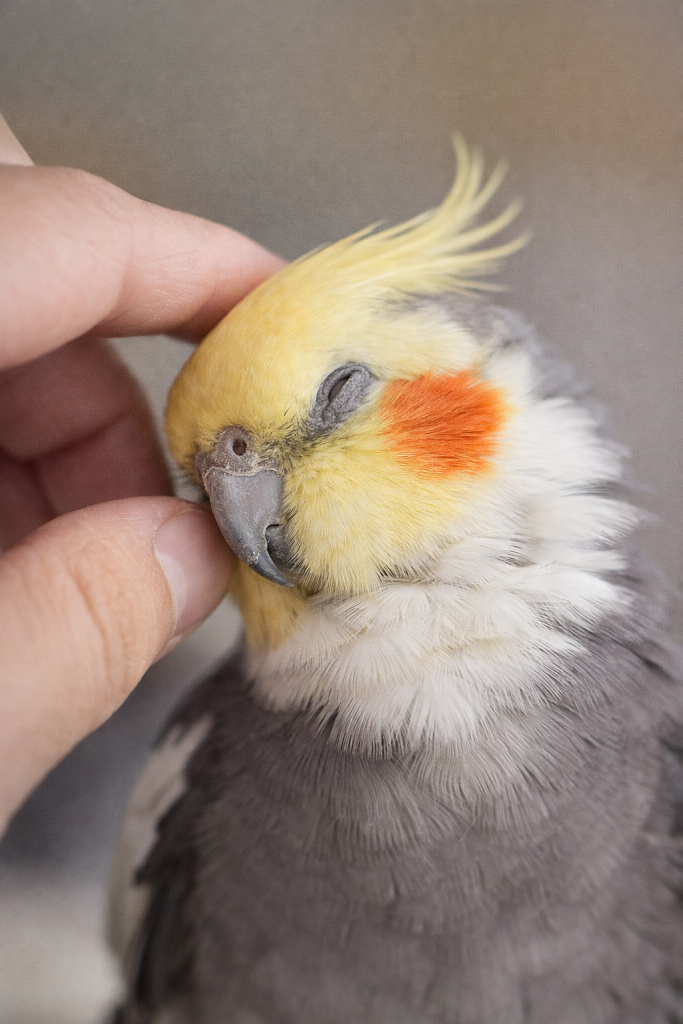
As you integrate these practices into your “Routine to Thrive,” you will find that the cockatiel is a remarkably responsive and affectionate companion. They communicate through a complex language of crest positions; a flat crest indicates a relaxed or submissive state, while a fully upright crest signals excitement or surprise. One of the most rewarding moments in bird ownership is the first time your cockatiel bows its head toward you, fluffing its head feathers in a request for “scritches.” This act of vulnerability is a sign of deep trust and bonding. By maintaining a consistent schedule of nutritious meals, mental challenges, and predictable rest, you are not just keeping a bird in a cage; you are fostering the spirit of a highly intelligent social creature. As you document and share these steps on mypetsroutine.com, you are providing the essential knowledge that turns a beautiful bird into a beloved, long-lived member of the family flock.