
 By
Kelley Kelly
A healthy iguana diet starts with one simple truth that many new owners miss at first: iguanas are not miniature dinosaurs looking for insects, meat, eggs, or pet food. Green iguanas are herbivorous reptiles, and more specifically, they are folivores, which means their bodies are designed around eating leaves. In the wild, iguanas feed mainly on leaves from trees and vines, along with smaller amounts of flowers and fruit. Their digestive system is built for fibrous plant matter, and their hindgut contains microbes that help ferment those high fiber foods so nutrients can be absorbed and used. That is why the right iguana salad is not just a meal. It is part of the animal’s entire digestive and metabolic health.
For beginner iguana owners, diet can feel confusing because so many foods look “natural” or “healthy” on the surface. Fruit seems harmless. Lettuce looks green. Insects are sold in reptile stores. Dog and cat foods are high in protein, so they may appear useful for growth. Unfortunately, these assumptions can lead to real health problems over time. VCA Canada explains that improper diet contributes to many iguana health issues, some of which can become life threatening, and their current feeding guidance places dark green leafy vegetables at the center of the diet.
Why Iguanas Need a Plant Based Diet
The best way to understand iguana food is to think like a leaf eating reptile, not like a dog, cat, bird, or bearded dragon. Iguanas have evolved to use fibrous vegetation. Their gut is not designed for frequent meals of insects, pinky mice, eggs, meat, dog food, or cat food. Merck Veterinary Manual notes that herbivorous lizards are adapted to ferment plant fiber in enlarged hindguts, and that insects, vertebrate prey, and diets high in fruit are not advised for herbivores because these foods are low in fiber and inappropriate for their digestive design.
This matters because diet affects far more than appetite. A young iguana that grows quickly needs a diet that supports bone development, muscle function, hydration, digestion, and mineral balance. An adult iguana needs a diet that maintains body condition without pushing too much sugar, phosphorus, fat, or protein into the system. Feeding animal protein too often can create a burden that the iguana’s body is not meant to handle. VCA Canada states that foods high in animal based protein, including crickets, mealworms, pinky mice, tofu, and hard boiled eggs, are generally too high in protein for iguanas to eat frequently, and dog and cat food should not be fed because it contains too much protein, vitamin D, phosphorus, and fat.
A good iguana diet is therefore not built around “treat variety.” It is built around leafy plant nutrition. Variety still matters, but it should be variety within the right categories: calcium rich greens, safe vegetables, limited fruit, clean water, and veterinarian guided supplementation.
The Foundation of an Iguana Diet: Dark Leafy Greens
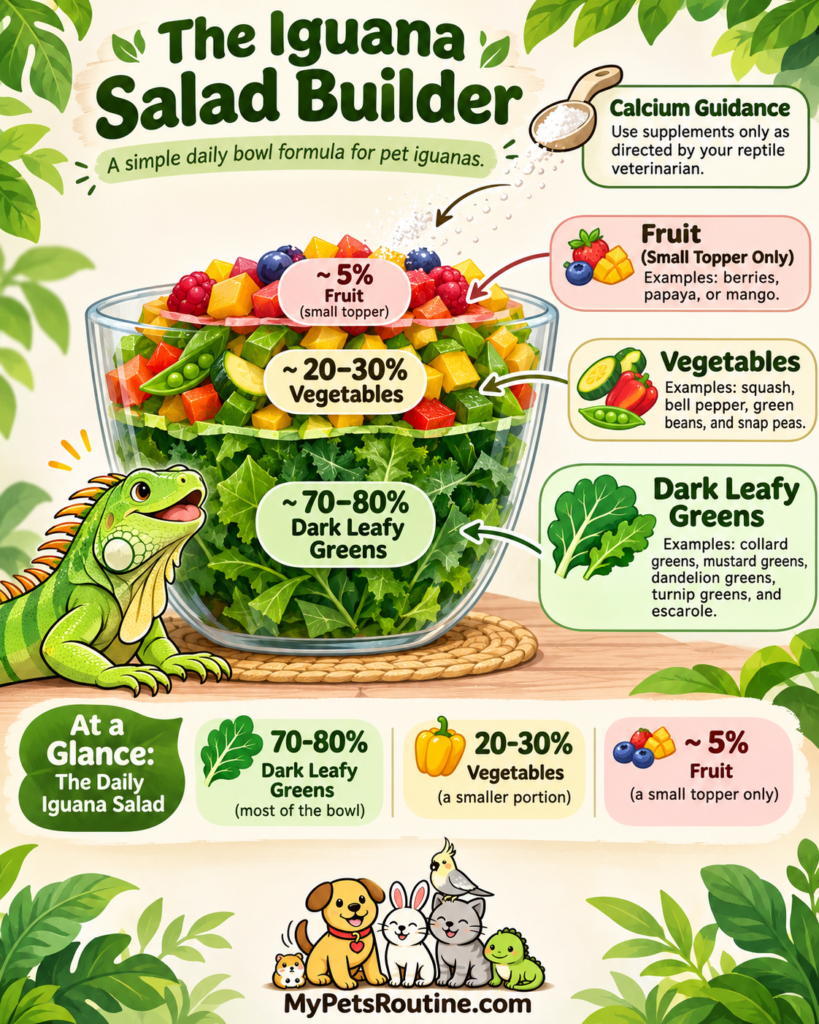
If you remember only one feeding rule, remember this: most of an iguana’s daily food should be dark green leafy vegetables. VCA Canada recommends that most of the diet, about 80 to 90 percent, should be dark green leafy vegetables, while fruit should make up less than 20 percent. The same guidance notes that calcium rich vegetables such as collard greens, mustard greens, turnip greens, dandelion greens, escarole, bok choy, kale, parsley, Swiss chard, romaine, kohlrabi, beet greens, and alfalfa hay may be included, although some of these should be rotated carefully rather than fed as the only green every day.
Dark leafy greens are valuable because they bring fiber, moisture, vitamins, and minerals into the iguana’s daily routine. They also give the salad the bulk and texture an herbivorous lizard needs. A bowl filled mostly with fruit may look colorful, but it does not provide the same nutritional structure as a bowl anchored by leafy greens. Fruit is often water rich and lower in the nutrients an iguana needs most, which is why it should be treated more like a small topping than the main event.
Choosing Staple Greens With Variety in Mind
A beginner friendly approach is to rotate several good greens rather than relying on one favorite. Collard greens are often used as a dependable base because they are sturdy, nutrient dense, and widely available. Mustard greens and turnip greens can bring variety and strong leafy texture. Dandelion greens are excellent when sourced safely from pesticide free areas or purchased as food grade greens. Escarole and romaine can add moisture and crunch, though romaine should not replace more nutrient dense greens as the primary base.
Some greens deserve more caution. VCA Canada notes that Swiss chard, spinach, and beet greens contain compounds that can interfere with calcium and trace mineral absorption when fed exclusively. It also notes that cabbage, kale, and mustard greens contain goitrogens, which can affect thyroid function when fed improperly or in excess. The practical takeaway is not that every one of these foods is forbidden. It is that repetition is the enemy. A varied iguana salad is safer than a bowl that looks exactly the same every day.
Vegetables as Support, Not the Whole Meal
Vegetables can make an iguana salad more appealing and nutritionally diverse, but they should support the greens rather than replace them. VCA Canada lists vegetables such as squash, bell peppers, green beans, sprouts, sweet potato, parsnips, okra, cucumber, asparagus, mushrooms, carrots, peas, corn, cactus, and broccoli as options that can make up an additional portion of an adult iguana’s diet.
The most useful vegetables tend to be colorful, varied, and chopped into manageable pieces. Squash adds moisture and texture. Bell pepper brings color and scent. Green beans and okra add plant variety. Carrot and sweet potato can be used in small shreds, but because they are richer and sweeter than leafy greens, they should not dominate the bowl. A salad that is mostly grated carrot, corn, peas, and fruit may look fresh, but it is not the same as a leaf focused iguana diet.
Preparation also matters. VCA Canada notes that vegetables can be offered cooked or raw, but raw is preferred because cooking removes many essential nutrients. Produce should be thoroughly washed to remove debris and pesticides, and edible flowers should only be offered when you are certain they have not been treated with chemicals.
Fruit Should Be Limited, Even When Your Iguana Loves It
Many iguanas love fruit, and that is exactly why new owners accidentally overfeed it. Mango, banana, berries, melon, pear, apple, grapes, figs, and peaches can all attract an iguana’s attention quickly. The problem is that preference is not the same as nutritional need. VCA Canada states that fruit should make up only a small percentage of an iguana’s total diet, less than 20 percent, and describes fruit as best used sparingly as a topping over vegetables.
A helpful way to think about fruit is to imagine it as the scent and color that encourages interest in the salad, not the substance of the meal. A few small pieces mixed through a bowl can help a hesitant iguana investigate new greens. A fruit heavy bowl, however, encourages selective eating. The iguana may pick out the sweet pieces and leave behind the foods that actually support long term health.
For a new pet owner, this can be emotionally tricky. You want your iguana to eat. You want to see excitement at mealtime. But if excitement only happens when the bowl is full of banana and grapes, the diet is drifting in the wrong direction. A healthier goal is to use fruit strategically while training the iguana to recognize a chopped leafy salad as normal daily food.
Calcium and Phosphorus: Why Mineral Balance Matters
Calcium is one of the most important topics in iguana nutrition because it connects directly to bone health, muscle function, growth, and overall reptile wellness. VCA Canada explains that iguanas have a higher dietary requirement for calcium than for phosphorus, and it recommends that owners speak with their veterinarian about supplementation because needs vary by age and individual health.
The danger is not just “not enough calcium.” The larger issue is usable calcium. An iguana needs the right diet, appropriate mineral balance, proper UVB exposure, and correct husbandry to use calcium effectively. MSD Veterinary Manual identifies secondary nutritional hyperparathyroidism as the most common bone disease seen in reptile practice and states that it is caused by poor diet, including a low calcium to phosphorus ratio, vitamin D3 deficiency, or husbandry problems such as lack of UVB light and inadequate thermal provision. Clinical signs can include anorexia, lethargy, abnormal walking, swollen or distorted jaw and limb bones, fractures, prolapse, tremors, and other serious symptoms.
This is why iguana feeding cannot be separated from habitat setup. A perfect salad does not compensate for poor UVB lighting. Likewise, strong UVB does not fix a diet built around lettuce, fruit, and animal protein. Bone health in iguanas is the result of diet and environment working together.
Merck Veterinary Manual’s reptile nutrient table lists calcium and phosphorus concentrations for herbivorous reptiles, with calcium shown higher than phosphorus, reinforcing the importance of mineral balance in herbivorous reptile diets. It also notes that vitamin D requirements may be met partly or fully through sunlight or appropriate artificial UV light, while also cautioning that listed dietary vitamin D concentrations are not sufficient to prevent clinical vitamin D deficiency signs in green iguanas.
Supplements Should Be Used Carefully
Calcium powder is commonly used in iguana care, but more is not automatically better. VCA Canada says supplement needs are controversial and age dependent. It notes that many veterinarians recommend calcium powder for young growing iguanas more frequently than for fully grown adults, while adult iguanas may receive calcium once or twice weekly and a multivitamin containing vitamin D less often. Because oversupplementation and undersupplementation can both create problems, the safest plan is to build the diet correctly and then adjust supplements with an experienced reptile veterinarian.
Please enjoy our Kitchen and Cooking tips, some links on this page are affiliate links. If you buy through these links, we may earn a commission at no extra cost to you. This helps support our site and allows us to continue producing helpful Tips and other content.
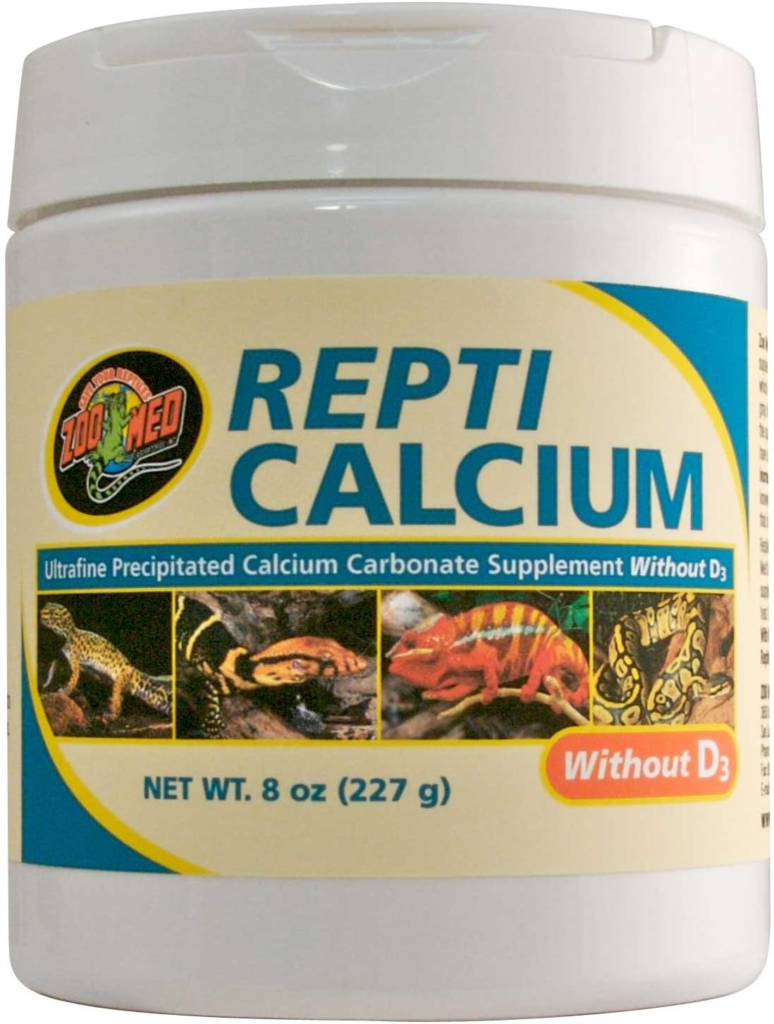
Zoo Med Reptile Calcium Without D3, 8 Ounce
Check Price and Availability on Amazon
Foods Iguanas Should Avoid or Receive Only Rarely
The most common beginner mistake is feeding an iguana like an omnivorous reptile. Crickets, mealworms, eggs, mice, meat, dog food, and cat food are not appropriate routine foods for a green iguana. VCA Canada specifically warns against dog and cat food because of excessive protein, vitamin D, phosphorus, and fat, and Merck Veterinary Manual states that insects, vertebrate prey, and high fruit diets are not advised for herbivorous lizards.
Light watery vegetables are another problem. Iceberg lettuce and celery may make a bowl look full, but they provide very little nutritional value compared with dark leafy greens. VCA Canada specifically advises avoiding nutrient poor light green vegetables such as celery and iceberg or head lettuce because they contain mostly water and few nutrients.
Toxic plants also deserve serious attention, especially if an iguana is allowed supervised time outside the enclosure. Cornell’s poisonous plant resource for iguanas warns that owners need to distinguish between safe and unsafe plants and identifies rhubarb as extremely toxic because of calcium oxalate crystal formation. The same resource advises contacting a reptile veterinarian or emergency reptile veterinarian promptly if an iguana eats something unsafe and develops concerning signs.
How to Feed an Iguana Day to Day
A young iguana usually eats daily, while many adult iguanas can be fed daily or every other day depending on body condition and veterinary advice. VCA Canada notes that overweight adults may need a less frequent schedule, such as every other day or every third day, but this should be handled carefully because reduced appetite can also signal illness.
The daily routine should feel calm and predictable. Offer food in a clean dish, ideally after the enclosure has warmed enough for normal activity and digestion. Chop greens and vegetables into pieces that fit the iguana’s size. Hatchlings and juveniles need finer pieces than large adults. Remove old food before it wilts, spoils, or attracts insects. Wash bowls thoroughly, especially because humid reptile habitats can encourage bacterial growth if food debris is left behind.
Hydration belongs in this conversation too. VCA Canada recommends that fresh clean water always be available and explains that iguanas may drink from the bowl and bathe in it. Because iguanas often eliminate in water bowls while bathing, the bowl should be heavy, hard to tip, cleaned daily, and refreshed consistently. Misting several times a week can also support hydration, especially in colder, drier indoor seasons.
Common Diet Mistakes New Iguana Owners Make
One of the most common mistakes is using fruit to “get the iguana eating” and then never reducing it. This teaches selective feeding and slowly shifts the diet away from the leafy greens that should be the core. Another mistake is relying on iceberg lettuce because it is cheap, easy to find, and technically green. Unfortunately, it does not offer the nutrient density an iguana needs.
A third mistake is assuming that fast growth requires animal protein. This belief has caused many owners to offer insects, eggs, dog food, or cat food to young iguanas. Even though young iguanas may have different growth demands than adults, routine animal protein feeding is not the right beginner strategy. VCA Canada recommends primarily plant material, notes that most veterinarians recommend feeding only plant material to iguanas, and warns that animal based protein foods are generally too high in protein for frequent feeding.
The final mistake is separating diet from lighting. Iguana nutrition depends on UVB exposure, heat, hydration, and calcium balance. MSD Veterinary Manual directly connects poor diet, low calcium to phosphorus balance, vitamin D3 deficiency, lack of UVB light, and inadequate thermal provision with serious metabolic bone disease in reptiles.
When to Ask a Reptile Veterinarian About Diet
Any iguana with poor appetite, weight loss, swelling of the jaw or limbs, weakness, abnormal walking, tremors, lethargy, diarrhea, constipation, or sudden behavior change should be evaluated by a veterinarian experienced with reptiles. Diet changes can help prevent problems, but they are not a substitute for diagnosis once symptoms appear. MSD Veterinary Manual notes that advanced nutritional bone disease may require radiographs, bloodwork, fluid therapy, nutritional support, calcium treatment, and correction of diet and husbandry.
A wellness visit is also the best time to discuss your specific iguana’s age, body condition, growth rate, reproductive status, UVB setup, calcium schedule, and food variety. VCA Canada emphasizes that nutritional needs can vary and recommends discussing an iguana’s specific needs with a veterinarian at wellness visits or annual examinations.
Final Thoughts: Build the Bowl Around Leaves
Feeding an iguana well is not about finding exotic treats or complicated recipes. It is about consistency. A healthy iguana diet begins with dark leafy greens, expands with safe vegetables, uses fruit sparingly, avoids routine animal protein, and supports calcium balance through proper food choices, UVB exposure, hydration, and veterinary guidance.
For new iguana owners, the best daily habit is to look at the food bowl before serving it and ask one question: does this look like a leafy herbivore meal, or does it look like a fruit cup with a few greens mixed in? If the answer is leafy, varied, calcium conscious, and mostly plant based, you are much closer to giving your iguana the diet its body was designed to use.
KitchenandCookingTips.com participates in the Amazon Services LLC Associates Program, an affiliate advertising program designed to provide a means for sites to earn advertising fees by advertising and linking to Amazon.com