 By
Kelley Kelly
By
Kelley Kelly
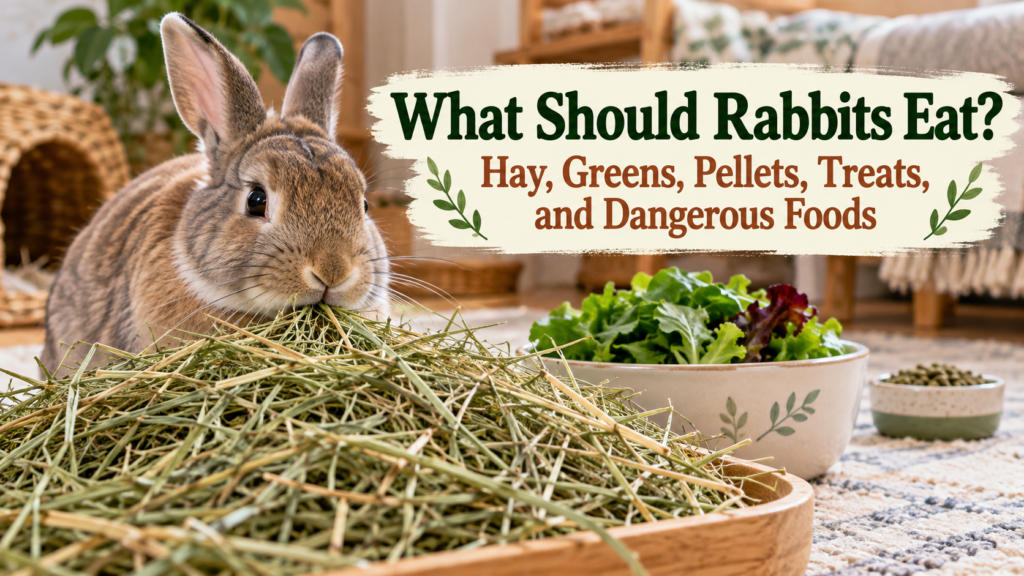
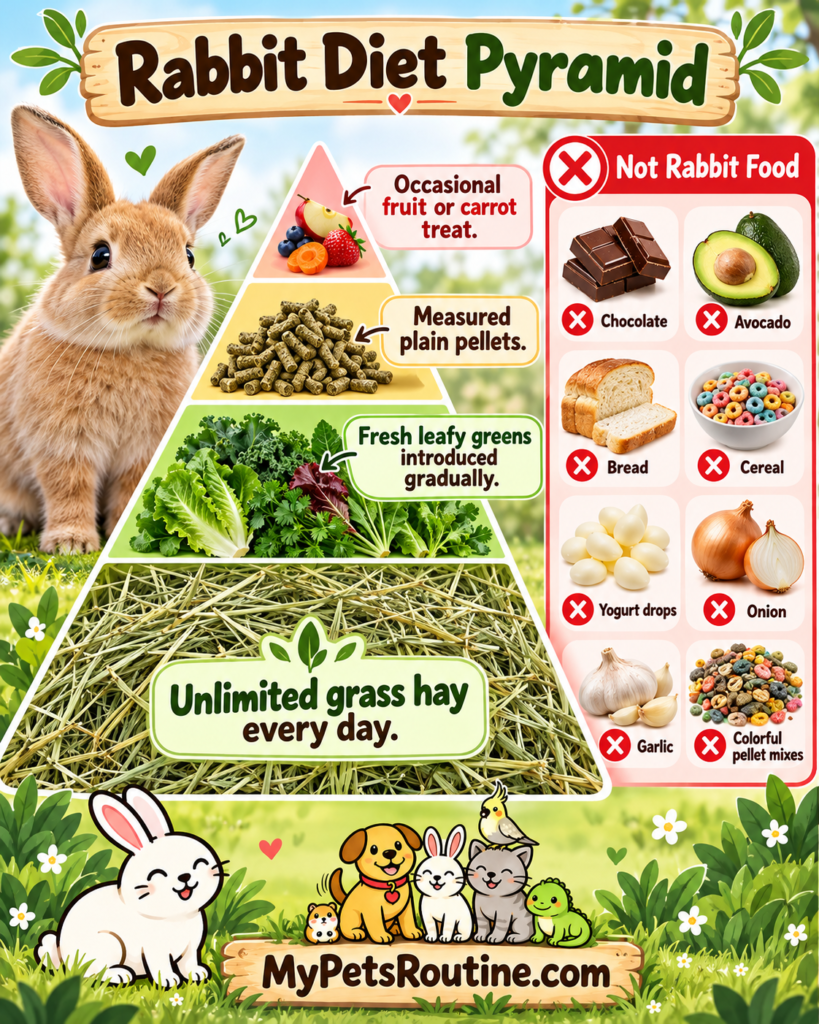
Rabbits may look like small, soft snack lovers, but their bodies are built for something much simpler and much more specific. A healthy rabbit diet is not based on carrots, fruit, cereal treats, colorful mixes, yogurt drops, or little bites of whatever the family is eating. Rabbits are fiber dependent herbivores, which means their digestive system and continuously growing teeth depend on a steady supply of rough plant material every day. For most pet rabbits, that means unlimited grass hay, fresh water, carefully chosen leafy greens, a modest amount of plain pellets, and only tiny treats on occasion.
House Rabbit Society guidance describes hay as the main foundation of an adult rabbit’s diet and recommends unlimited grass hay, daily greens, controlled pellets, and limited treats. The RSPCA gives similar advice, explaining that most of a rabbit’s diet should be fresh hay or grass, with leafy greens and a few pellets, while fruit and root vegetables should be treated as occasional extras rather than daily staples.
Why Rabbit Nutrition Matters So Much
A rabbit’s diet affects almost everything a new owner worries about, including droppings, appetite, energy, tooth health, weight, and the risk of digestive slowdown. When a rabbit eats enough hay, the long strands of fiber help keep the gut moving and encourage the natural side to side chewing motion that wears the teeth properly. When a rabbit eats too many pellets, treats, starchy foods, or sugary extras, the balance can shift quickly. The rabbit may fill up on the wrong foods, ignore hay, gain weight, develop soft stools, or become more vulnerable to serious digestive problems.
This is why rabbit feeding is less about variety for entertainment and more about daily consistency. A good rabbit meal plan should look almost boring from a human point of view. The magic is in the rhythm. Hay is always available. Greens are fresh and introduced gradually. Pellets are measured. Treats are small enough that they do not interfere with hay eating. Water is clean and easy to reach. That simple routine is one of the best gifts a new rabbit owner can give.
Your Rabbit’s Plate: What a Healthy Daily Diet Should Look Like
A helpful way to picture rabbit food is to imagine a plate where hay takes nearly all the space. Fresh greens sit in a smaller section. Pellets occupy only a small corner. Treats are not really part of the daily plate at all; they are more like a tiny garnish used occasionally.
| Rabbit Plate Area | What It Means in Real Life | Why It Matters |
|---|---|---|
| Hay | Unlimited grass hay available day and night | Supports digestion, normal chewing, dental wear, and healthy droppings |
| Fresh greens | Washed leafy greens served daily after gradual introduction | Adds moisture, nutrients, enrichment, and variety without replacing hay |
| Pellets | A small measured portion of plain rabbit pellets | Provides supplemental nutrition without becoming the main food |
| Treats | Tiny pieces of fruit or starchy vegetables only occasionally | Adds enjoyment, but too much sugar can disrupt diet balance |
| Unsafe foods | No chocolate, avocado, onion, garlic, processed snacks, colorful mixes, or spoiled foods | Protects the rabbit from toxic, fatty, sugary, or gut upsetting ingredients |

Hay Is the Foundation of a Rabbit’s Diet
Hay is not bedding. It is not optional. It is the food that should be in front of a rabbit every hour of the day. Good grass hay gives rabbits the indigestible fiber their gut needs to keep moving, and it also keeps them chewing for long stretches of time. That chewing matters because rabbit teeth grow continuously. Without enough abrasive hay and natural chewing, dental problems can become painful and expensive.
Timothy hay is the best known option for adult rabbits, but orchard grass, meadow hay, oat hay, and other good quality grass hays can also be useful. Some rabbits are picky, so a hay blend can encourage better eating. The important thing is that the hay smells fresh, looks dry rather than dusty or moldy, and is available in generous amounts. VCA states that unlimited, high quality grass hay such as timothy, orchard, or brome should make up the bulk of a rabbit’s diet.
What Good Hay Looks and Smells Like
Fresh hay should smell clean, grassy, and pleasant. It should not smell musty, sour, damp, dusty, or like an old basement. Some hay is greener and softer, while some is more golden and stemmy. Many rabbits enjoy a mix of textures because leaves are fragrant and stems encourage more chewing. A rabbit who tosses hay around, digs through it, and chooses favorite pieces is behaving normally. That is part of the feeding process.
Owners sometimes worry that their rabbit is “wasting” hay. In reality, rabbits naturally sort through hay, and some waste is expected. A generous pile that gets refreshed is better than a tiny handful that becomes stale or soiled. Hay can be placed in a rack, basket, litter area, cardboard box, or hay feeder, as long as the rabbit can reach it comfortably and it stays clean.
Alfalfa Hay Is Not Usually for Healthy Adult Rabbits
Alfalfa is richer than grass hay and is usually more appropriate for young growing rabbits, pregnant or nursing rabbits, or certain rabbits under veterinary direction. For healthy adult rabbits, grass hay is generally preferred because alfalfa is higher in protein and calcium. VCA notes that alfalfa hay is not recommended for adult rabbits because it is too rich in protein and calcium.
Fresh Greens Add Moisture, Nutrients, and Daily Enjoyment
Fresh leafy greens are a valuable part of a rabbit’s diet, but they should be introduced with patience. A rabbit’s digestive system does not appreciate sudden change. One new green at a time is safer than offering a big salad of unfamiliar foods on the first day. Start with a small amount, watch the droppings, appetite, and behavior, then increase gradually if the rabbit tolerates it well.
Safe greens often include romaine lettuce, green leaf lettuce, red leaf lettuce, cilantro, parsley, basil, mint, dill, arugula, carrot tops, dandelion greens, endive, escarole, bok choy, and small amounts of kale. House Rabbit Society advises offering leafy greens and introducing new vegetables slowly, while removing any item that causes soft stool or diarrhea.
A Practical Greens Introduction Chart
| Day Range | What to Do | What to Watch |
|---|---|---|
| First few days | Offer one familiar or mild leafy green in a small amount | Normal appetite, normal droppings, no bloating, no soft stool |
| After tolerance is clear | Slowly increase the amount of that green | Steady hay eating and normal litter box output |
| Once stable | Add a second leafy green in a small amount | Any change in stool texture, appetite, or comfort |
| Long term | Rotate several safe greens that your rabbit tolerates well | Consistent appetite, healthy droppings, good energy |
Free Printable: New Greens Trial Tracker
Keep track of the leafy greens you introduce to your rabbit! Record the date, portions size, changes in droppings, and which greens your rabbit tolerates well.

Greens Should Not Replace Hay
A rabbit may adore greens and run toward the bowl the moment it hears the refrigerator open, but greens are not the main meal. Hay still needs to be the food your rabbit eats most throughout the day. If a rabbit starts filling up on greens and ignores hay, the portions may need adjusting. The same is true if greens cause soft stool. A rabbit savvy veterinarian can help tailor the plan for rabbits with chronic digestive sensitivity, dental disease, kidney concerns, bladder sludge, or weight issues.
Pellets Should Be Plain, Measured, and Limited
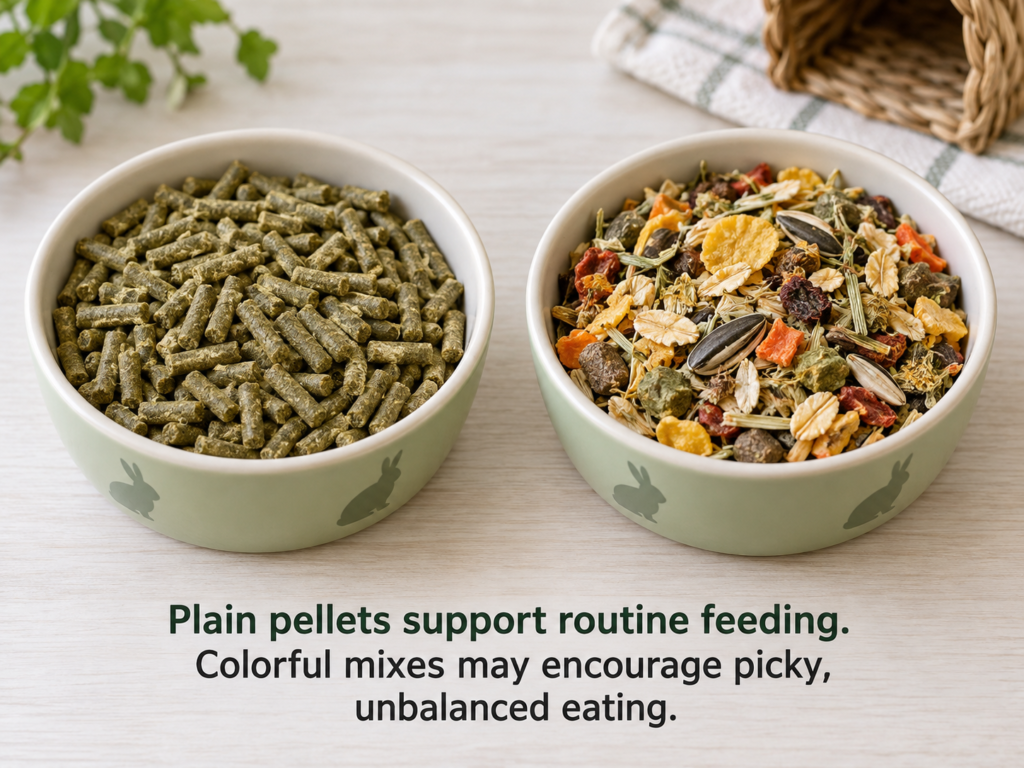
Pellets are where many beginner mistakes happen. A new owner sees a bag with bright colors, seeds, dried corn, flakes, fruit pieces, or crunchy shapes and assumes it must be more exciting and complete. For rabbits, those colorful mixes are usually the wrong choice. Rabbits tend to pick out the tastiest, highest calorie pieces first, which can lead to an unbalanced diet and less hay eating.
A good pellet is usually plain, uniform, and hay based. For most healthy adult rabbits, timothy based pellets are commonly preferred over rich alfalfa based pellets unless a veterinarian recommends otherwise. Pellets should be measured, not free poured into a bowl all day. The goal is to supplement the hay and greens, not compete with them.
The RSPCA advises that rabbits should eat fresh hay or grass as most of the diet, with leafy greens and only a few pellets, and specifically warns that rabbits should not eat muesli style foods.
Pellet Quality Table for New Owners
| Pellet Feature | Better Choice | Feeding Concern |
|---|---|---|
| Appearance | Plain, uniform pellets | Colorful mixes encourage selective eating |
| Main ingredient | Grass hay based for most healthy adults | Rich formulas may not suit adult maintenance diets |
| Add ins | No seeds, corn, dried fruit, or candy like pieces | Sugary and starchy extras can crowd out hay |
| Portion | Measured daily amount | Free feeding pellets can reduce hay intake |
| Freshness | Stored dry and used before it becomes stale | Old pellets may lose quality and appeal |
Treats Should Be Tiny and Occasional
Rabbits often love sweet foods. That does not mean sweet foods love them back. Fruit, carrot, banana, berries, apple without seeds, and small pieces of other rabbit safe produce can be used as occasional treats, but they should never become a major part of the diet. A rabbit does not need a chunk of carrot every day, and it definitely does not need cookies, crackers, cereal, bread, yogurt drops, or processed pet treats full of sugar.
Treats are best used thoughtfully. A tiny piece can help with bonding, reward a rabbit for coming when called, or make grooming and handling practice feel more positive. The portion should be small enough that the rabbit still returns to hay afterward. If the treat changes the rabbit’s droppings, reduces hay eating, or causes begging that disrupts the routine, it is too much.
RSPCA guidance explains that fruit and root vegetables such as carrots should only be occasional treats, not everyday staples.
Dangerous Foods Rabbits Should Not Eat
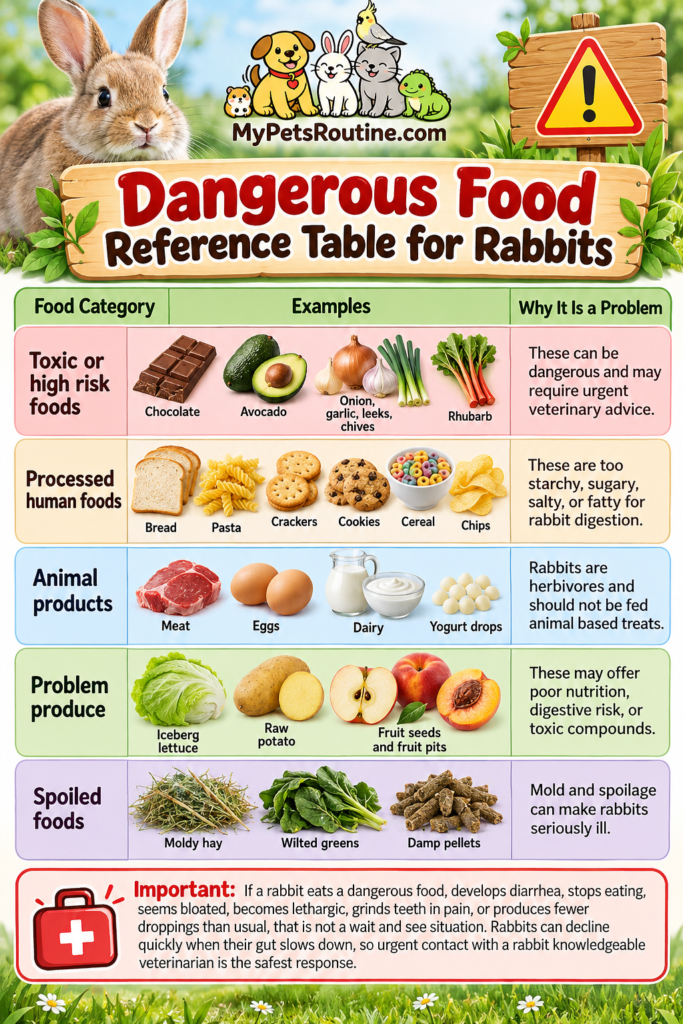
Some foods are simply not worth the risk. Rabbits should not be given chocolate, avocado, onions, garlic, leeks, chives, rhubarb, raw potato, fruit pits or seeds, meat, eggs, dairy, bread, pasta, crackers, cookies, cereal, nuts, seeds, yogurt drops, or processed human snacks. Iceberg lettuce is also best avoided because it has poor nutritional value and may be harmful in larger quantities.
Oxbow Animal Health lists several foods rabbits should never eat, including avocado, chocolate, fruit seeds and pits, raw onions, leeks, garlic, meat, eggs, dairy, rhubarb, iceberg lettuce, mushrooms, processed foods, and raw potatoes. Rabbit.org also warns that processed human foods such as chocolate, cookies, crackers, breakfast cereals, bread, pasta, and yogurt drops are dangerous for rabbits and their delicate digestive systems.
Dangerous Food Reference Table
Water Belongs in the Diet Conversation Too
Food gets most of the attention, but water is part of healthy feeding. Rabbits should always have access to clean drinking water. Many rabbits drink more comfortably from a heavy ceramic bowl than from a bottle, although some owners provide both. Bowls need washing and refilling daily because hay, fur, and bedding often end up in them. Bottles need checking carefully because the metal sipper can clog even when the bottle looks full.
A rabbit eating lots of fresh greens may drink differently from a rabbit eating mostly dry hay and pellets, but fresh water should still be available at all times. Sudden changes in drinking, urination, appetite, or droppings deserve attention, especially if they happen alongside reduced hay eating.
A Simple Daily Rabbit Feeding Rhythm
A reliable routine helps new owners spot problems early. In the morning, refresh the hay, rinse and refill the water, remove old greens, and offer the day’s measured pellets or a portion of them. Later, offer washed leafy greens and make sure the rabbit is still eating hay. In the evening, check the litter area for normal droppings, refresh hay again, and observe appetite, posture, and energy.
The key is not to make rabbit feeding complicated. The key is to notice patterns. A healthy rabbit usually approaches food with interest, chews frequently, produces regular droppings, and returns to hay throughout the day. A rabbit who suddenly refuses a favorite green, ignores pellets, sits hunched, or produces very few droppings may be showing an early warning sign.
Common Feeding Mistakes New Rabbit Owners Make
| Mistake | What Often Happens | Better Routine |
|---|---|---|
| Feeding mostly pellets | Rabbit fills up and eats less hay | Keep hay unlimited and pellets measured |
| Giving carrots daily | Sugar intake climbs and hay may become less appealing | Treat carrots as occasional extras |
| Buying colorful mixes | Rabbit picks favorite pieces and leaves the rest | Choose plain uniform pellets |
| Introducing many greens at once | Soft stool or digestive upset becomes harder to trace | Add one new green at a time |
| Using hay as bedding only | Rabbit misses the most important food source | Offer fresh edible hay at all times |
| Giving processed treats | Sugar, starch, and fat disrupt the natural diet | Use tiny rabbit safe produce treats sparingly |
Final Takeaway for New Rabbit Owners
The healthiest rabbit diet is not fancy. It is steady, fibrous, and built around hay. When unlimited grass hay is the foundation, greens are introduced carefully, pellets are plain and measured, treats stay tiny, and dangerous foods stay out of reach, feeding becomes much easier to manage. Your rabbit does not need a rotating buffet of snacks to feel loved. Your rabbit needs the kind of daily routine that supports digestion, protects teeth, maintains a healthy weight, and gives you a clear picture of what normal appetite and droppings look like.
For new bunny owners, that is the real goal. Feed in a way that keeps your rabbit acting like a rabbit: grazing, chewing, exploring, producing healthy droppings, and returning again and again to a fresh pile of hay.