
 By
Kelley Kelly
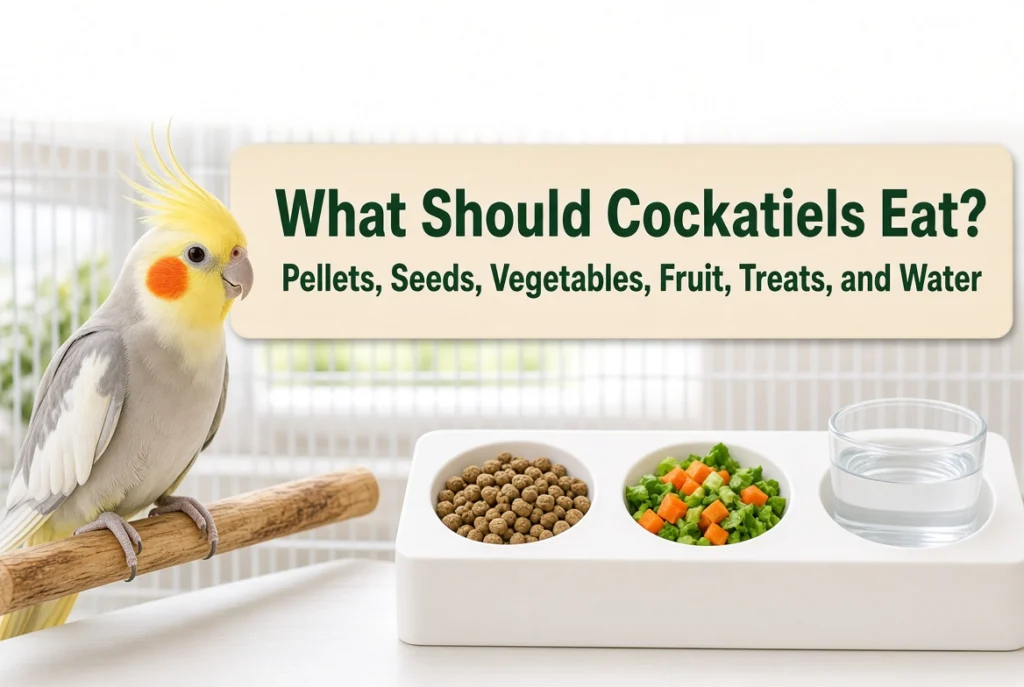
Bringing home a cockatiel often comes with one very common misunderstanding: if the bird has a dish full of seed, the bird must be eating well. It is an easy assumption to make because cockatiels usually love seed. They crack it, pick through it, and often act as though every other food is an inconvenience. But a seed only diet can quietly create nutritional gaps over time, especially when a cockatiel fills up on high fat favorites and leaves behind the foods that provide broader vitamin and mineral support.
A healthy cockatiel diet is not about making meals complicated. It is about building a simple, repeatable routine that gives your bird dependable nutrition every day. Formulated pellets usually provide the foundation, while vegetables, small amounts of fruit, carefully managed seed, occasional treats, and fresh clean water all play supporting roles. PetMD describes cockatiel diets as including pellets, seed, vegetables, fruit, occasional treats, and constant access to fresh clean water, while also warning owners not to share food from their mouths because human microorganisms can make birds ill.
For new bird owners, this matters because nutrition affects far more than appetite. A balanced diet supports feather condition, energy, immune health, weight control, digestive regularity, and long term wellness. Cockatiels are small birds, but their care deserves the same daily intention you would give any companion animal.
Why Cockatiels Should Not Live on Seed Alone
Seed has a place in cockatiel care, but it should not become the whole menu. Many cockatiels naturally prefer seed because it is familiar, easy to eat, and often richer in fat than other foods. The problem is that a bird can appear satisfied while still missing important nutrients. A cockatiel that eats mostly seed may gradually become selective, overweight, or deficient in key nutrients, especially if it refuses greens, vegetables, and formulated food.
VCA Hospitals explains that pellets are commonly considered the ideal diet for pet cockatiels and that seed eating birds should be slowly transitioned rather than abruptly forced into a new diet. Their guidance also notes that diet changes may take days, weeks, or even months, which is an important reminder for owners who feel discouraged when their bird ignores pellets at first.
The goal is not to make seed disappear overnight. A sudden diet change can be stressful, and a bird that does not recognize pellets as food may simply avoid eating enough. Instead, the best approach is patient, consistent exposure. Your cockatiel should learn that pellets are normal, vegetables are safe, and seeds are a small part of the routine rather than the main event.
The Pellet Based Foundation
Pellets are formulated to provide balanced nutrition in a way that prevents the selective eating problem common with seed mixes. When a cockatiel is given a bowl of mixed seeds, it may pick out the fattiest favorites and leave the rest. Pellets help reduce that problem because each piece is designed to be nutritionally consistent.
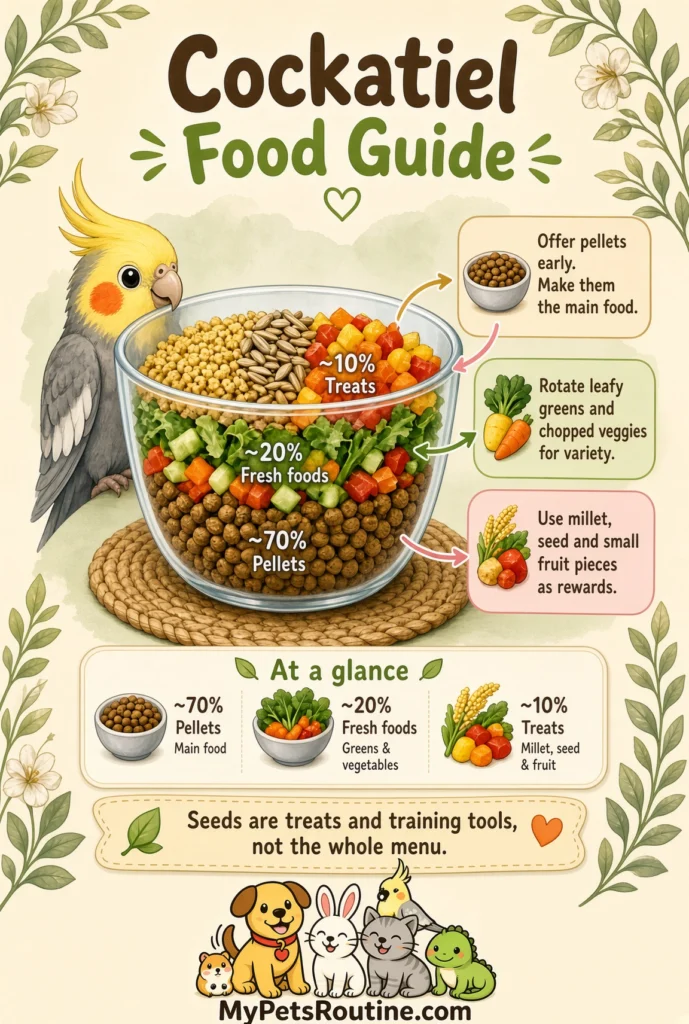
Some avian veterinarians and bird care resources recommend that pellets make up the majority of a cockatiel’s diet. PetMD, citing avian veterinary guidance, notes that about seventy percent of a cockatiel’s diet may come from pellets, with the remaining portion made up of fresh vegetables, fruit in small amounts, and seed or millet as treats.
That does not mean every cockatiel will accept pellets immediately. Birds are cautious eaters, especially when they were raised on seed. The morning meal is often the best time to offer pellets because your bird is usually most interested in food after waking. VCA recommends offering pellets first thing in the morning before other foods, then using small amounts of seed or produce later in the day if the bird is slow to accept them.
Please enjoy My Pets Routine. Some links on this page are affiliate links. If you buy through these links, we may earn a commission at no extra cost to you. This helps support our site and allows us to continue producing helpful articles and other content.
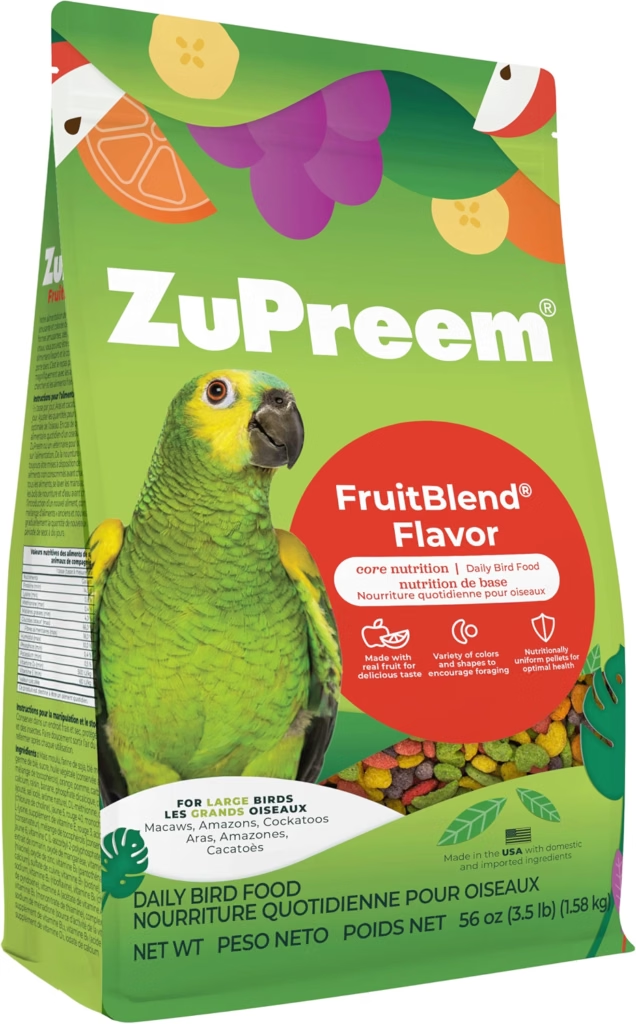
ZuPreem FruitBlend with Natural Fruit Flavors Contains fresh ground fruit in every tasty bite and 21 vitamins and minerals, no supplements required
Check Current Price and Availability at Amazon
How to Introduce Pellets Without Stress
A cockatiel that has eaten seed for months or years may not understand that pellets are edible. This is not stubbornness in the human sense. It is normal food caution. Start by placing a small amount of pellets in the regular food area every day. Let your bird see them, touch them, crumble them, and investigate them. Some owners find that lightly moistening pellets with warm water makes the texture more interesting, but any softened food must be removed before it spoils.
You can also model curiosity by placing pellets near familiar foods without burying them under seed. The bird should be able to see the new food clearly. Over time, the amount of seed can be reduced only when you are sure your cockatiel is actually eating the pellets. Monitoring droppings, body weight, and daily appetite helps protect your bird during the transition. If your cockatiel refuses pellets or loses weight, an avian veterinarian should guide the process.
Seeds Still Have a Role, but They Need Boundaries
Seeds are not poison, and they are not automatically bad. The issue is proportion. Seed can be useful as a training reward, a foraging treat, or a small part of the daily diet depending on your veterinarian’s advice. Millet spray, for example, can be helpful during bonding or training because many cockatiels find it highly motivating.
The difficulty is that a bird can quickly learn to hold out for seed if seed is always available. When a cockatiel has constant access to a favorite food, it may ignore pellets and produce. Owners sometimes interpret this as the bird “not liking healthy food,” when the real issue is that the bird has been given unlimited access to the easiest, richest option.
Seeds should be offered with purpose. They can reward step up practice, encourage exploration of a new perch, or make a foraging toy more appealing. Used this way, seed supports enrichment instead of replacing nutrition.
Vegetables for Cockatiels
Vegetables add color, texture, moisture, and variety to a cockatiel’s diet. They also encourage natural curiosity. Many cockatiels need repeated exposure before they try a new vegetable, so the first few attempts may look like failure. Your bird may throw the food, shred it, avoid it, or stare at it suspiciously. That is still progress because the bird is learning that fresh foods belong in its environment.
Dark leafy greens, broccoli, carrots, bell pepper, peas, squash, and sweet potato are common produce options used by many bird owners. Fresh vegetables should be washed well, cut into manageable pieces, and removed before they dry out or spoil. Warm, lightly steamed vegetables may be more appealing to some cockatiels than cold raw pieces from the refrigerator.
Texture can make a surprising difference. One bird may ignore a large piece of carrot but nibble finely grated carrot. Another may avoid leafy greens in a dish but chew them when clipped to the side of the cage. Cockatiels are individuals, and feeding fresh food often requires creativity.
The Slow Introduction Rule
New foods should be introduced gradually. This helps your bird adjust and allows you to notice digestive changes. A cockatiel that has never eaten vegetables may need time before fresh foods become part of its normal rhythm. Serve small amounts at first, keep the presentation calm, and avoid turning meals into a battle.
A practical routine is to offer pellets in the morning, fresh vegetables during an active part of the day, and a measured amount of seed or millet as a reward or later meal component. This rhythm encourages the bird to approach the most nutritionally important foods before filling up on favorites.
Fruit and Treats
Fruit can be part of a cockatiel’s diet, but it should usually be offered in small amounts. Many fruits are higher in sugar than vegetables, so they are better used as occasional variety rather than a daily centerpiece. Small pieces of apple without seeds, berries, melon, banana, or papaya may be accepted by some cockatiels, but fruit should always be fresh, washed, and removed after a short time.
Treats should feel special, not constant. If treats are available all day, they stop being useful for training and may crowd out better nutrition. A tiny piece of millet, a small bit of safe fruit, or a favorite seed can be powerful when used during handling practice or gentle trust building.
The best treats help your bird participate in a routine. A cockatiel that learns to step onto a hand, return to the cage, or explore a new toy for a tiny reward is building confidence. Treats should support that relationship, not become the main diet.
Unsafe Foods Cockatiels Should Avoid
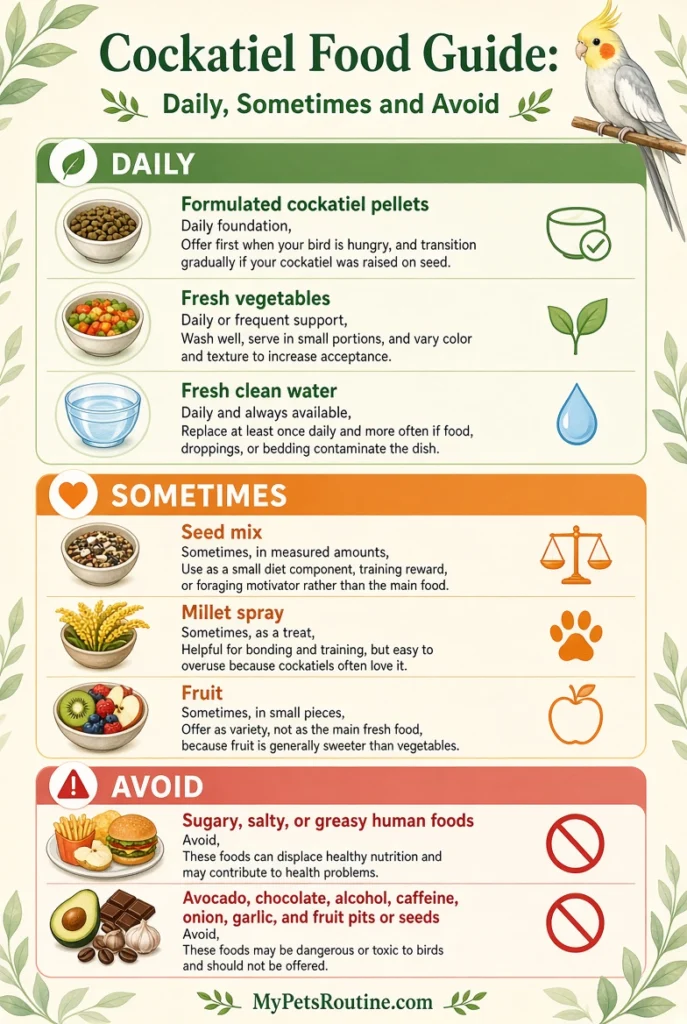
Some human foods are unsafe for birds and should never be offered. Avocado is one of the most important foods to avoid, and high salt foods, sugary foods, greasy foods, chocolate, alcohol, caffeine, onion, garlic, and fruit pits or seeds can also pose risks. PetMD warns that several foods can be toxic to birds, including chocolate and fruit pits or seeds, while the ASPCA lists avocado, chocolate, caffeine, alcohol, and other common people foods among items pet owners should avoid giving animals.
It is also important not to share food from your mouth. Even if the food itself seems harmless, human saliva can contain microorganisms that are not safe for birds. A cockatiel may look adorable trying to nibble from your lips or fork, but that habit is not worth the health risk. PetMD specifically cautions that food should not be shared from human mouths or plates because microorganisms can make birds ill.
Kitchen habits matter too. A cockatiel should not be near cooking fumes, hot pans, greasy splatter, or strong food odors while meals are being prepared. Feeding safety is not only about what goes in the dish. It is also about where the bird eats and what it may accidentally access.
Cockatiel Food Guide: Daily, Sometimes, Avoid
The Cockatiel Daily Food Balance
Water: The Most Overlooked Part of the Diet
Fresh water is not optional for cockatiels. A bird should always have access to clean drinking water, and the dish should be checked more than once a day if your cockatiel is active, messy, or likes to dunk food. PetMD notes that cockatiels should always have fresh, clean water available.
Water dishes can become dirty quickly. Seed hulls, pellet crumbs, feathers, and droppings may end up in the bowl, especially if the dish is placed under a perch. Positioning matters. The water bowl should be easy for the bird to access but not directly beneath the favorite sleeping perch or toy area. If you use a water bottle, your bird still needs monitoring to make sure it understands how to drink from it and that the nozzle is functioning properly.
During warm weather, after bathing, or during periods of increased activity, water checks become even more important. A healthy feeding routine is not complete until water is part of the daily inspection.
When Your Cockatiel Refuses Healthy Food
Many new owners worry when a cockatiel refuses pellets or vegetables. This is common, especially with birds that have been eating mostly seed. The worst response is panic followed by giving unlimited seed forever. The second worst response is removing all familiar food before the bird has learned to eat the new diet. The better path sits between those extremes.
Keep offering small portions of healthy foods without drama. Try different shapes, temperatures, and presentations. Place vegetables in a shallow dish one day, clip leafy greens to the cage another day, and offer finely chopped produce beside familiar food on another. Some cockatiels are more willing to investigate food when it looks like something to shred rather than something to eat.
Progress may be slow. A bird that touches a vegetable, shreds it, or carries it around is becoming familiar with it. Over time, familiarity can turn into tasting, and tasting can turn into eating. If your cockatiel is losing weight, producing abnormal droppings, or refusing most food during a diet change, contact an avian veterinarian promptly.
Signs Your Cockatiel’s Diet May Need Veterinary Attention
Diet problems can show up gradually. A cockatiel may become less active, gain excess weight, develop poor feather quality, show changes in droppings, or become unusually picky. Because birds often hide illness, any significant change in appetite, weight, droppings, posture, or behavior deserves attention.
A gram scale can be one of the most useful tools for bird owners. Weighing your cockatiel regularly helps you notice changes before they become obvious by sight. Weight loss during a pellet transition is especially important to catch early. An avian veterinarian can help you decide whether your bird is eating enough and whether the diet plan is appropriate for your cockatiel’s age, health, and history.
EEAT Note for New Cockatiel Owners
Cockatiel feeding advice should always be practical, but it should also be medically responsible. Online guides can help owners understand the basics, but they cannot replace an avian veterinarian who can examine your bird, evaluate weight and body condition, review droppings, and help with diet conversion. This is especially important for birds that have eaten a seed heavy diet for a long time, birds with known health problems, breeding birds, young birds, and older cockatiels.
The safest feeding routine is not the most complicated one. It is the one you can repeat consistently while watching your bird closely. Pellets provide the foundation. Vegetables add variety and enrichment. Fruit and seed stay limited. Treats become tools for trust. Water stays fresh. Over time, those simple choices become the quiet structure behind a healthier, more confident cockatiel.
Final Thoughts: Build a Bowl Your Cockatiel Can Thrive On
A cockatiel’s diet should never be judged by enthusiasm alone. Most birds will cheerfully choose favorite foods first, just as people often prefer snacks over balanced meals. Good ownership means gently shaping the routine so the healthiest foods become familiar and expected.
If your cockatiel currently eats mostly seed, do not feel guilty and do not rush. Start where your bird is. Offer pellets consistently, introduce vegetables patiently, keep fruit and treats small, remove unsafe foods completely, and make fresh water part of every daily check. With time, observation, and veterinary guidance when needed, your cockatiel’s food dish can become one of the strongest foundations for a long, active, and joyful life.
MyPetsRoutine.com participates in the Amazon Services LLC Associates Program, an affiliate advertising program designed to provide a means for sites to earn advertising fees by advertising and linking to Amazon.com