
 By
Kelley Kelly
By
Kelley Kelly
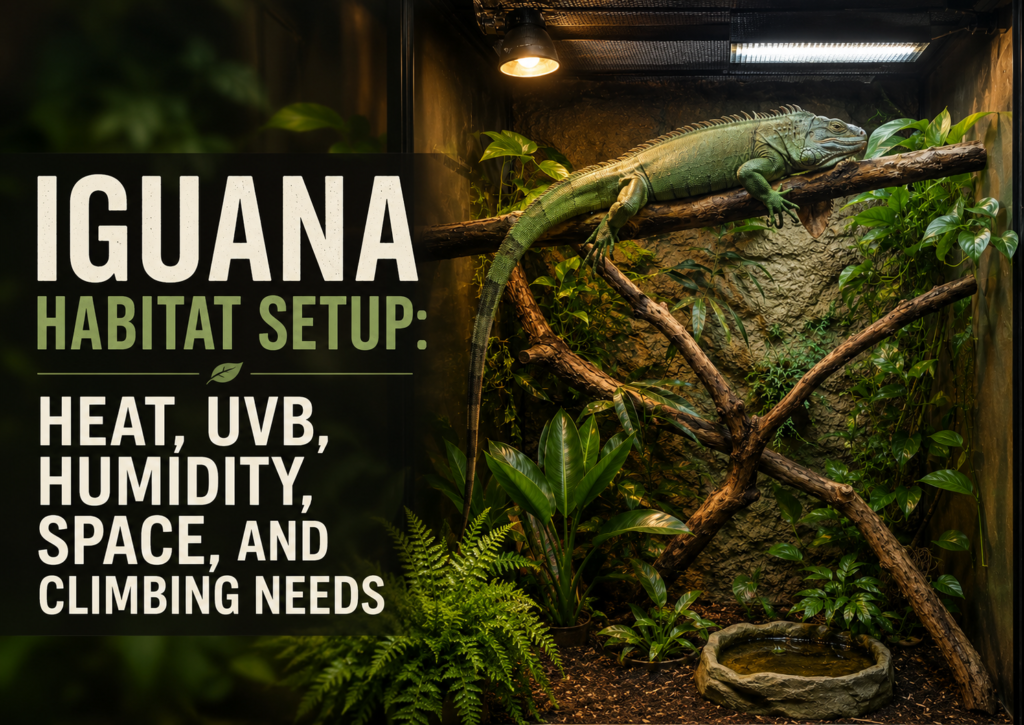
Green iguanas are beautiful, intelligent, fascinating reptiles, but they are not simple beginner pets. A young iguana may arrive looking small enough for a modest terrarium, yet that same animal can become a large, powerful, long lived lizard with highly specific environmental needs. A healthy iguana habitat is not just a cage with a branch and a light. It is a carefully managed tropical environment with proper heat, UVB exposure, humidity, hydration, ventilation, vertical climbing space, safe surfaces, and daily monitoring.
This matters because iguanas are ectothermic animals. They rely on their environment to regulate body temperature, digestion, immune function, movement, and normal behavior. Merck Veterinary Manual explains that reptiles depend on environmental temperature and behavior to control core body temperature, and it also notes that broad spectrum UVB supports vitamin D synthesis and calcium balance in reptiles. For iguanas in particular, habitat mistakes are not minor inconveniences. Poor heat, inadequate UVB, low humidity, and undersized enclosures can contribute to stress, poor appetite, bad shedding, burns, dehydration, and metabolic bone disease.
Why Iguanas Need Advanced Habitat Planning
A green iguana habitat should be planned around the adult animal, not the baby you bring home. This is one of the most common mistakes new iguana owners make. A juvenile iguana may temporarily fit in a smaller setup, but iguanas grow rapidly during the first year and need their enclosure enlarged as they develop. PetMD notes that adult iguanas commonly reach several feet in length, with some growing up to six feet including the tail, and that iguanas often need a custom built enclosure once they grow beyond four feet.
That growth changes everything. A habitat that seems roomy for a baby can become restrictive very quickly. An adult iguana needs enough horizontal length to move, enough depth to turn comfortably, and enough vertical height to climb and bask above the ground. Iguanas are arboreal lizards, meaning they naturally spend time in trees and elevated spaces. A flat, low enclosure does not give them the same behavioral opportunity as a tall habitat with sturdy branches, basking shelves, and secure climbing routes.
For a new owner, the most practical mindset is to treat the first enclosure as temporary unless it is already built for adult size. The long term goal is usually a large custom enclosure or dedicated reptile room, not a standard glass tank. PetMD’s habitat guidance uses a rule of thumb that an iguana enclosure should be at least twice the iguana’s body length, the same width as the iguana’s body length, and tall enough to support climbing behavior.
Iguana Enclosure Planning Table
Iguana Enclosure Planning Table
A healthy iguana habitat should be planned around the adult animal, not the small juvenile brought home from a pet store. This table highlights the enclosure features that matter most when creating a safe, climbable, and manageable long-term setup.
| Habitat Feature | Why It Matters | Owner Planning Note |
|---|---|---|
| Length | Allows the iguana to move, turn, and thermoregulate between warmer and cooler areas. | Plan around adult body length, not baby size. |
| Height | Supports natural climbing, basking, and elevated resting behavior. | Include strong branches and shelves at multiple levels. |
| Ventilation | Helps prevent stagnant, overly damp air while still allowing humidity control. | Balance moisture with airflow rather than sealing the enclosure completely. |
| Cleaning access | Large reptiles produce large messes, and surfaces need regular cleaning. | Choose materials that can be disinfected safely and repeatedly. |
| Lighting layout | Heat and UVB must reach the iguana at the correct basking distance. | Build branches and basking shelves around the lighting plan. |
Creating the Right Heat Gradient
An iguana enclosure should never be one uniform temperature. In the wild, an iguana moves between sun, shade, warm branches, cooler cover, and different heights in the canopy. Captive habitats need to offer a similar choice through a thermal gradient. That means one area is warm enough for basking, while another area stays cooler so the iguana can move away from heat when needed.
This is not just about comfort. Reptiles need correct environmental heat to digest food, maintain normal activity, and function properly. PetMD recommends using external heat sources to create a temperature gradient, with a warm end and a cooler end, and it emphasizes checking habitat temperatures daily with thermometers placed in both zones. Merck’s reptile husbandry table also emphasizes gradients, noting that temperature values are air temperature gradients, with basking temperatures generally warmer and nighttime temperatures lower.
The basking zone should be the warmest area and should be positioned where the iguana can sit comfortably under the heat and UVB source. The cooler zone should be far enough away that the iguana can escape direct warmth. At night, visible daytime lights should go off so the iguana has a normal day and night rhythm. If supplemental night heat is needed, it should come from a ceramic heat emitter or another non light producing heat source controlled by a thermostat.
Iguana Thermal Gradient Habitat Diagram
Iguana Thermal Gradient Habitat Diagram
A healthy iguana enclosure should offer different zones so the iguana can warm up, cool down, climb, hydrate, and rest. Instead of keeping the entire habitat at one temperature, the setup should create a natural movement path from the warm upper basking area to cooler and more humid spaces below.
Upper Basking Zone
The warmest area of the enclosure, placed beneath properly positioned heat and UVB lighting so the iguana can bask, absorb UVB, digest, and rest above the ground.
Middle Movement Zone
The transition area with diagonal branches, broad perches, and visual cover, allowing the iguana to climb, explore, pause, and choose a comfortable temperature.
Lower Cooler Zone
A shaded retreat away from direct basking heat where the iguana can cool down, rest, hide, and reduce overstimulation.
Hydration Zone
A humid, easy-to-clean area with a large shallow water dish and safe misting access to support drinking, soaking, hydration, and healthy shedding.
| Habitat Zone | Suggested Function | What the Setup Should Include | What the Iguana Can Do There |
|---|---|---|---|
| Upper basking zone | The warmest climbing and basking area. | A sturdy branch or shelf beneath properly placed heat and UVB lighting. | Warm up, absorb UVB, digest, and rest in an elevated position. |
| Middle movement zone | The transition area between hot and cool spaces. | Diagonal branches, broad perches, and visual cover. | Climb, explore, pause, and choose a comfortable temperature. |
| Lower cooler zone | A cooler retreat away from direct basking heat. | Shade, plants, a hide, and open floor space. | Cool down, retreat, and reduce overstimulation. |
| Hydration zone | A humid area that supports drinking, soaking, and shedding. | A large shallow water dish, safe misting access, and easy cleaning surfaces. | Drink, soak, and maintain skin moisture during shed cycles. |
Why UVB Lighting Is Non Negotiable
UVB lighting is one of the most important parts of iguana care. It is also one of the easiest areas for new owners to misunderstand. A bright bulb is not automatically a useful UVB bulb. A heat lamp is not automatically a UVB source. A window with sunlight is not enough because glass can filter UVB. A bulb that still shines visibly may no longer produce effective UVB.
Reptiles need UVB so they can produce vitamin D3 in the skin, which allows them to absorb calcium properly. VCA Canada explains that UVB exposure helps reptiles manufacture vitamin D3 and that failure to provide proper UV light can predispose reptiles to metabolic bone disease. Merck Veterinary Manual gives an especially important warning for green iguanas, noting that dietary vitamin D alone may not be sufficient to prevent bone problems and that UVB exposure may be critically important for active vitamin D production and prevention of fractures.
Placement matters as much as the bulb itself. The UVB source needs to reach the iguana without being blocked by glass or plastic. The basking branch should be close enough to receive useful UVB, but not so close that the animal risks skin or eye damage. VCA Canada notes that UV output decreases as bulbs age and that UV light must reach the reptile unfiltered, with no glass or plastic between the animal and the light. Merck also states that following manufacturer directions for bulb height and replacement is key, and that UVB output declines with use.
Please enjoy Kitchen and Cooking tips, some links on this page are affiliate links. If you buy through these links, we may earn a commission at no extra cost to you. This helps support our site and allows us to continue producing helpful Tips and other content.
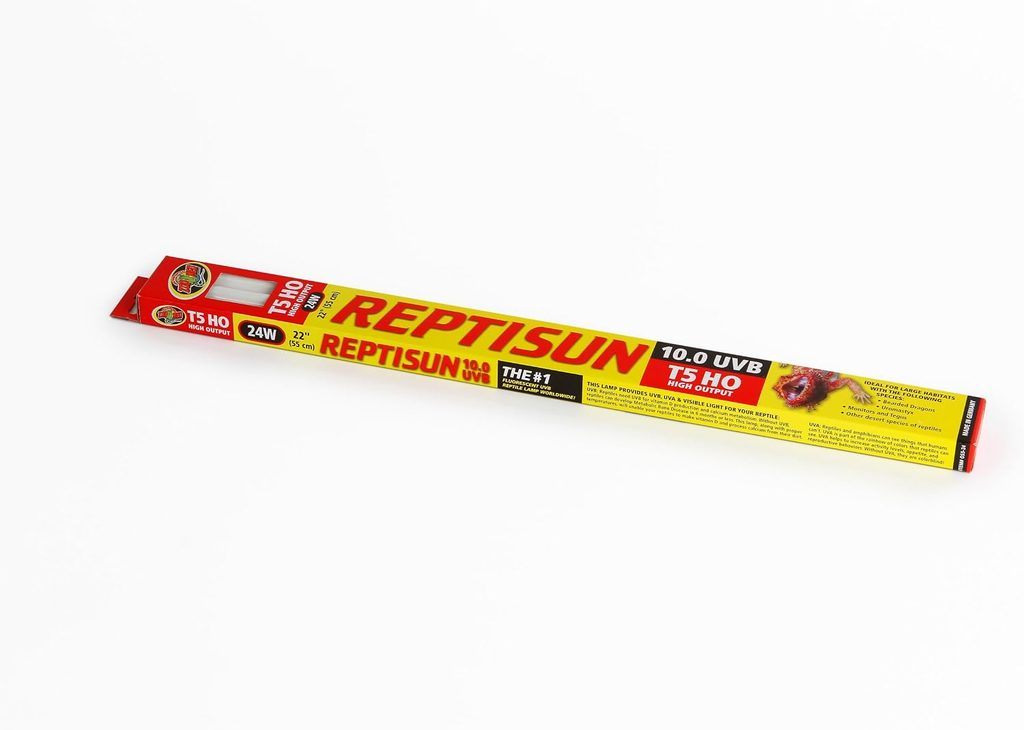
Recommended Iguana Habitat Equipment: Carolina Custom Cages Zoo Med ReptiSun 10.0 UVB T5HO 22 Reptile Lighting Fluorescent Tube,White
Check Amazon for current price and availability
UVB Setup Table for Iguana Owners
UVB Setup Table for Iguana Owners
UVB lighting is one of the most important parts of an iguana habitat because it supports vitamin D3 production, calcium metabolism, and long-term bone health. This table explains the setup details new iguana owners should understand before relying on a bulb, window, or basking light.
| UVB Detail | Why It Matters | Common Beginner Mistake |
|---|---|---|
| Correct UVB spectrum | Supports vitamin D3 production and calcium metabolism. | Using a bright visible bulb that does not provide usable UVB. |
| Proper distance | Allows the iguana to receive useful exposure without overexposure. | Mounting the bulb too high or placing the branch too far below it. |
| No glass or plastic barrier | UVB can be blocked before it reaches the iguana. | Placing the enclosure near a sunny window and assuming that is enough. |
| Regular replacement | UVB output weakens before the bulb appears burned out. | Waiting until the bulb stops producing visible light. |
| Coordinated basking spot | Iguanas are more likely to absorb UVB when heat and UVB overlap safely. | Putting the heat lamp in one area and the UVB in a separate unused area. |
Humidity, Hydration, and Shedding Support
Green iguanas are tropical reptiles, so humidity is not an optional comfort feature. It affects hydration, respiratory comfort, and shedding. When the air is too dry, shedding can become patchy and difficult. Dry retained skin around toes, tail tips, and spikes can become a serious problem if ignored. PetMD recommends maintaining humidity for tropical iguanas in a high range and monitoring it with a hygrometer.
Misting can help, but misting alone should not be the entire humidity plan. A good setup usually combines a large shallow water dish, safe misting, moisture friendly enclosure design, and regular humidity monitoring. The habitat still needs ventilation, because a damp enclosure with poor airflow can become unhealthy. The goal is tropical humidity with clean air, not wet stagnant conditions.
Soaking can also support hydration and shedding, especially when done safely in shallow warm water under supervision. The water should never be deep enough to create a drowning risk, and the iguana should be able to stand comfortably. Fresh water should be available daily, and bowls should be cleaned often because iguanas may soak or soil in them.
Humidity and Hydration Care Chart
Humidity and Hydration Care Chart
Green iguanas need a habitat that supports tropical moisture, steady hydration, healthy shedding, and clean airflow. This chart helps owners understand what to maintain and what warning signs to watch for inside the enclosure.
| Care Area | Healthy Habitat Goal | What Owners Should Watch |
|---|---|---|
| Humidity | Maintain tropical moisture levels appropriate for green iguanas. | Dry sheds, wrinkled skin, retained skin, or frequent rubbing. |
| Misting | Raise humidity and support skin moisture. | Overly wet surfaces that never dry or develop odor. |
| Water dish | Provide daily access to clean water and a safe soaking option. | Soiled water, spilled substrate, or a dish that is too deep. |
| Ventilation | Keep humid air from becoming stale. | Condensation, musty smell, mold, or poor airflow. |
| Shedding | Allow skin to release in patches without constricting toes or tail. | Stuck shed, swelling, discoloration, or repeated incomplete sheds. |
Climbing Space Is Not Decoration
Branches, platforms, and elevated basking areas are not just accessories. They are part of the iguana’s physical and emotional health. Iguanas are tree climbing lizards, and a proper enclosure should let them move upward, rest securely, and choose different heights. VCA notes that pet iguanas enjoy access to branches and that branches should support the animal safely, slope through the enclosure, and be positioned near heat and UV lighting for basking.
A good climbing structure should feel stable under the iguana’s weight. Thin decorative sticks are not enough for a growing animal. Branches should be broad enough for the feet to grip comfortably, secured so they cannot roll or collapse, and arranged so the iguana can move without falling. Because iguanas become heavier and stronger with age, every perch should be chosen with adult size in mind.
This is also where enclosure design becomes a welfare issue. An iguana that cannot climb, bask properly, retreat, or explore may become stressed and inactive. A tall enclosure with diagonal branches, broad shelves, visual cover, and a safe basking platform encourages natural movement and helps the iguana use the whole habitat.
Safe Surfaces, Substrate, and Cleaning
A beautiful enclosure still has to be cleanable. Iguanas produce waste, shed skin, scatter food, and may soak in water dishes. The floor material should be non toxic, easy to remove or disinfect, and unlikely to cause impaction if accidentally swallowed. VCA advises using non toxic, easy to clean substrate and warns against materials such as sand, gravel, wood shavings, corn cob, walnut shells, cat litter, and cedar shavings because of cleaning, ingestion, obstruction, or toxicity concerns.
For many new owners, simple surfaces are safer than elaborate naturalistic substrates. Reptile carpet, paper based materials, and other easy clean options can make daily care more manageable. The more complex the habitat becomes, the more important it is to maintain hygiene. Food should be removed before it spoils, water should be refreshed daily, and soiled areas should be cleaned promptly.
A veterinarian can also help evaluate the habitat. PetMD recommends annual veterinary care for green iguanas and suggests bringing photos of the enclosure so the veterinarian can assess the conditions and recommend improvements. This is an excellent habit for new owners because many iguana health issues are rooted in husbandry rather than a single sudden illness.
Common Habitat Mistakes New Iguana Owners Make
The most common habitat mistake is underestimating the adult iguana. A small juvenile in a pet store can create the impression that iguanas are manageable in a standard tank, but that stage does not last. The second mistake is separating heat and UVB in a way that causes the iguana to choose warmth without receiving meaningful UVB exposure. The third is assuming that a bulb is still effective because it still produces visible light. UVB output declines over time, and replacement schedules matter.
Another common mistake is creating heat without a safe escape route. An iguana should never be trapped under a heat source. It should always be able to move away from the basking area into a cooler zone. Likewise, owners should avoid hot rocks because belly heat can burn reptiles before the danger is obvious. PetMD specifically warns that hot rocks can become too warm and cause injury.
Low humidity is another frequent problem. Dry household air can interfere with shedding, especially in winter or in air conditioned homes. The answer is not simply to soak the entire enclosure until it stays wet. The better approach is to monitor humidity, mist appropriately, provide water access, support soaking when useful, and maintain airflow.
Signs the Habitat May Need Adjustment
An iguana’s behavior often tells you whether the habitat is working. A healthy iguana should be able to bask, move to cooler areas, climb, rest, eat, drink, shed, and explore. When an iguana constantly hides, refuses food, stays dark in color, avoids the basking area, gapes excessively, shows weak movement, sheds poorly, or spends all day pressed against glass, the enclosure deserves a careful review.
Some signs require veterinary attention rather than simple home adjustment. Merck identifies metabolic bone disease in reptiles as a serious condition associated with poor diet or poor husbandry, including lack of UVB light and inadequate thermal provision. Clinical signs may include anorexia, lethargy, abnormal walking, and swollen or distorted bones. Any iguana showing weakness, tremors, swelling, jaw changes, repeated falls, or appetite loss should be assessed by a reptile veterinarian promptly.

Final Thoughts: A Good Iguana Habitat Is a Living System
Setting up an iguana habitat is more like building a small tropical room than decorating a cage. Heat has to be measured. UVB has to be correctly placed and replaced. Humidity has to be monitored. Branches have to be strong. The enclosure has to grow with the animal. Water, airflow, cleaning, and veterinary oversight all matter.
For the right owner, an iguana can be a remarkable reptile to observe and care for. But the responsibility is serious. A healthy green iguana depends on a carefully planned enclosure that supports thermoregulation, UVB exposure, hydration, shedding, climbing, and long term welfare. When the habitat is right, the iguana has choices. It can bask when warm, retreat when hot, climb when active, soak when needed, and live in an environment that respects what it is: a tropical, arboreal, advanced reptile with very specific needs.
KitchenandCookingTips.com participates in the Amazon Services LLC Associates Program, an affiliate advertising program designed to provide a means for sites to earn advertising fees by advertising and linking to Amazon.com