
 By
Kelley Kelly
By
Kelley Kelly
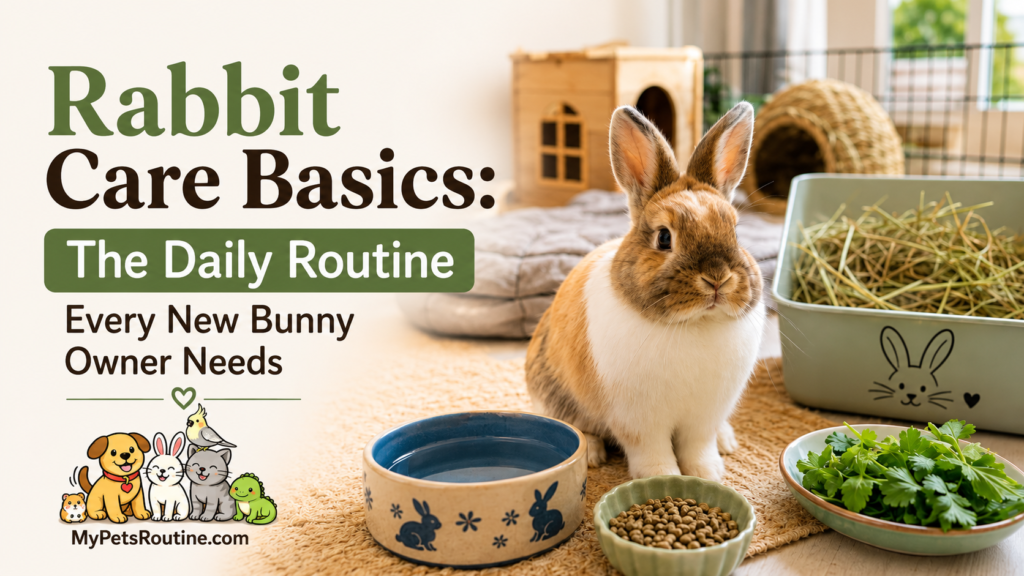
Rabbits have a way of looking easy. They are quiet, tidy, soft, and often sold in pet stores beside cages that make them seem like small animals with small needs. Then a new owner brings one home and quickly realizes the truth: a rabbit is not a low maintenance cage pet. A healthy bunny needs a thoughtful daily rhythm, a safe living area, fresh food, clean water, space to move, and close observation from someone who knows what “normal” looks like.
That does not mean rabbit care has to feel overwhelming. In fact, rabbits thrive when their days are predictable. A steady routine helps protect their digestion, encourages good litter habits, reduces stress, and makes it easier for you to spot early signs of illness. The most important part of rabbit care is not doing something complicated once in a while. It is doing the simple things every day, with attention.
Veterinary and rabbit welfare sources consistently emphasize that hay should make up the bulk of a rabbit’s diet, with fresh greens and measured pellets playing supporting roles. The House Rabbit Society describes adult rabbit feeding as unlimited hay, fresh greens, and a small amount of pellets, while the RSPCA notes that rabbits should be eating every day and passing plenty of dry droppings, with changes in appetite or droppings treated as urgent warning signs.
Why Rabbits Need a Daily Routine
A rabbit’s body is built around constant grazing, steady movement, and a sensitive digestive system. Unlike a dog that may eat two meals a day and rest between walks, rabbits naturally nibble throughout the day. Their teeth continue growing, their gut depends on fiber, and their emotional wellbeing is closely tied to safety, routine, and environment.
This is why daily rabbit care is about much more than filling a food dish. A bunny owner needs to check hay, water, litter, appetite, droppings, posture, grooming, and behavior. These checks may only take a few minutes at a time, but they matter. Rabbits are prey animals, which means they often hide discomfort until a problem has already become serious. A rabbit that is suddenly quiet, refusing food, producing fewer droppings, sitting hunched, or acting unlike itself may need veterinary attention quickly.
A strong rabbit care routine also prevents many common problems before they begin. Unlimited hay supports digestion and dental wear. Clean litter helps protect skin, feet, and odor control. Daily exercise reduces boredom and obesity. Gentle handling and observation build trust. Safe chew options protect furniture while satisfying a natural need. When these pieces work together, your rabbit’s home becomes less like a cage setup and more like a healthy living environment.
Morning Rabbit Care: Start the Day With Food, Water, and Observation
Morning care sets the tone for the whole day. Before thinking about treats, toys, or cuddles, start by checking the basics. Your rabbit should have fresh hay available at all times. The hay rack, hay box, or litter box hay area should be refilled generously, not topped up with a stingy handful. Good quality grass hay, such as timothy, orchard grass, meadow hay, or brome, gives rabbits the fiber they need and keeps them chewing in the way their bodies expect.
Hay is not just a snack. It is the foundation of rabbit nutrition. VCA explains that unlimited high quality grass hay should make up the bulk of a rabbit’s daily intake, with vegetables and pellets offered in smaller amounts according to the rabbit’s age, body condition, and veterinary guidance.
Fresh water should be checked every morning, even if the bowl or bottle still looks partly full. Bowls are often more natural for rabbits to drink from, but some rabbits use bottles well. Many owners provide both, especially during warm weather or while learning their rabbit’s preferences. The important thing is that the water is clean, accessible, and refreshed daily. A water bowl that has hay, fur, bedding, or droppings in it should be washed and refilled rather than simply topped up.
Pellets and greens should be handled with more care than hay. Pellets are useful, but they should not become the main diet for most adult rabbits. A measured portion is better than an overflowing bowl, because too many pellets can reduce hay intake and contribute to weight gain. Fresh leafy greens can add moisture, variety, and enrichment, but new greens should be introduced gradually. Sudden dietary changes can upset a rabbit’s digestive system, so new owners should learn what their rabbit has been eating before adoption and transition slowly.
The Morning Litter Check: What Your Rabbit Leaves Behind Matters
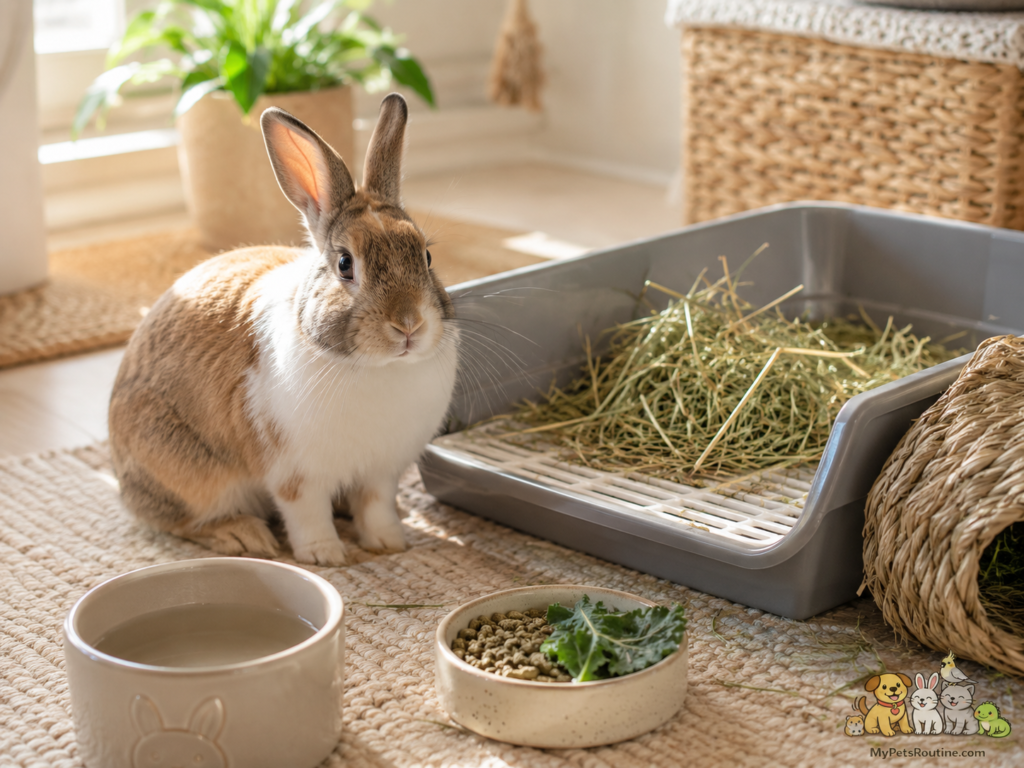
A rabbit’s litter box is one of the best daily health reports you will ever get. In the morning, check whether your rabbit has been eating hay and producing normal droppings overnight. Healthy rabbit droppings are usually round, dry, and fairly consistent in size. A sudden drop in quantity, tiny misshapen droppings, diarrhea, or no droppings at all should not be brushed off.
The RSPCA specifically advises owners to check that rabbits eat every day and pass plenty of dry droppings, and to contact a vet immediately if eating, drinking, or droppings change or stop. This is one of the reasons a daily rabbit routine is so important. If you clean and check the litter area regularly, you quickly learn what is normal for your bunny.
The litter box should be fresh enough that your rabbit wants to use it. Many rabbits like to eat hay while using the litter box, so placing hay near or inside the litter area can support natural habits. However, wet or soiled hay should be removed. Rabbit safe paper based litter or soft paper bedding is often preferred over dusty, clumping, clay, pine, or cedar products. VCA notes that hay, soft recycled paper bedding, or shredded paper are appropriate litter substrates and cautions against clay litter because rabbits groom themselves and may ingest it.
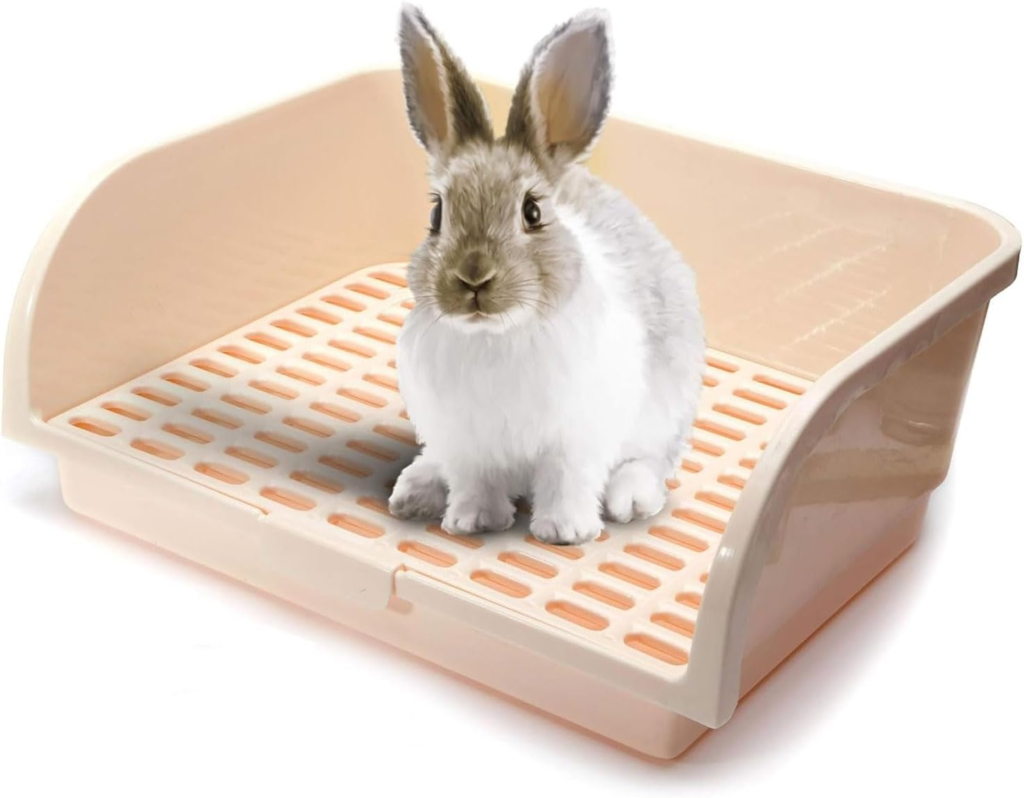
Oncpcare Super Large Rabbit Litter Box and Potty Trainer
Check Current Price and Availability at Amazon
Rabbit Daily Care:
Rabbit Daily Care Chart: What to Check Each Day
Use this daily rabbit care chart to quickly check your bunny’s food, water, litter habits, exercise, behavior, grooming, comfort, and overall wellbeing.
| ✓ | Daily Care Check | What to Look For | When to Check | Why It Matters |
|---|---|---|---|---|
| ☐ | Hay | Plenty of fresh, clean grass hay is available and your rabbit is actively eating it. Remove wet or soiled hay. | Morning & Evening | Hay provides essential fiber and supports healthy digestion and normal dental wear. |
| ☐ | Fresh Water | Water bowl or bottle is clean, full, accessible, and free from hay, fur, bedding, or droppings. | Morning & Evening | Rabbits need dependable access to clean water for hydration and healthy digestion. |
| ☐ | Appetite | Your rabbit is interested in hay and responds normally when greens or pellets are offered. | Morning & Evening | A sudden loss of appetite can be an important early warning sign that something is wrong. |
| ☐ | Droppings | Droppings are plentiful, round, dry, and reasonably consistent in size. | Morning & Evening | Fewer, smaller, misshapen, unusually soft, or absent droppings can signal a digestive problem. |
| ☐ | Urine & Litter Habits | Normal urine output and usual litter-box habits are continuing. | Daily | Changes in urine or litter habits may indicate stress, discomfort, illness, or a habitat problem. |
| ☐ | Litter Box | Remove wet litter and soiled hay and keep the box clean enough that your rabbit wants to use it. | Daily | A clean litter area supports hygiene and also makes health changes easier to notice. |
| ☐ | Pellets & Greens | Give measured pellets and appropriate fresh greens without allowing them to replace hay. | Daily | Hay should remain the foundation of the diet, with pellets and greens playing supporting roles. |
| ☐ | Movement & Exercise | Your rabbit has safe space to hop, stretch, stand, explore, dig, play, and rest. | Daily | Exercise helps reduce boredom, frustration, excess weight, and destructive behavior. |
| ☐ | Behavior | Watch for your rabbit’s usual level of curiosity, interaction, resting, exploring, and response to you. | Throughout the Day | Learning your rabbit’s normal behavior makes unusual changes much easier to recognize. |
| ☐ | Posture & Comfort | Your rabbit is resting normally rather than remaining hunched, unusually still, or appearing uncomfortable. | Morning & Evening | Changes in posture can be an early indication of pain or illness. |
| ☐ | Chew & Enrichment Items | Safe cardboard, willow, grass mats, hay-based toys, or other appropriate chew options are available and safe. | Daily | Chewing is normal rabbit behavior and appropriate outlets provide enrichment while protecting the home. |
| ☐ | Bunny-Proofed Exercise Area | Check cords, plants, furniture, rugs, stairs, and other possible hazards before free-roam time. | Before Exercise | Rabbits investigate their environment with their teeth, making daily safety checks important. |
| ☐ | Eyes, Nose & Ears | Look for unusual discharge, dampness, irritation, or other noticeable changes. | Daily Observation | Regular observation helps you recognize changes from your rabbit’s normal condition. |
| ☐ | Bottom & Feet | Check for dampness, irritation, stuck droppings, dirty fur, or sore areas on the feet. | Daily Observation | Clean, dry skin and feet are important for comfort and overall health. |
| ☐ | Coat & Grooming | Look for loose fur, mats, or excessive shedding and gently brush when needed. | Daily During Shedding / Regularly Otherwise | Rabbits groom themselves, but removing loose fur is especially important during shedding periods. |
| ☐ | Habitat Comfort | Resting space is dry, comfortable, away from direct sun and drafts, and includes a secure hiding place. | Daily | A predictable, comfortable environment supports both physical and emotional wellbeing. |
| ☐ | Overall “Normal” Check | Ask yourself: Is my rabbit eating, drinking, moving, resting, and behaving normally today? | Morning & Evening | Small changes are often easier to recognize when you deliberately compare today’s behavior with your rabbit’s normal routine. |
DAILY BUNNY RULE:
Hay available? Water fresh? Eating normally? Droppings normal? Acting like themselves?
If one of these suddenly changes—especially eating or droppings—pay attention right away.
Exercise Time: Rabbits Need Space to Move Every Day
A rabbit should not spend life confined to a small cage. Even a well designed enclosure is not enough on its own. Rabbits need safe daily exercise time, whether that happens in a bunny proofed room, a supervised free roam area, or a large exercise pen attached to their main habitat.
Daily movement gives rabbits the chance to stretch, hop, stand, explore, dig at appropriate surfaces, toss toys, and show natural behaviors. It also helps prevent boredom, frustration, weight gain, and destructive chewing. A rabbit that sits in a small cage for most of the day may appear quiet, but quiet does not always mean content. Sometimes it means under stimulated.
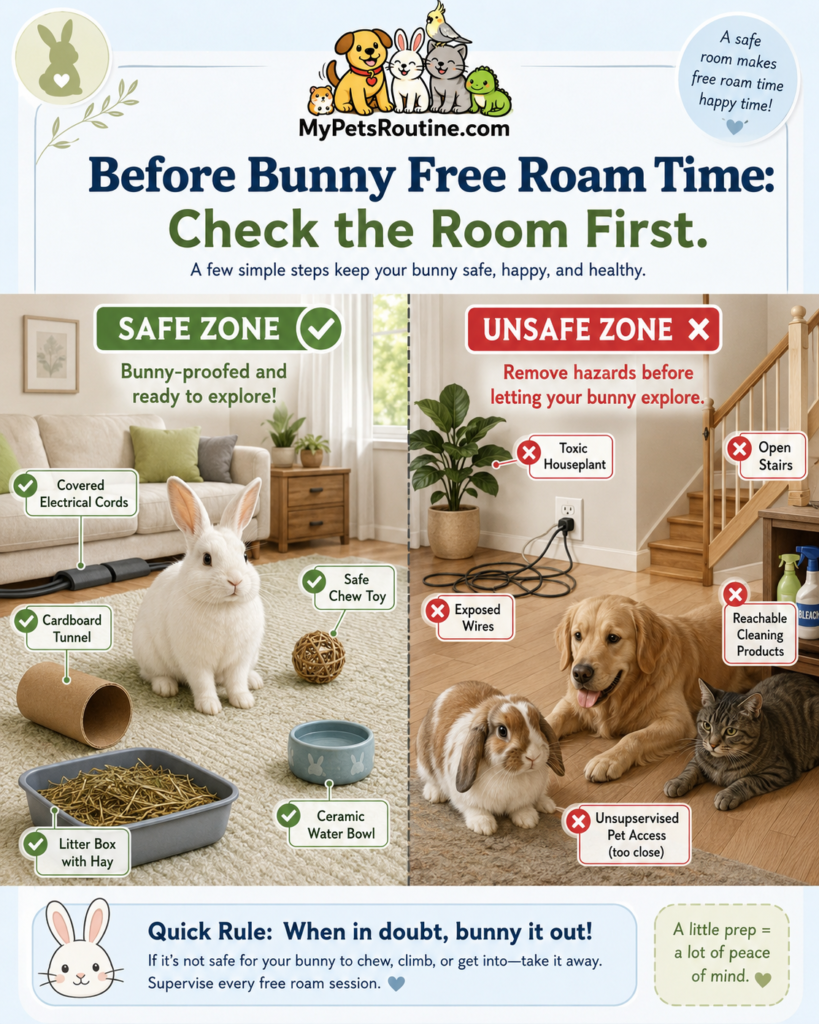
Before exercise time begins, the area needs to be safe. Bunny proofing is not optional, because rabbits explore with their teeth. Electrical cords should be covered or blocked. Houseplants should be removed unless they are confirmed rabbit safe. Baseboards, furniture legs, rugs, and low shelves may need protection. Slippery floors can make rabbits hesitant, so rugs or mats can help them move confidently. If there are dogs, cats, or young children in the home, supervision becomes even more important.
Exercise time is also when you learn your rabbit’s personality. Some rabbits race, binky, and zoom around the room. Others prefer slow exploration, gentle climbing, cardboard tunnels, or sitting near their person. Neither style is wrong. What matters is that your bunny has the chance to move and choose.
Best Friends notes that rabbits need several hours daily outside a cage for socialization, exercise, and exploration. A new owner does not need to offer the whole house on the first day, but the rabbit’s safe area should grow as trust, litter habits, and bunny proofing improve.
Bunny Proofing: Protecting Your Rabbit and Your Home
New bunny owners often learn about chewing the hard way. A rabbit can damage a charger cord, chew baseboards, or nibble carpet faster than expected. This is not spite, and it is not bad behavior. Chewing is normal rabbit behavior. The goal is to redirect it safely rather than punish it.
A good rabbit routine includes providing acceptable chewing outlets every day. Cardboard boxes, untreated willow toys, hay based toys, safe grass mats, and rabbit safe chew items can help keep a bunny busy. Cardboard hideouts are especially useful because they offer privacy, enrichment, and chewable texture at the same time.
Supervision matters most during early free roam time. A rabbit that repeatedly chooses one corner, rug edge, or furniture leg is telling you that the environment needs adjustment. You may need to block the area, add a litter box nearby, offer a better chew option, or reduce the amount of space until habits improve.
Evening Rabbit Care: Appetite, Droppings, Behavior, and Comfort.
Evening care is your second daily health check. By this point, your rabbit should have eaten hay, used the litter box, moved around, and interacted in its normal way. The evening routine does not need to feel formal, but it should be consistent.
Start by checking appetite. Is your rabbit still interested in hay? Does it come forward for greens or pellets as usual? A rabbit that refuses a favorite food should be watched closely. If refusal is paired with no droppings, lethargy, belly pressing, tooth grinding, or a hunched posture, contact a rabbit savvy veterinarian promptly.
Merck Veterinary Manual identifies unlimited hay, stress reduction, obesity prevention, environmental enrichment, safe chew items, and brushing loose fur as important ways to help prevent hairballs and gastrointestinal stasis. Gastrointestinal stasis is a serious condition in rabbits, and appetite changes are often one of the first signs owners notice.
Evening is also a good time to look at grooming and comfort. Rabbits groom themselves, but they still need help, especially during shedding season. Loose fur can be removed with gentle brushing. Long haired rabbits may need more frequent grooming to prevent mats. Nails should be monitored, because indoor rabbits may not wear them down enough naturally. Ears, eyes, nose, bottom, and feet should be checked regularly for discharge, dampness, irritation, sore hocks, or stuck droppings.
Comfort also includes temperature, bedding, and resting space. Rabbits do not handle extreme heat well. Their habitat should be away from direct sun, drafts, dampness, and noisy household traffic. A rabbit should have a hiding place where it can retreat without being dragged out or bothered. A secure rabbit is usually a healthier, more relaxed rabbit.
Cleaning Rhythm: Daily Litter Care and Weekly Habitat Refresh
A clean rabbit area does not happen once a week. It happens through small daily habits that prevent odor, mess, and health problems. The litter box should be checked every day. Wet litter should be removed, soiled hay should be replaced, and the box should be refreshed before it becomes unpleasant. Rabbits are naturally clean animals, and many will avoid a box that smells too strongly or feels dirty underfoot.
Daily cleaning also gives you a chance to notice patterns. If the litter box is suddenly dry, urine output has changed, droppings are smaller, or your rabbit has stopped using the box, something may be different. The cause could be stress, hormones, a dirty box, a change in routine, pain, illness, or a setup issue.
Weekly cleaning should be more thorough. The habitat base, pen panels, washable rugs, hideouts, bowls, and litter box should be cleaned with rabbit safe methods. Strong chemical smells can be stressful, so owners should avoid harsh residues and make sure everything is dry before the rabbit returns. Fabric items should be washed regularly, especially if the rabbit has accidents or sheds heavily.
Habitat Cleaning Rhythm Table:
| Done | Cleaning Task | Recommended Rhythm | Why It Matters |
|---|---|---|---|
| ☐ | Remove wet litter and soiled hay | Daily | Helps control odor, keeps the litter box inviting, and reduces the risk of dampness irritating your rabbit’s feet or skin. |
| ☐ | Check droppings and urine patterns | Daily | Changes in droppings, urine amount, or litter habits can be an early sign that your rabbit is stressed, dehydrated, or not feeling well. |
| ☐ | Wash and refill water bowl or bottle | Daily | Fresh water supports healthy digestion, hydration, and normal appetite. Bowls should be cleaned if hay, fur, or litter gets inside. |
| ☐ | Refresh hay feeding area | Daily | Rabbits need constant access to clean hay. Removing damp or trampled hay encourages better eating and keeps the habitat cleaner. |
| ☐ | Wipe small messes around the pen | Daily or as needed | Quick cleanups prevent buildup and make the rabbit’s space easier to maintain throughout the week. |
| ☐ | Vacuum loose hay and fur nearby | Several times per week | Regular vacuuming keeps the surrounding room cleaner and helps prevent hidden damp spots, dust, and excess fur buildup. |
| ☐ | Wash food dishes and water bowls thoroughly | Several times per week or daily if soiled | Clean dishes help prevent residue, bacteria buildup, and stale food smells in the rabbit’s feeding area. |
| ☐ | Deep clean litter box | Weekly | A full litter box clean helps remove urine buildup, lingering odor, and stuck-on residue that daily spot cleaning may miss. |
| ☐ | Wash blankets, mats, and soft bedding | Weekly or sooner if soiled | Clean resting surfaces help keep your rabbit comfortable and reduce odor, fur, and dampness in the habitat. |
| ☐ | Refresh hideouts, tunnels, and chew items | Weekly | Checking enrichment items helps you remove anything dirty, damp, heavily chewed, or unsafe while keeping the space interesting. |
| ☐ | Wipe down enclosure or pen surfaces | Weekly | Cleaning panels, corners, and floor protectors keeps the habitat fresh and prevents grime from building up in hard-to-see areas. |
| ☐ | Restock hay, litter, pellets, and cleaning supplies | Weekly | A quick supply check prevents last-minute shortages and keeps the rabbit’s daily care routine consistent. |
Feeding Routine: Hay First, Pellets Second, Treats Last
One of the biggest mistakes new rabbit owners make is treating pellets as the main meal. Pellets are easy, tidy, and familiar, so it is understandable. But rabbits are designed for fiber rich forage, not a pellet heavy diet. Hay should always come first.
Fresh greens are valuable, but they should be chosen carefully. Many rabbits enjoy leafy greens such as romaine lettuce, cilantro, parsley, basil, dandelion greens, and spring mix, depending on the individual rabbit’s tolerance and veterinary advice. Iceberg lettuce, sugary treats, seed mixes, yogurt drops, and processed snack sticks are not appropriate staples. Fruit and root vegetables should be occasional treats, not daily bulk foods.
The House Rabbit Society emphasizes that adult rabbits need unlimited hay, fresh greens, and only a few pellets, with anything beyond that treated as limited extras. The RSPCA also states that most of a rabbit’s diet should be hay or grass, with some leafy greens and a small amount of pellets.
A simple feeding rhythm works well for many homes. Morning can include a hay refresh, clean water, and a measured pellet serving. Later in the day, leafy greens can be offered after the rabbit has had plenty of time to eat hay. Evening can include another hay top up, water check, and a small familiar treat used for bonding or training. The exact schedule can vary, but the principle stays the same. Hay should always be available, and richer foods should not crowd it out.
Rabbit Behavior Checks: Learning What Normal Looks Like
A daily routine does more than care for the body. It teaches you who your rabbit is. Some rabbits greet their owners every morning. Some are shy until evening. Some flop dramatically after exercise. Some chin everything they own. Some are tidy. Some are hay tornadoes.
The more you understand your rabbit’s normal behavior, the faster you can recognize a problem. A rabbit that normally rushes over for greens but suddenly stays in the corner is communicating something. A rabbit that usually leaves a full litter box but produces only a few tiny droppings is showing a change. A rabbit that normally relaxes stretched out but now sits hunched may be uncomfortable.
Behavior changes do not always mean an emergency, but they always deserve attention. Rabbits cannot tell you when something hurts. Your job is to notice the small changes before they become big ones.
Common Rabbit Care Mistakes New Owners Make
Many rabbit care mistakes begin with good intentions. A new owner buys a cage because it is marketed for rabbits. They feed pellets because the bag says rabbit food. They offer carrots because cartoons made carrots look like the perfect bunny meal. They pick up the rabbit often because they want to bond. None of this means the owner is careless. It means rabbit needs are often misunderstood.
The better approach is to think of rabbits as active, delicate, intelligent companion animals. They need room to move, not just room to sit. They need hay more than treats. They need gentle trust building more than frequent lifting. They need a clean litter setup, not a forgotten corner. They need daily observation because their health can change quickly.
A rabbit that is properly cared for is not simply “kept.” It is supported. Its home gives it choices. Its diet matches its biology. Its routine makes it feel safe. Its owner notices the little things.
When to Call a Rabbit Savvy Veterinarian
Every rabbit owner should know where to find a rabbit savvy veterinarian before there is an emergency. Not all vets regularly treat rabbits, and waiting until your bunny is sick can cost valuable time.
Call a veterinarian promptly if your rabbit stops eating, produces no droppings, has diarrhea, seems weak or lethargic, sits hunched in pain, has trouble breathing, has a wet or dirty bottom, drools, tilts its head, stops moving normally, or behaves very differently from usual. Appetite and droppings are especially important. Because rabbits are prey animals and digestive problems can become serious, a “wait and see” approach is risky when a rabbit is not eating or not passing stool.
This article is meant to help new owners build a better home routine, but it is not a replacement for veterinary care. A good rabbit routine should include an initial wellness visit, spay or neuter discussion, nail trimming guidance, diet review, and a plan for emergencies.
Final Thoughts: A Good Rabbit Routine Is Built on Attention
Rabbit care is not difficult because rabbits are impossible pets. It is difficult only when people are told they are simple cage animals. Once you understand what they really need, the daily rhythm becomes clear.
In the morning, refill hay, refresh water, measure food carefully, and check the litter box. During the day, provide safe space to move, chew, explore, and rest. In the evening, look again at appetite, droppings, posture, grooming, and comfort. Keep the habitat clean through small daily habits and a deeper weekly refresh. Most of all, learn your rabbit’s normal.
A bunny does not need a perfect owner. It needs a consistent one. With fresh hay, clean water, safe exercise, gentle observation, and a predictable routine, your rabbit can become more confident, more comfortable, and far easier to understand. That is the heart of good rabbit care. Not a fancy setup. Not expensive accessories. Just daily attention, repeated with love.