
 By
Kelley Kelly
By
Kelley Kelly
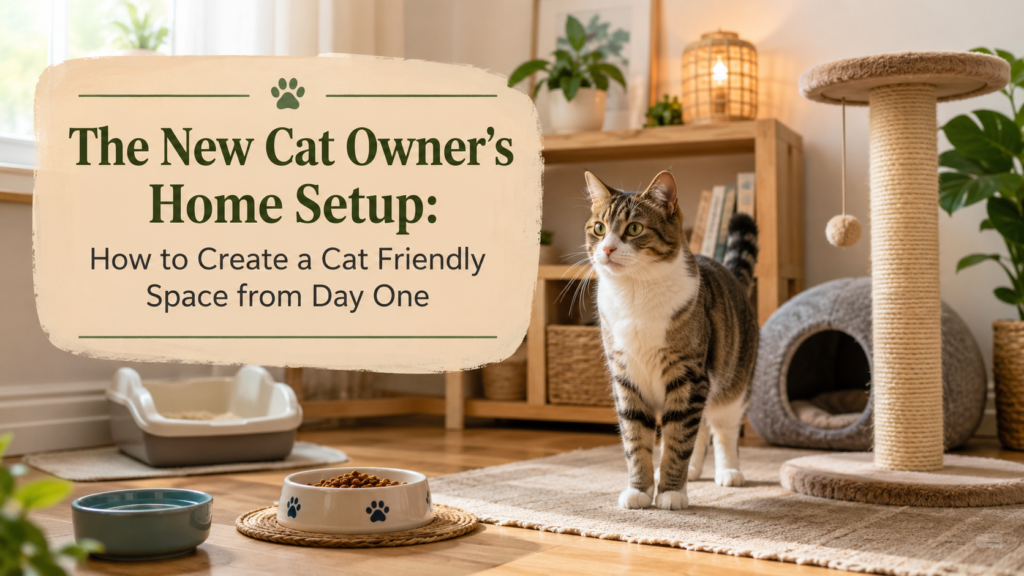
Bringing home a new cat is exciting, but for the cat, the experience can feel much bigger than we realize. A new home is full of unfamiliar smells, sounds, rooms, people, routines, and hiding places. Even a confident cat may pause at the edge of the carrier, listen carefully, and decide that the safest choice is to stay tucked away for a while. That is not rejection. It is normal feline behavior.
Cats are highly sensitive to their environment, and many common “cat problems” begin when the home setup works against a cat’s instincts instead of with them. Litter box avoidance, furniture scratching, hiding, nighttime restlessness, and tension with other pets are often less about stubbornness and more about stress, poor resource placement, or a lack of secure territory. The good news is that a thoughtful cat friendly home setup can prevent many of these issues before they begin.
A new cat does not need a perfect house on day one. What they need is a predictable starter space, a clean and accessible litter box, appropriate scratching zones, food and water placed with feline instincts in mind, and safe spaces where they can retreat without being disturbed. When those basics are in place, your cat can begin to relax, explore, bond, and show you who they really are.
Why Your Cat’s Home Setup Matters So Much
Cats are both predators and prey animals by nature. They may stalk toys, leap at movement, and proudly claim a sunny window perch, but they also want escape routes, quiet corners, and places where they can observe without feeling exposed. This is why a cat may ignore the expensive bed in the middle of the room and choose the cardboard box in the corner instead. The box feels safer.
The AAFP and ISFM feline environmental guidelines describe important cat resources as food, water, toileting areas, resting spaces, scratching areas, and elevated perches. These resources are not just conveniences. They give cats choice, control, and a stronger sense of security in the home. When cats have access to several well placed resources, especially in homes with more than one cat, they are less likely to feel trapped or forced into conflict.
For a new cat owner, this means the goal is not to decorate around the cat after problems appear. The goal is to set up the home so normal cat behavior has acceptable outlets from the beginning. Your cat will need to scratch. Your cat will need to hide. Your cat will need a clean bathroom area. Your cat will probably prefer that food, water, and litter are not crowded together in one busy corner. When the home respects these needs, daily life becomes calmer for everyone.
Start With a Safe Arrival Room
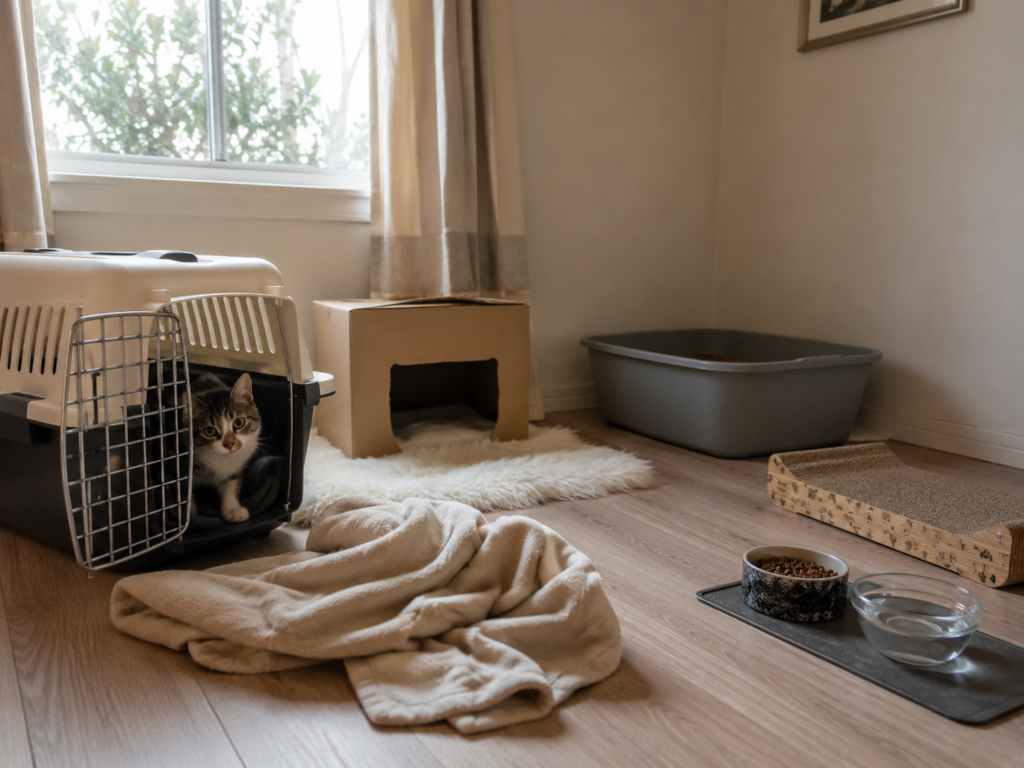
A safe arrival room is a quiet starter space where your new cat can decompress before exploring the rest of the home. This room can be a spare bedroom, office, bathroom, or any calm space with a door. It should be easy to keep quiet, easy to clean, and free from hazards such as exposed cords, toxic plants, open vents, small objects that could be swallowed, and unstable furniture.
The purpose of this room is not to isolate your cat as a punishment. It is to give them a manageable first territory. Instead of asking your cat to process an entire house at once, you are offering a smaller world where every important resource is easy to find. Many cats adjust faster when they can begin in a quiet room with food, water, litter, bedding, toys, scratching options, and hiding spots. Ontario SPCA guidance for newly adopted cats also recommends setting up a small base camp for the first few days, with food and water on one side of the room and the litter box on the opposite side.
When you arrive home, place the carrier in the safe room and open the door. Then let your cat decide when to come out. Some cats step out within minutes. Others wait until the room is silent. A very shy cat may explore at night when the house is still. Resist the urge to pull them out, lift them into your lap, or give them a full house tour right away. A cat that chooses movement voluntarily is learning that the new environment is safe. A cat that is forced may learn the opposite.
The safe room should include at least one hiding place that you can access if needed, such as a covered cat bed, a cardboard box with an opening, or a carrier with soft bedding inside. Avoid letting the cat hide somewhere unsafe or unreachable, such as inside a wall opening, behind heavy appliances, or under furniture where you could not help them in an emergency. A good hiding spot makes the cat feel invisible while still allowing you to monitor their health, appetite, and litter box use.
What to Put in the Safe Arrival Room
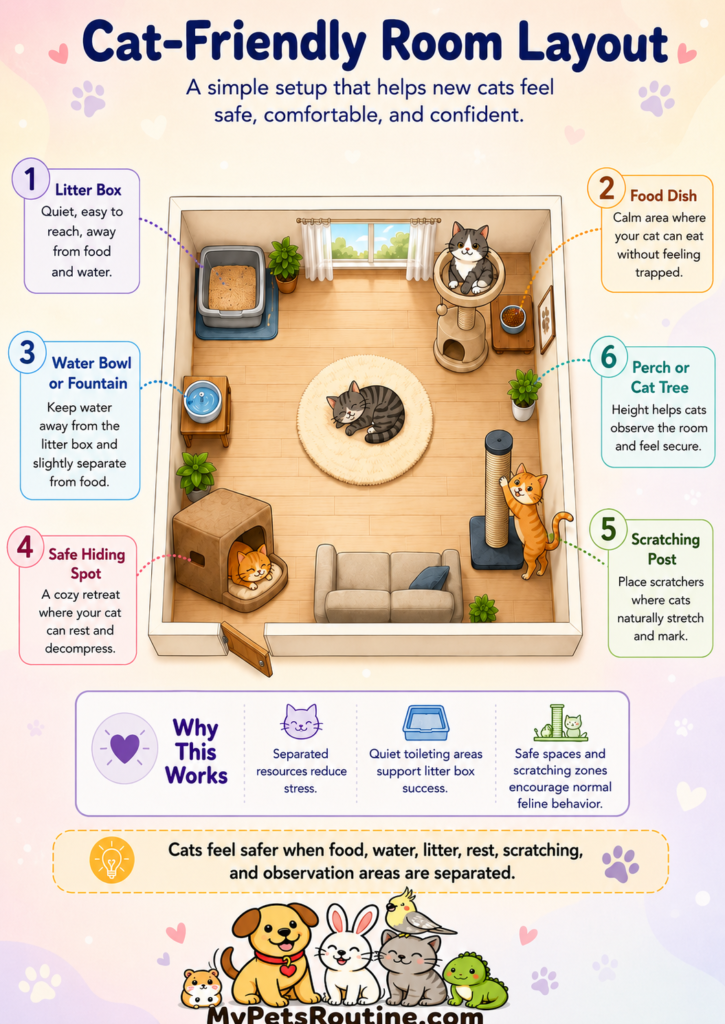
The safe room should feel simple, not crowded. A new cat needs clear zones for resting, eating, drinking, toileting, scratching, and watching the room. If everything is pushed together in one corner, the cat may feel that they have no real choice. A better layout gives each resource its own small area.
This kind of starter layout is especially helpful for kittens, timid cats, recently adopted shelter cats, and cats entering a home with children or other animals. It also makes it easier for you to notice whether your cat is eating, drinking, urinating, defecating, and moving normally during the first few days.
Litter Box Setup: Make the Bathroom Easy to Say Yes To
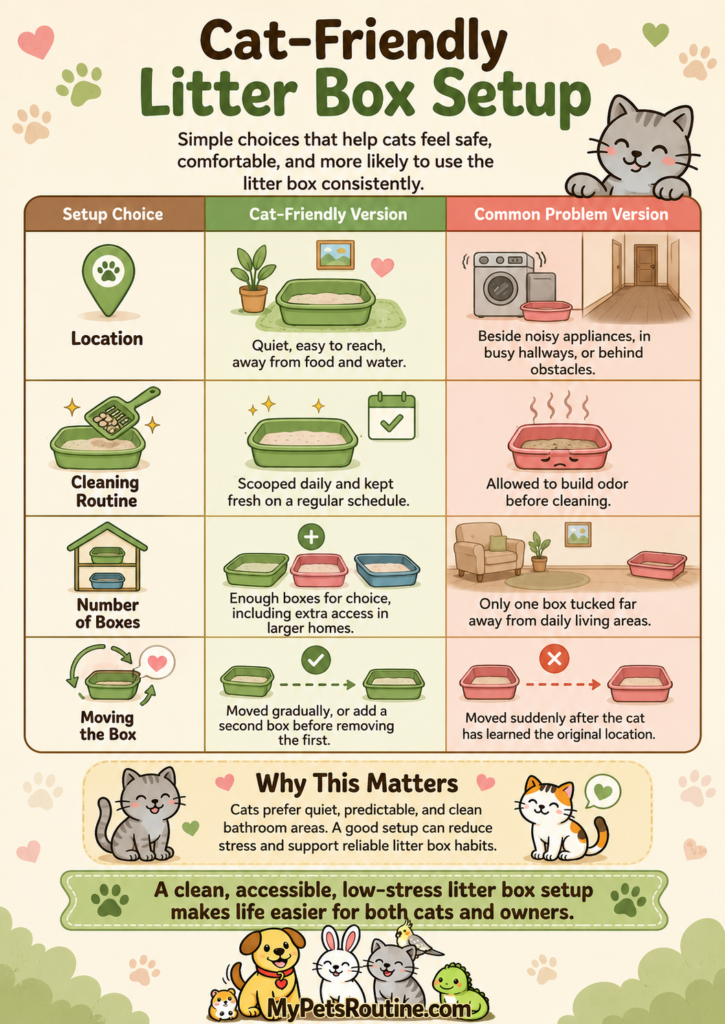
The litter box is one of the most important parts of a new cat setup because cats can form strong opinions quickly. If the box is dirty, difficult to reach, too close to loud appliances, hidden behind a baby gate, placed beside food, or suddenly moved after the cat has started using it, the cat may choose another location that feels more acceptable to them. Once a cat begins using a rug, laundry pile, bathtub, or quiet closet corner, the habit can become frustrating to reverse.
The ASPCA recommends scooping litter boxes at least once daily and cleaning boxes weekly with warm water and mild unscented soap, baking soda, or no soap, because strong scents can contribute to litter box aversion. That daily scooping routine matters. Cats have a much stronger sense of smell than humans, and a box that seems “not too bad” to a person may already smell unpleasant to a cat.
Location matters just as much as cleanliness. A good litter box location is quiet, accessible, and not too far from where the cat spends time. It should not require the cat to pass a barking dog, squeeze through a busy hallway, or descend into a dark basement where a furnace suddenly turns on. International Cat Care recommends placing litter trays away from food and water, full length windows, external doors, and busy thoroughfares, because cats can feel vulnerable while toileting.
In a multi level home, litter access should be convenient on more than one floor. The ASPCA also notes that indoor cats should have a quiet, accessible litter box location, with daily scooping, and recommends one box per floor in multi level homes. This is especially important for kittens, senior cats, nervous cats, and cats who may not want to travel far when they need to go.
Many cat behavior professionals use the “one box per cat plus one extra” guideline. That means one cat often does best with two boxes, while two cats often do best with three. The reason is not simply cleanliness. Some cats prefer to urinate in one box and defecate in another. Others do not want to share a bathroom with another cat. In multi cat homes, boxes should be placed in different locations rather than lined up side by side, because side by side boxes may function like one shared bathroom from the cat’s perspective.
Do Not Move the Litter Box Too Suddenly
New cat owners sometimes place the litter box in the starter room for the first few days, then move it across the house all at once. From the human point of view, this seems reasonable. From the cat’s point of view, the bathroom has disappeared. A sudden move can cause confusion, especially if the cat is still learning the home.
If you need to move a litter box, do it gradually when possible. Shift it a short distance at a time, keeping the path obvious and accessible. If your cat is already using a box reliably in the safe room, you can add a second box in the future permanent location before removing the first one. This gives the cat a choice and lowers the chance of accidents.
A cat that urinates or defecates outside the box is not being spiteful. They may be stressed, confused, blocked from access, unhappy with the litter, uncomfortable with the box style, or dealing with a medical issue. Straining, frequent trips to the box, crying, blood in the urine, or repeated unproductive attempts to urinate should be treated as urgent veterinary concerns, especially in male cats.
Scratching Zones: Give the Claws a Legal Destination
Scratching is not bad behavior. It is normal feline behavior. Cats scratch to stretch their muscles, maintain their claws, mark territory, release tension, and leave scent from glands in their paws. When a cat scratches the arm of the couch, they are not trying to ruin your furniture. They are choosing a surface that feels stable, visible, and useful.
The solution is not to stop scratching. The solution is to make the right scratching surfaces more appealing than the furniture. A cat friendly home should include both vertical and horizontal scratching options. Vertical scratchers help cats stretch upward through their shoulders and back. Horizontal scratchers appeal to cats who like to dig downward or scratch carpets and rugs. Some cats love sisal rope. Others prefer cardboard, wood, carpet, or woven textures. The best scratching setup is the one your cat actually uses.
Placement is critical. A scratching post hidden in a spare room may be ignored while the sofa takes the damage. Cats often scratch near resting areas, entrances, social spaces, and places where their scent feels meaningful. If your cat scratches the couch, place a sturdy scratcher directly beside that couch at first. Once the cat is using it consistently, you can slowly shift the scratcher to a nearby location that still makes sense to the cat.
A scratching post should be tall enough for a full body stretch and stable enough that it does not wobble. If the post tips or shakes, many cats will avoid it. Horizontal scratchers should be placed where the cat already wants to scratch, not where they are most convenient for the owner. Furniture protection can help during the transition. Clear furniture guards, washable throws, double sided furniture safe tape, and strategic scratcher placement can all redirect behavior without scaring the cat.
Punishment is rarely helpful for scratching. Yelling, spraying water, or startling the cat may only teach them to scratch when you are not watching, or may increase stress in the home. A better approach is to interrupt gently, redirect to the approved scratcher, praise calm use, and make the unwanted surface less satisfying.
Please enjoy our Pet Product Selections, some links on this page are affiliate links. If you buy through these links, we may earn a commission at no extra cost to you. This helps support our site and allows us to continue producing helpful Tips and other content.
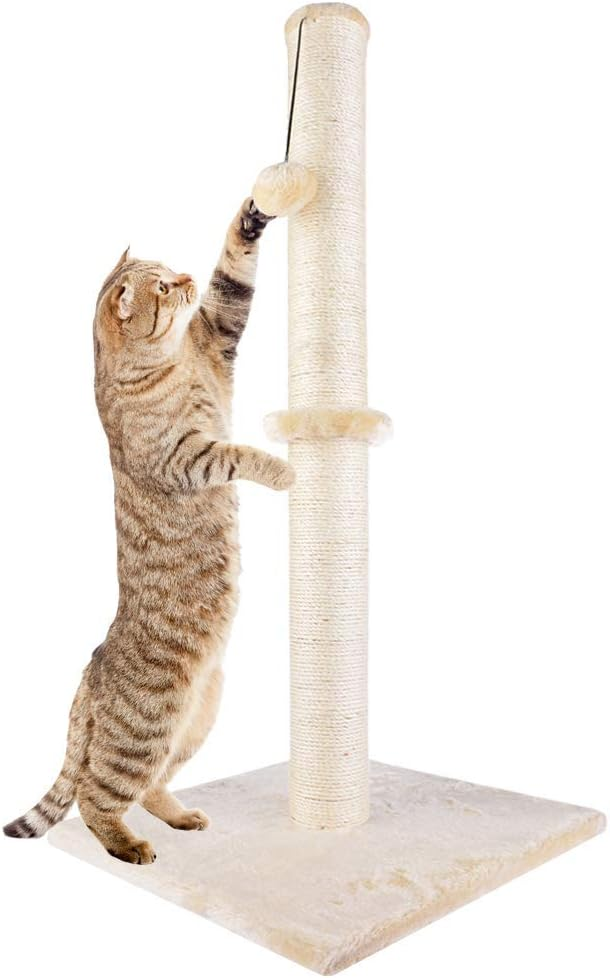
Recommended Cat Setup Product: A Tall, Stable Scratching Post. Check out current Price and Availability of Amazon’s Dimaka 29″ Tall Cat Scratching Post with Sisal Rope.
Food and Water Placement: Stop Crowding the Cat Station
Many new cat owners create one “pet corner” with food, water, and litter all close together. It looks tidy to humans, but it does not always feel right to cats. In nature, cats do not typically eat, drink, and toilet in the same tiny area. Indoor cats often prefer separation between these resources.
Food should be placed in a calm area where the cat can eat without being startled or cornered. Avoid placing the bowl beside a noisy appliance, near a doorway where people step over the cat, or directly beside another pet’s feeding area if that causes tension. In multi cat homes, separate feeding stations can reduce competition and make mealtimes more peaceful.
Water often works best when it is not directly beside food or litter. Some cats drink more readily from a bowl placed in a different room or from a cat fountain that keeps water moving. The most important rule is freshness. Water should be changed daily, and bowls should be washed often enough that they do not develop slime or odor.
The food bowl itself can also affect comfort. Wide, shallow dishes may be more comfortable for cats who dislike their whiskers touching the sides of a narrow bowl. Raised dishes may help some cats, while others prefer floor level feeding. Watch your cat’s body language. If they pull food out of the bowl to eat from the floor, hesitate at the dish, or seem uncomfortable, the bowl style or location may need adjustment.
International Cat Care’s home setup guidance emphasizes placing litter away from food and water, and the broader feline environmental guidelines emphasize giving cats separate, accessible resources so they can choose where to eat, drink, rest, and toilet. This is one of the simplest changes a new owner can make, and it often has a noticeable effect on a cat’s comfort.
Safe Spaces: Your Cat Needs Places Where Nothing Is Demanded
A safe space is any place where your cat can retreat and know they will not be grabbed, chased, cornered, or forced into interaction. It can be a cat tree cubby, a covered bed, a cardboard box, a shelf, a quiet chair, a blanket lined carrier, or a perch above the room. Safe spaces are especially important in homes with children, guests, dogs, or other cats.
A good safe space has at least one easy exit. Cats dislike feeling trapped. If a child, dog, or adult blocks the only way out, the cat may swat, hiss, growl, or bite because escape feels impossible. Teaching everyone in the home to respect retreat spaces is one of the most important parts of responsible cat ownership. When the cat goes to their safe place, interaction stops.
Vertical space is particularly powerful. A cat tree, wall perch, window shelf, or sturdy bookcase pathway can help a cat feel secure because height allows observation. Many cats calm down when they can watch activity from above instead of being in the middle of it. Toronto Humane Society also recommends scratching posts, climbing trees, and window perches as part of environmental enrichment for cats.
Safe spaces should be available beyond the starter room once the cat begins exploring the home. A nervous cat may move from hiding under the bed to resting on a chair, then to watching from the hallway, then to joining the family in the living room. That gradual expansion is healthy. Let your cat’s confidence set the pace.
A Simple Adjustment Timeline for a New Cat
Every cat adjusts differently. Some cats behave as if they own the house within hours. Others need days or weeks before they feel comfortable walking through open rooms. Age, temperament, previous experiences, shelter stress, household noise, and the presence of other animals can all affect the timeline.
This timeline is not a rule. It is simply a way to think about progress. A cat hiding on day two is not failing. A cat that eats at night before eating in front of you is still adjusting. A cat that watches from under the bed may be gathering information. What matters most is that eating, drinking, litter box use, and overall health are being monitored.
The Most Common Home Setup Mistakes New Cat Owners Make
One common mistake is giving a new cat too much space too soon. Humans often want to show the cat the whole home because they are excited. The cat may experience that same tour as overwhelming. Starting smaller is usually kinder.
Another common mistake is placing all cat supplies together. A food bowl, water bowl, and litter box lined up in one laundry room may look efficient, but it ignores the cat’s preference for separated resources. Cats are more likely to settle when their home has distinct areas for eating, drinking, toileting, scratching, resting, and observing.
A third mistake is buying one scratching post and assuming the cat will understand the plan. Scratching surfaces need to be appealing, stable, varied, and placed where the cat wants to use them. If the sofa is the favorite target, the first scratcher should appear beside the sofa, not hidden across the room.
A fourth mistake is removing hiding places too quickly. Owners sometimes worry that a hiding cat will never bond if allowed to stay hidden. In reality, safe hiding often helps bonding because the cat learns that people will not force interaction. Trust grows faster when the cat has control.
How to Know Your Setup Is Working
A good setup does not guarantee that your cat will be instantly social, but it does create the conditions for confidence. You may notice your cat eating more consistently, using the litter box reliably, grooming in the open, stretching after naps, scratching approved surfaces, exploring with a relaxed tail, or choosing to rest near family members. These are quiet signs of progress.
A comfortable cat may blink slowly, knead a blanket, sleep on their side, approach with a softly raised tail, or settle in a perch where they can watch the room. A stressed cat may hide constantly, freeze, hiss, swat, refuse food, eliminate outside the box, overgroom, pace, or startle easily. Occasional caution is normal during transition. Persistent distress, appetite loss, litter box changes, vomiting, diarrhea, or signs of pain should be discussed with a veterinarian.
Bringing It All Together
A new cat does not need a huge collection of supplies to feel at home. They need the right resources in the right places. A quiet arrival room tells your cat they are safe. A clean, accessible litter box tells them where the bathroom is. Scratching zones tell them their normal instincts are welcome. Separated food and water stations make daily care more comfortable. Hiding spots, perches, and calm retreat areas give them control.
The best cat home is not one that tries to stop cats from being cats. It is one that gives normal feline behavior an acceptable place to go. When you build the home around your cat’s instincts, you are not spoiling them. You are preventing stress, reducing behavior problems, and creating the foundation for a trusting relationship.
Your cat may not thank you on the first day. They may sit under the bed and stare. They may wait until midnight to inspect the food bowl. They may scratch the new post only when no one is watching. But little by little, a well designed home tells them the same message again and again: this place is safe, your needs are understood, and you belong here.
MyPetsRoutine.com participates in the Amazon Services LLC Associates Program, an affiliate advertising program designed to provide a means for sites to earn advertising fees by advertising and linking to Amazon.com