 By
Kelley Kelly
By
Kelley Kelly
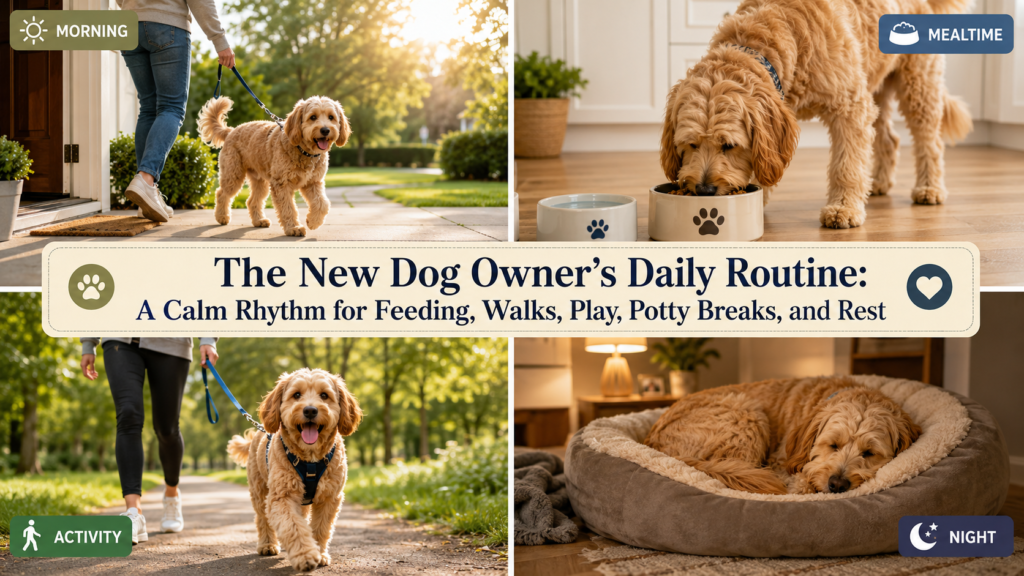
Bringing home a new dog is exciting, emotional, and, if we are being honest, a little overwhelming. One minute your dog is sweetly curled up at your feet, and the next minute they are barking at the window, chewing the corner of a rug, sniffing suspiciously near the back door, or following you from room to room with restless eyes. Many new dog owners wonder if they are doing something wrong, but most of the time, the dog is not being difficult on purpose. They are trying to understand a brand new world without a clear daily rhythm.
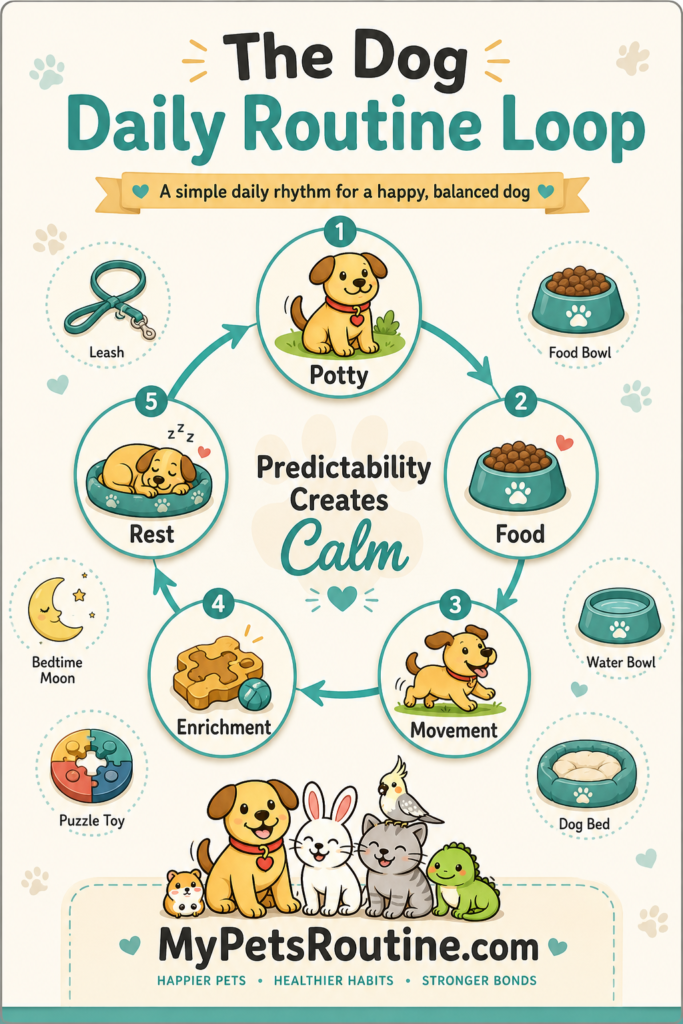
A predictable dog routine is one of the simplest ways to help a new dog feel secure. Dogs learn through patterns. When food, potty breaks, walks, play, training, quiet time, and sleep happen in a familiar order, your dog begins to relax because the day starts to make sense. A good routine does not need to be rigid or complicated. It simply gives your dog enough structure to know when it is time to eat, when it is time to go outside, when it is time to rest, and when it is time to connect with you.
For new dog owners, this kind of rhythm can reduce stress in the home. It can help prevent potty accidents, lower demand barking, reduce destructive chewing, support crate training, and make alone time easier. A routine also helps you notice changes in your dog’s health. When you know your dog’s normal appetite, energy level, bathroom pattern, and mood, it becomes much easier to spot when something is off. Responsible pet ownership includes nutritious food, fresh water, exercise, companionship, and timely veterinary care, and a daily routine is the practical framework that helps those needs happen consistently.
Why Dogs Feel Safer With a Predictable Daily Routine
A dog’s day is built around a few basic needs. They need to eat, drink, eliminate, move their body, use their brain, bond with their family, and sleep deeply enough to recover. When these needs are scattered randomly through the day, some dogs become anxious or overstimulated. They may bark because they do not know what is coming next. They may chew because they have not had enough appropriate enrichment. They may have accidents because their potty schedule is inconsistent. They may become clingy because alone time has never been taught as a normal, safe part of the day.
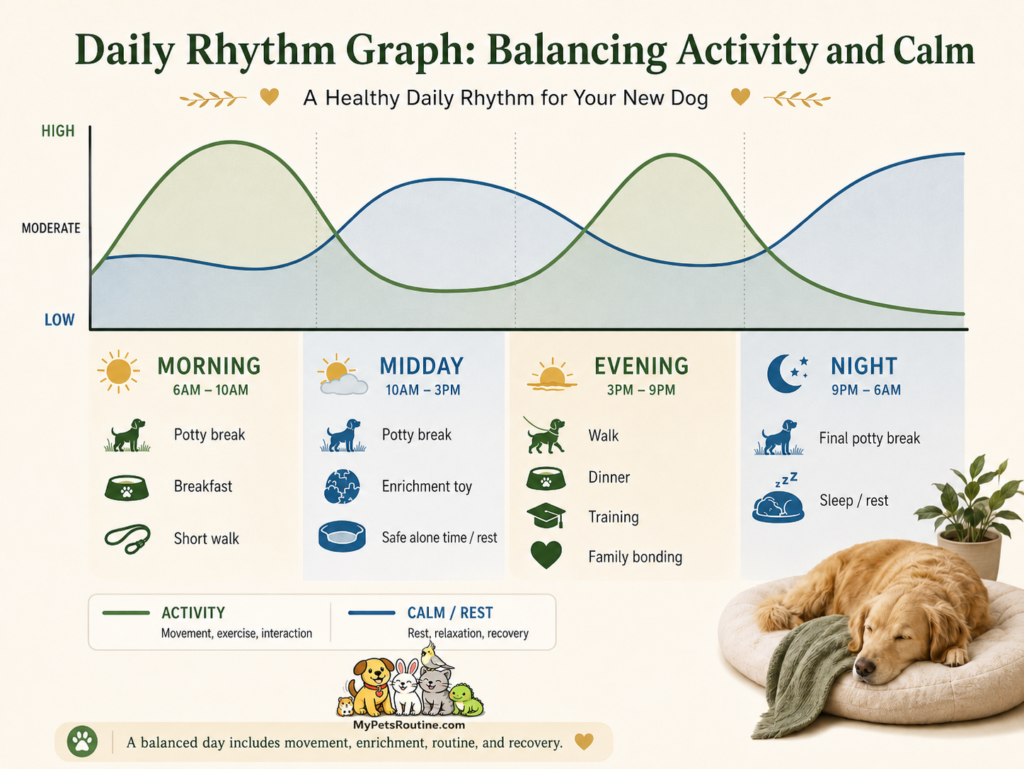
A daily dog routine does not mean every minute is controlled. In fact, the best routines leave room for real life. The goal is not perfection. The goal is predictability. Your dog learns that mornings bring a potty break, breakfast, and movement. Midday brings a bathroom opportunity, calm time, and enrichment. Evenings bring another walk, dinner, family connection, and a gradual wind down before bed.
This is especially important for puppies, newly adopted adult dogs, rescue dogs, and dogs settling into a new household. A new home has unfamiliar smells, sounds, people, rules, and expectations. A routine acts like a map. It gently tells your dog, “This is how life works here.”
The Morning Routine: Start the Day Before Problems Begin
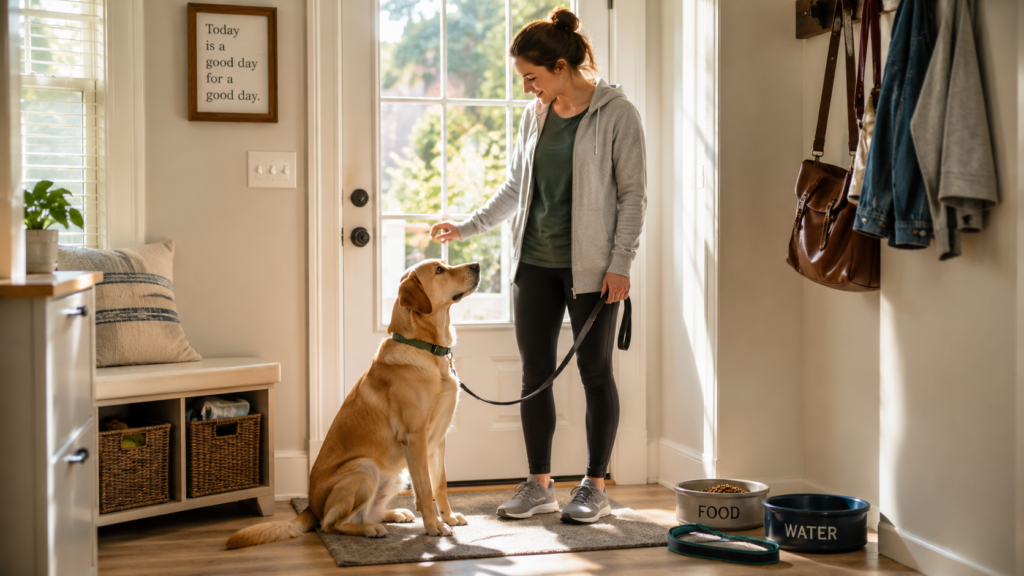
Morning sets the tone for the entire day. For most dogs, the first need is not breakfast or play. It is a potty break. After several hours of sleep, puppies and adult dogs usually need to go outside as soon as the household wakes up. Taking your dog out before checking your phone, making coffee, or starting chores can prevent many early morning accidents.
With puppies, the morning potty break is especially important because their bladder control is still developing. Housetraining guidance commonly recommends taking puppies out first thing in the morning, last thing at night, after eating or drinking, after naps, after crate time, and after indoor play. This does not mean you have to live outside with your puppy forever. It simply means that early structure helps them connect the feeling of needing to go with the habit of going outdoors.
Once your dog has had a chance to eliminate, breakfast can become the next predictable part of the morning. Feeding at roughly the same time each day helps regulate digestion and makes bathroom timing easier to understand. For adult dogs, many families feed twice a day, once in the morning and once in the evening. Puppies often need more frequent meals, depending on age, breed, size, and veterinary guidance. The exact amount and schedule should be based on your veterinarian’s advice, your dog’s body condition, and the feeding instructions for the food you use. The ASPCA notes that dog owners should consult their veterinarian to determine the best feeding schedule and food type for their individual dog.
A short morning walk after breakfast or shortly after the first potty break gives your dog a chance to move, sniff, and mentally settle before the day gets busy. This does not have to be a long hike. For many dogs, ten to twenty minutes of calm walking, sniffing, and gentle engagement can make a noticeable difference. Sniffing is not wasted time. It is mental enrichment. Your dog is reading the neighborhood the way you might read messages or headlines.
Morning is also the best time for a quick health and behavior check. Notice whether your dog eats normally, drinks normally, moves comfortably, and seems like themselves. A dog who suddenly refuses breakfast, seems unusually tired, limps, vomits, has diarrhea, strains to urinate, or acts painful should be monitored closely and may need veterinary attention. The value of a routine is that it gives you a baseline. You cannot recognize “not normal” unless you know what normal looks like for your dog.
Midday Needs: Potty Breaks, Enrichment, and Safe Alone Time
By midday, many new dog owners are working, running errands, caring for children, or managing a full household. This is often when routine problems start to show up. A dog who was calm in the morning may begin barking, chewing, pacing, or pawing for attention. A puppy may suddenly have an accident even though they went outside earlier. An adult dog may raid the trash, shred paper, or scratch at doors.
These behaviors often mean the dog’s needs are not being met in a predictable way. Midday is not just empty space between breakfast and dinner. It is an important part of the daily dog schedule.
For puppies, midday potty breaks are essential. A common rule of thumb used in puppy training is the month plus one guideline, which estimates that a puppy may be able to hold their bladder for roughly their age in months plus one hour, although individual puppies vary and should not be pushed beyond comfort. A three month old puppy, for example, may need a bathroom opportunity about every few hours during the day. Small breeds, very young puppies, excited puppies, and puppies who recently ate, drank, played, or woke from a nap may need to go even sooner.
Adult dogs can usually wait longer, but that does not mean they should be ignored all day. A midday bathroom break helps prevent discomfort and supports good house manners. If you work outside the home, this may involve coming home at lunch, asking a trusted family member, hiring a dog walker, using a safe daycare option, or creating a schedule that fits your dog’s age and needs.
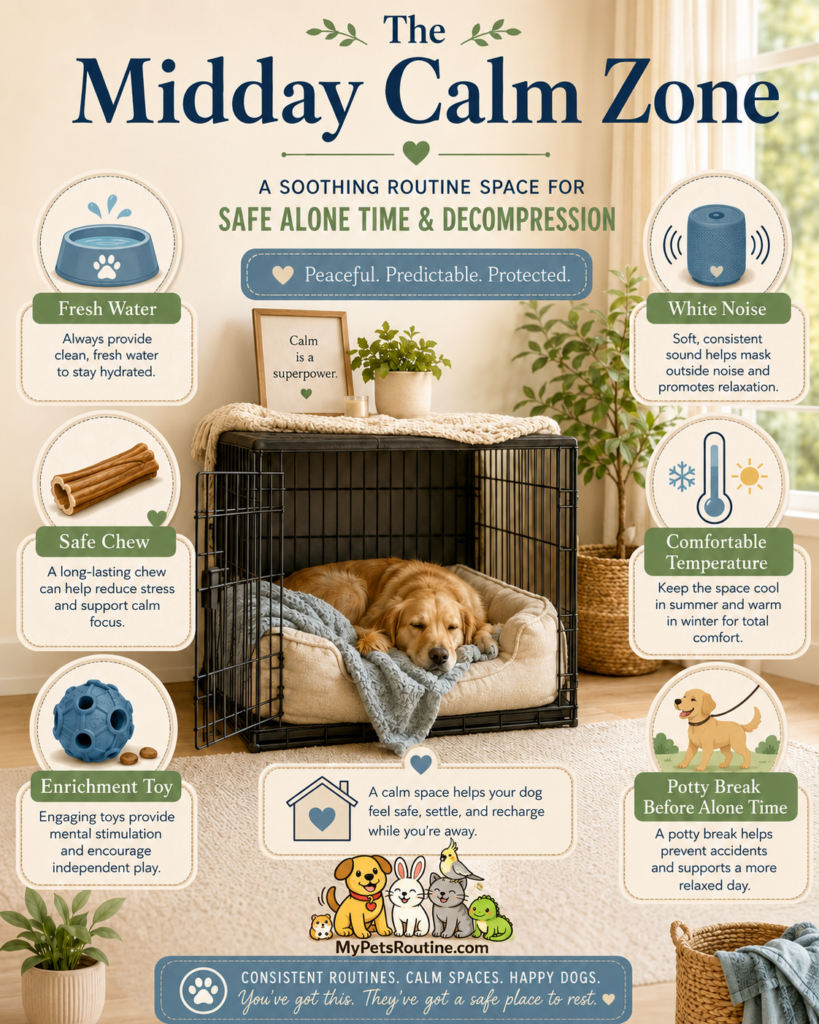
Midday is also when enrichment toys can be very useful. Dogs need more than physical exercise. They need appropriate ways to use their brain, nose, mouth, and problem solving skills. Foraging toys and activity toys can reduce boredom, increase enjoyment, and encourage natural dog behaviors in a desirable way. A stuffed food toy, puzzle feeder, lick mat, snuffle mat, or safe chew can turn a restless part of the day into a calmer one.
The key is to use enrichment thoughtfully. A toy should match your dog’s size, chewing style, and supervision needs. A powerful chewer may need a sturdier option than a gentle senior dog. A puppy should not be left alone with anything that can break apart, splinter, or become a choking hazard. If your dog guards food or toys, speak with a qualified trainer or veterinarian before using high value food enrichment around people or other pets.
Safe alone time is another important midday skill. Dogs are social animals, but they also need to learn that being alone for short periods is normal and safe. A crate, exercise pen, gated room, or cozy calm zone can help, as long as it is introduced positively and never used as punishment. Crate training can support routine, potty training, rest, and safe alone time when it is done gradually and kindly.
A calm zone should feel like a place of comfort. It may include a bed, water access when appropriate, safe chew items, a familiar blanket, and enough distance from household chaos. For some dogs, the calm zone is a crate. For others, it is a gated kitchen, laundry room, bedroom corner, or puppy pen. What matters is that your dog learns to settle there before you truly need them to.
The Evening Routine: Walk, Dinner, Training, Bonding, and Decompression
Evening is when many households become active again. People return from work or school, dinner is being made, doors open and close, children may be noisy, and the dog is suddenly surrounded by movement. For some dogs, this is the most exciting part of the day. For others, it is the most overstimulating.
A good evening routine gives your dog connection without chaos. Most dogs benefit from an evening potty break or walk before dinner. This helps release physical energy and gives your dog a chance to sniff and reset after the quieter part of the day. The walk does not always need to be intense. In fact, a calm sniff walk is often better than a frantic march around the block. The goal is to let your dog move their body, explore safely, and return home ready to settle.
Dinner should happen at a predictable time when possible. Feeding too late may affect overnight potty needs, especially for puppies. Feeding too early may leave some dogs restless later in the evening. Your dog’s ideal timing will depend on your household schedule, age, digestion, and veterinary guidance. What matters most is consistency.
After dinner, many owners make the mistake of allowing the dog to become wildly excited right up until bedtime. Tug games, wrestling, chasing, barking at the window, or high energy play late at night can make it harder for a dog to settle. Evening play is healthy, but it should gradually shift toward calm. A few minutes of basic training can be a wonderful bridge between activity and rest. Practicing simple cues such as sit, down, stay, come, leave it, name recognition, or leash manners gives your dog mental work and strengthens communication.
Training does not need to feel formal. In a daily routine, training is often most effective when it is woven into normal life. Your dog sits before the door opens. Your dog waits while the food bowl is placed down. Your dog comes when called from the yard. Your dog settles on a mat while the family watches television. These little repetitions become household manners over time.

Family bonding matters too. Dogs are not machines that simply need food and walks. They need connection. Gentle petting, quiet time on the floor, brushing, relaxed conversation, or sitting together while your dog chews a safe toy can help your dog feel included. The trick is to balance affection with calm expectations. A dog who receives attention only when barking, jumping, pawing, or stealing socks may learn that chaos gets results. A dog who receives calm attention when resting, checking in, or settling nearby learns that peace also pays.
The final part of the evening should be decompression. This is the soft landing at the end of the day. Lights become lower. Voices become calmer. Play becomes quieter. Your dog gets one last potty break before bed. Puppies often need this final trip outside to prevent overnight accidents, while adult dogs benefit from the consistency. Then your dog goes to their sleeping area, whether that is a crate, bed, gated room, or approved sleeping spot.
Rest and Sleep: The Routine Step New Owners Often Underestimate
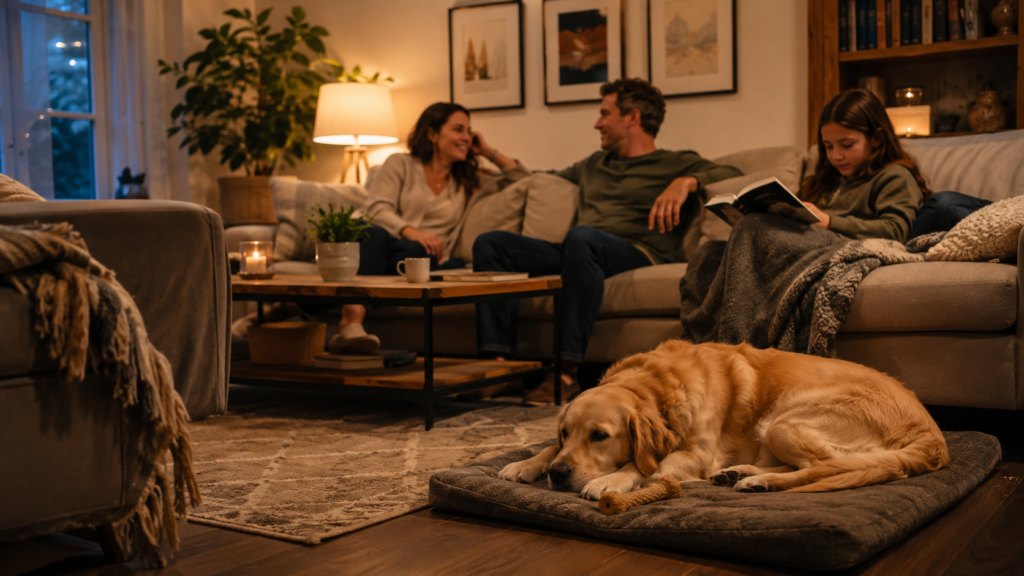
Many new dog owners focus on walks, feeding, potty training, and toys, but rest is just as important. Dogs who do not get enough sleep can become cranky, mouthy, jumpy, noisy, and difficult to redirect. Puppies in particular can look as though they need more play when they actually need a nap. An overtired puppy may race around the room, bite at clothing, bark, grab forbidden objects, or seem unable to listen.
Adult dogs also need structured rest. A dog who follows you all day, reacts to every sound, watches every movement, and never fully relaxes may be physically lying down but mentally on duty. That kind of constant alertness can contribute to stress. Rest should be treated as a real part of the routine, not as something that only happens when the dog finally collapses.
This is where crates, beds, mats, and calm zones become useful. A dog should have a place where nothing exciting is expected. No rough play. No teasing. No children climbing in. No constant interruption. Just quiet.
Some dogs settle naturally. Others need help learning how. You can begin by rewarding calm behavior when it happens. If your dog lies on a mat, quietly praise them or place a treat between their paws. If your dog relaxes in their bed while you cook, acknowledge that calm choice. If your dog can rest in a crate after a potty break and a short enrichment activity, let that success build.
Rest is not laziness. It is recovery. It supports learning, digestion, emotional regulation, and behavior. A dog who has a predictable balance of movement, mental stimulation, and sleep is usually easier to live with than a dog who is either under stimulated or constantly overstimulated.
What a Balanced New Dog Owner Schedule Can Look Like
Every dog is different, and your actual schedule should fit your dog’s age, health, breed tendencies, energy level, and household reality. A young puppy needs more potty breaks, more meals, and more naps than an adult dog. A senior dog may need shorter walks, softer bedding, and more frequent bathroom opportunities. A high energy adolescent dog may need more structured exercise and training than a calm mature dog.
Still, most successful routines follow the same pattern. Needs come before freedom. Potty comes before play. Exercise comes before long alone time. Calm comes before sleep. When those pieces are in the right order, the day becomes much easier for both dog and owner.
A sample day might begin with a potty break as soon as the dog wakes. Breakfast follows, then a short walk or sniff break. After that, the dog gets a calm period while the owner begins the day. By midday, the dog has another potty break and some form of safe enrichment. In the late afternoon or early evening, the dog gets more movement, another chance to eliminate, and time with the family. Dinner is followed by a little training or quiet bonding. The night ends with decompression, one last potty trip, and sleep.
The routine should feel steady, not strict. If you are fifteen minutes late with dinner one day, your dog will survive. If rain shortens a walk, you can add indoor training or a food puzzle. If your puppy has an accident, you adjust supervision and timing rather than assuming the puppy is stubborn. The routine is not a test you pass or fail. It is a guide that helps you make better decisions.
Common Routine Mistakes That Lead to Accidents, Barking, and Chewing
One of the most common mistakes new dog owners make is waiting too long between potty breaks. Puppies rarely have accidents out of spite. Most accidents happen because the puppy had too much freedom, too little supervision, or too much time since the last outdoor break. The ASPCA recommends close supervision during housetraining and watching for signs such as sniffing, circling, or stiff movement that may indicate the dog needs to go out.
Another common mistake is confusing exercise with exhaustion. A tired dog is not always a calm dog. Some dogs become more frantic when they are pushed too hard without enough rest. A better approach is balanced stimulation. Movement, sniffing, chewing, training, and sleep all work together.
New owners may also give freedom too quickly. A dog who has not learned the rules of the house should not have unsupervised access to every room. This is not punishment. It is management. Baby gates, closed doors, crates, leashes indoors, and calm zones can prevent mistakes while your dog is still learning.
Finally, many families accidentally reward the very behavior they want to stop. If barking always brings attention, barking may increase. If jumping brings petting, jumping may continue. If stealing a sock starts a thrilling chase, sock stealing becomes a game. A routine helps because it gives your dog better ways to get what they need before they start inventing their own entertainment.
How to Adjust the Routine for Puppies, Adult Dogs, and Senior Dogs
A puppy routine should be built around frequent potty breaks, short bursts of play, gentle training, and plenty of naps. Puppies are learning everything at once. They are learning where to potty, what to chew, how to be alone, how to sleep, how to respond to their name, and how to live with humans. Their routine should protect them from making too many mistakes before they understand what you want.
An adult dog may not need the same intensity of supervision, but a newly adopted adult dog still needs structure. Even a housetrained dog can have accidents in a new home because they do not yet understand the exits, schedule, smells, or expectations. Adult dogs also need time to bond. A predictable routine helps them learn that food, walks, rest, and affection will happen reliably.
A senior dog may need a softer and more flexible version of the routine. Older dogs may require more frequent potty breaks, shorter walks, non slip surfaces, orthopedic bedding, and closer monitoring of appetite, thirst, stiffness, and mood. A senior dog who suddenly has accidents, drinks more water, seems confused at night, or resists walks should be checked by a veterinarian.
The best routine is not copied from someone else’s dog. It is shaped around the dog in front of you.
When the Routine Is Not Enough
A daily routine can solve many ordinary new dog owner problems, but it is not a replacement for veterinary care or professional training support. If your dog has repeated vomiting, diarrhea, loss of appetite, sudden aggression, severe fear, intense separation distress, painful movement, excessive thirst, frequent urination, or major behavior changes, your veterinarian should be your first call.
If your dog panics when left alone, destroys doors, drools heavily, injures themselves, or cannot settle even after gradual practice, you may be dealing with separation related distress rather than simple boredom. VCA notes that relaxation exercises and safe settling skills are important for dogs who struggle when alone. In these cases, a veterinarian, veterinary behaviorist, or qualified positive reinforcement trainer can help you create a plan that is safe and humane.
The same is true for serious chewing, guarding, reactivity, or fear. A routine provides the foundation, but some dogs need a more individualized behavior plan.
Final Thoughts: Your Dog Does Not Need a Perfect Day, Just a Predictable One
New dog ownership becomes easier when you stop trying to react to every problem after it happens and start shaping the day before problems begin. A dog who gets a morning potty break, predictable meals, enough movement, safe enrichment, calm alone time, family connection, and structured rest is more likely to feel secure. A secure dog is easier to teach. A secure dog is less likely to bark out of frustration, chew out of boredom, or have accidents because no one noticed the timing.
There will still be messy days. Your dog may have an accident. A walk may be cut short. A puppy may bite your sleeve at sunset. An adult rescue dog may need more time than expected to settle. None of that means you are failing. It means you are learning each other.
The routine is not about controlling your dog’s every move. It is about creating a daily rhythm that says, over and over again, “You are safe here. Your needs will be met. This is how our day works.”
For a new dog, that kind of predictability can change everything.